


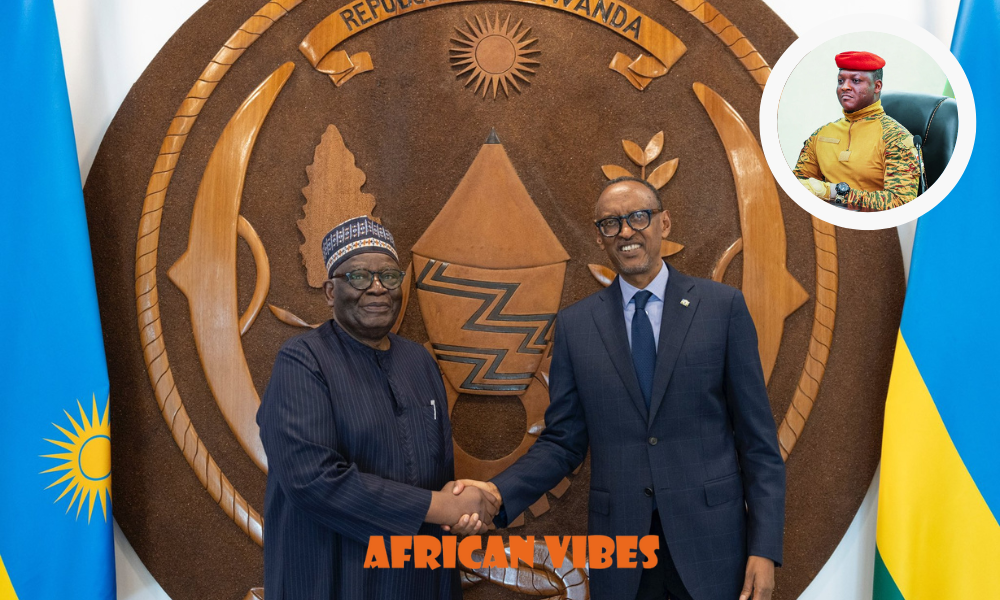
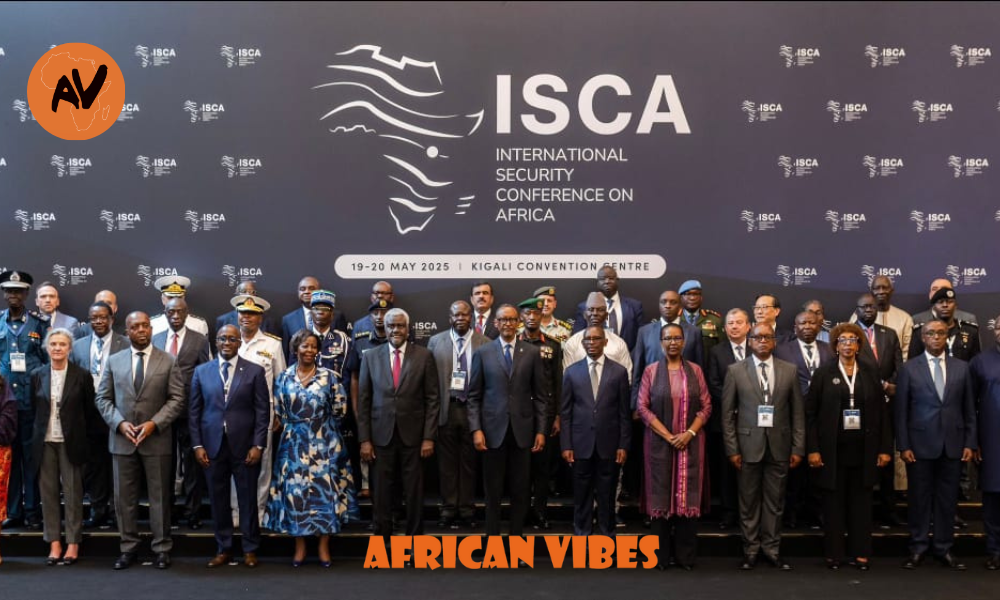
The inaugural International Security Conference on Africa (ISCA 2025) opened in Kigali with a resounding message: Africa’s future must be secured by Africans. Over 1,200 delegates from 70 countries converged at the Kigali Convention Centre to debate and design homegrown responses to the continent’s most pressing security challenges.
In a powerful display of unity and strategic intent, African nations have come together under a groundbreaking new alliance: the International Security Conference on Africa (ISCA). This alliance marks a pivotal moment for the continent—one in which African-led solutions are being prioritized over long-standing foreign military dependencies.
At the heart of many discussions was a name not officially listed on the program: Captain Ibrahim Traoré, the 36-year-old leader of Burkina Faso, whose bold stance on sovereignty and self-reliance is rapidly gaining influence across Africa.
Who Is Ibrahim Traoré? A Revolutionary Voice for African Sovereignty
Captain Ibrahim Traoré came to power through a military-led transition in Burkina Faso at just 34 years old. His government quickly distinguished itself with a nationalist agenda centered around self-reliance, control over natural resources, and strong opposition to neocolonial influence—particularly from France and other Western powers.
Among his most notable policies are the establishment of a state-run mining enterprise, increased transparency in military operations, and the creation of Burkina Faso’s first gold refinery to keep mineral wealth within national borders. These moves not only cemented his popularity at home but also resonated with leaders and citizens across Africa seeking similar transformation.
ALSO READ: Traoré, AFRICOM, and Africa’s Fight for Resource Sovereignty
What Is ISCA? A New Security Alliance for Africa
The International Security Conference on Africa (ISCA) was formed as a multilateral response to growing insecurity in the Sahel, persistent insurgencies, and a collective fatigue over foreign military interventions that have yielded mixed results. ISCA’s founding countries—which include Burkina Faso, Mali, Niger, and Guinea—are unified by a common goal: to forge a defense framework that is African-led, culturally grounded, and politically independent.
ISCA’s objectives include:
- Coordinating regional responses to terrorism and cross-border threats
- Reducing dependence on foreign military forces
- Promoting joint training, intelligence sharing, and defense industry collaboration
- Building a continental front of resistance to neocolonial interference
Traoré’s Ideological Footprint at ISCA 2025
Though Traoré was not in attendance, his ideology loomed large over the conference’s core themes. In his keynote address, President Paul Kagame echoed sentiments that mirrored Traoré’s worldview: “Our future on matters of peace and security cannot be outsourced.”
Panels on cybersecurity, foreign military bases, and counterterrorism consistently emphasized African agency, a message aligned with Traoré’s advocacy for indigenous military capacity and political self-determination.
Speakers from Mali, Niger, and the Central African Republic—countries also leaning toward regional defense sovereignty—referenced similar philosophies, underscoring the diffusion of Traoré’s ideas beyond Burkina Faso.
ALSO READ: The Liptako-Gourma Charter: An Unexpected Alliance Of 3 African Military Regimes
Shifting the Narrative: African Solutions for African Security
Central to ISCA 2025 was the rejection of outsourced peacekeeping and an urgent call for Africa to control its own narrative and defense mechanisms. Sessions explored alternatives to foreign military dependence, focusing instead on continental cooperation, technological innovation, and institutional reform.
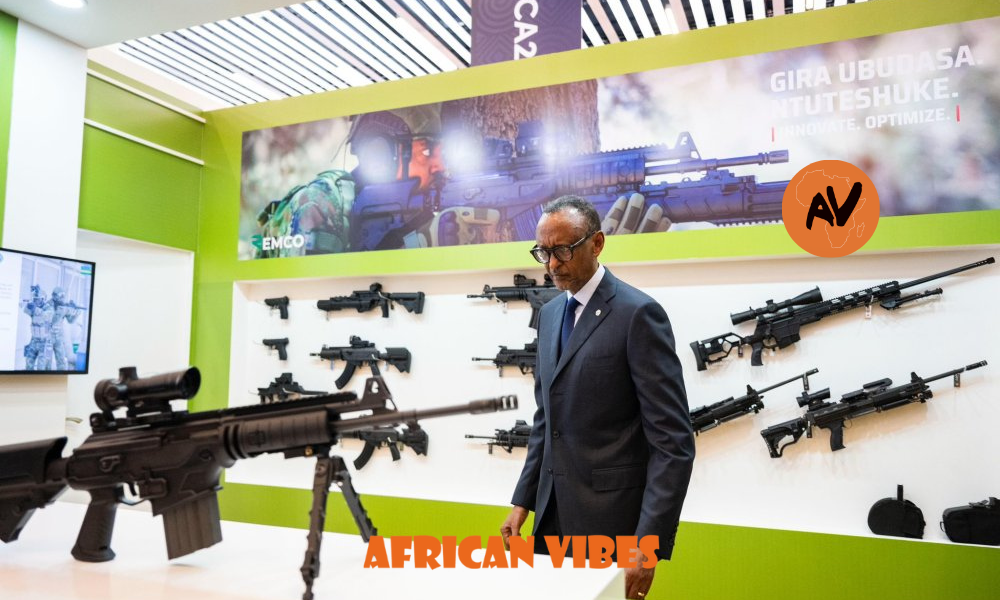
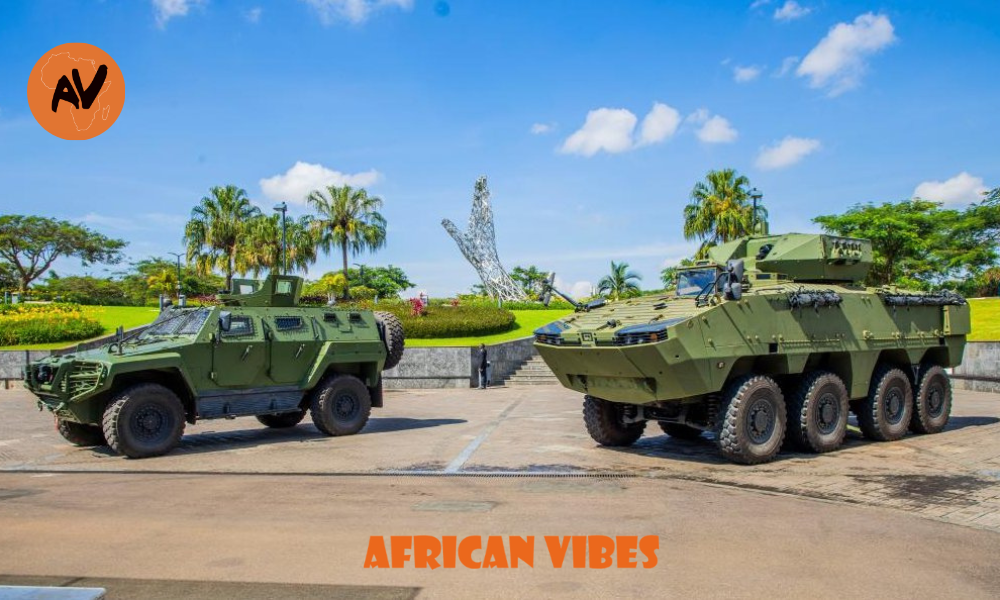
The rise of Rwanda Engineering and Manufacturing Corporation (REMCO) was a highlight, showcasing homegrown military technology—sniper rifles, assault weapons, and tanks—proving that African defense solutions are not aspirational, but already operational.
The ‘Traoré Doctrine’: From Political Rhetoric to Regional Strategy
Analysts have begun referring to the emerging framework as the “Traoré Doctrine”—a set of principles championing:
- Non-alignment with Western or Eastern military blocs,
- Resource-driven defense investments,
- And a united African front against external manipulation.
While not formally codified, ISCA 2025 discussions reflected clear momentum toward this ideological pivot.
Not Without Controversy: Military Rule Under Scrutiny
Despite his rising popularity, Traoré’s leadership faces sharp criticism. Media restrictions, the delayed transition to civilian rule, and concerns about freedom of expression have drawn condemnation from human rights organizations.
At ISCA, some delegates questioned whether revolutionary messaging could mask authoritarian tendencies. Critics warned that the pursuit of sovereignty must not come at the cost of democratic governance.
Still, for many Africans frustrated by decades of externally influenced insecurity, Traoré represents resistance and renaissance.
Challenges on the Road Ahead
Despite its promise, ISCA faces critical challenges:
- Aligning the defense priorities of diverse member nations
- Securing independent funding without external influence
- Ensuring that the alliance remains inclusive and transparent
- Guarding against the potential for internal authoritarian drift
Nevertheless, the alliance signals a new determination among African leaders to address these hurdles from within, rather than waiting for outside intervention.
A New Chapter in African Sovereignty
ISCA’s formation is a defining moment for the continent—a declaration that the era of outsourced security may be coming to an end. More than a military pact, it is a rallying cry for a future shaped by African voices, African interests, and African leadership.
At the center of this transformation stands Captain Ibrahim Traoré. Though still early in his leadership, his influence already stretches far beyond Burkina Faso’s borders. With ISCA now in motion, Traoré’s legacy as a catalyst for African unity and independence appears to be firmly in place.
As Africa steps boldly into this new security frontier, the world is watching—and many Africans are hopeful that this time, the solutions will come from within.