


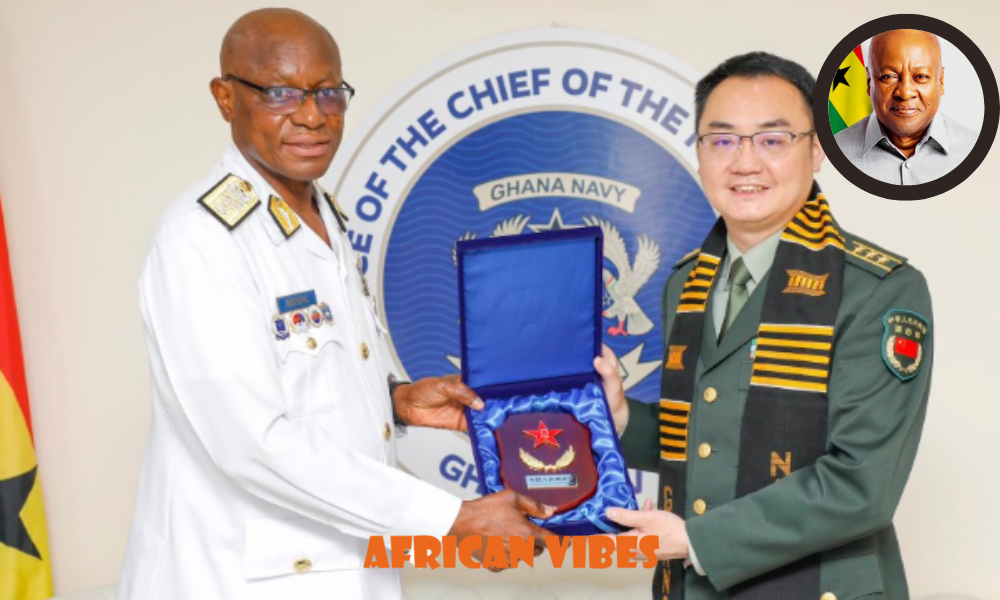
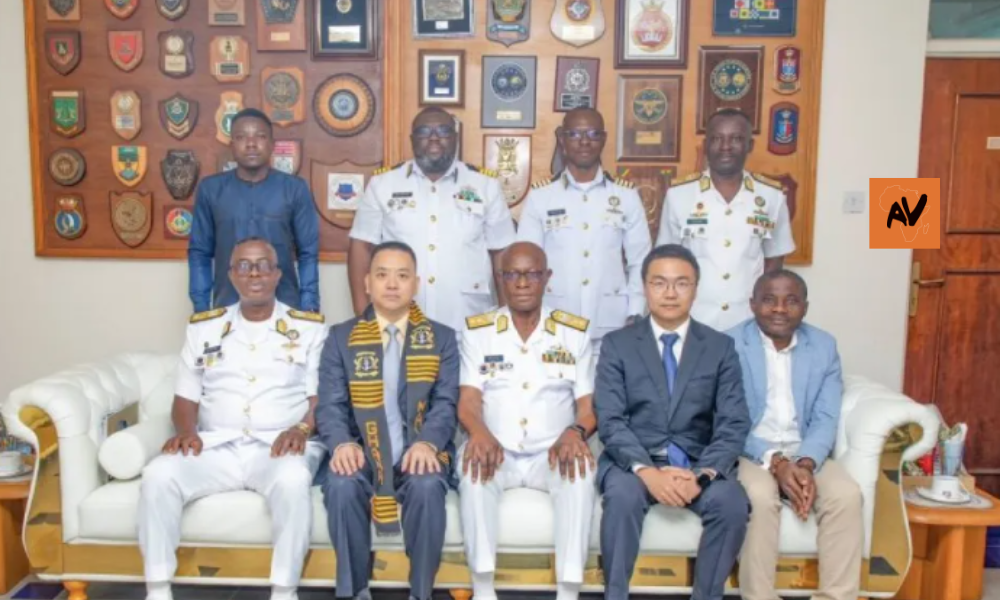
In a significant stride towards bolstering its maritime security and safeguarding its vital interests in the Gulf of Guinea, Ghana recently welcomed a high-level delegation from the China National Aero-Technology Import & Export Corporation (CATIC). This pivotal visit, which took place on June 2, 2025, at the Naval Headquarters in Accra, signals a new chapter in the ongoing strategic partnership between Ghana and China.
The discussions centered on potential avenues for future collaborations aimed at enhancing the operational capabilities of the Ghanaian naval force, a development keenly observed by stakeholders invested in Ghana maritime security and the broader landscape of China-Africa cooperation.
As a nation strategically positioned along the bustling West African coastline, Ghana’s proactive engagement with international partners underscores its unwavering commitment to securing its territorial waters and contributing to regional stability.
ALSO READ: How Ibrahim Traoré’s Rise Is Redefining African Security Leadership
Ghana’s Maritime Imperatives and Evolving Partnerships
the Ghana Navy has been steadfast in its commitment to continuous modernization and capacity building. This unwavering dedication is a testament to Ghana’s resolve to protect its vast maritime domain, which is crucial for its burgeoning blue economy – a sector encompassing fisheries, oil and gas, and maritime transport. The nation’s strategic geographical location, coupled with its commitment to democratic governance, positions it as a key player in ensuring stability across West Africa.
China’s growing engagement in African defense and security has become an increasingly prominent feature of international relations. While China’s economic footprint across the continent is well-documented, its pivot towards comprehensive security cooperation, including military training, equipment supply, and joint exercises, reflects a deepening strategic partnership.
This evolving dynamic is not new to Ghana; in previous years, China has extended support through various means, including the donation of patrol boats in 2017 to bolster Ghana’s naval presence and numerous instances of military training and exchanges.
These consistent engagements have laid the groundwork for the current discussions, showcasing a shared understanding of mutual benefits and a collaborative spirit that is a hallmark of strong bilateral ties.
ALSO READ: The Liptako-Gourma Charter: An Unexpected Alliance Of 3 African Military Regimes
CATIC Delegation Explores Naval Collaboration with Ghana
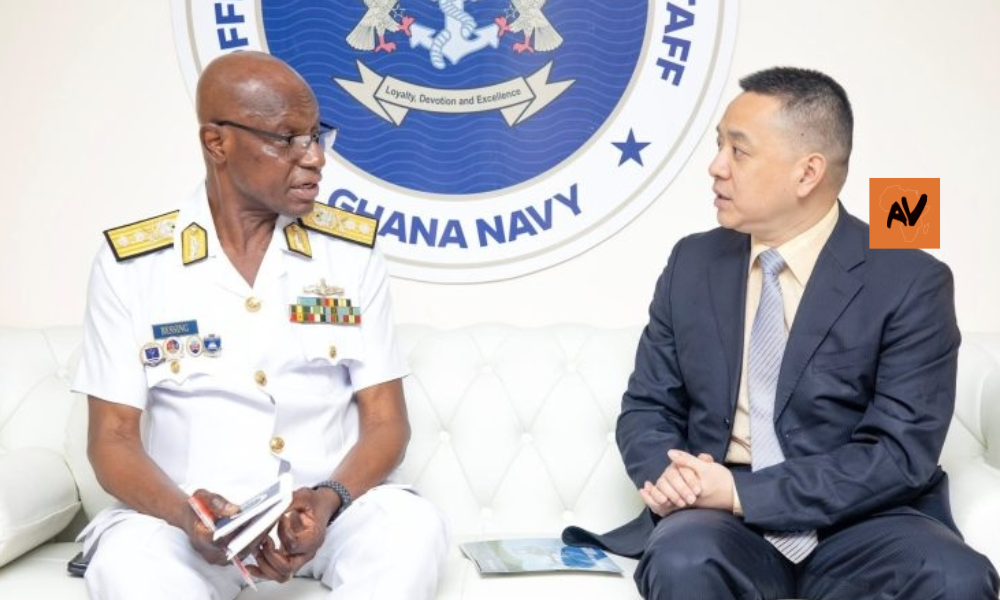
A high-level delegation from the China National Aero-Technology Import & Export Corporation (CATIC), led by Africa Department Director Mr. Fang Xu, visited Ghana to initiate strategic defence discussions with the Ghana Navy. CATIC, a major player in aerospace and defense exports, engaged with Rear Admiral Godwin Livinus Bessing, Chief of the Naval Staff, to explore potential areas of cooperation aimed at modernizing Ghana’s naval capabilities.
Key areas of discussion included the modernization of existing naval assets, acquisition of maritime patrol equipment, upgrades to communication systems, and the development of advanced training programs for naval personnel.
Rear Admiral Bessing emphasized the importance of partnering with experienced international firms like CATIC to address maritime threats such as piracy and illegal fishing. While no agreements were finalized, both sides expressed strong interest in future collaboration, aligning with Ghana’s long-term vision for a robust and modern navy.
Strategic Impact of Ghana–China Naval Cooperation
Ghana’s potential naval collaboration with China represents a significant step toward enhancing maritime security in the Gulf of Guinea. By acquiring advanced vessels and surveillance systems, along with comprehensive training programs, Ghana aims to boost naval self-reliance, operational effectiveness, and protection of vital marine resources.
This initiative aligns with China’s broader Global Security Initiative, reflecting its strategic interest in fostering regional stability and strengthening global partnerships. For Ghana, the engagement is part of a pragmatic, non-aligned foreign policy approach—diversifying defense partnerships to meet national priorities without compromising sovereignty.
While promising, the cooperation also requires long-term support systems for sustainability and careful navigation of geopolitical dynamics. Nonetheless, Ghana’s history of balanced diplomacy and regional leadership suggests it is well-positioned to manage this partnership strategically, reinforcing its commitment to a secure and prosperous maritime future.
Conclusion
The CATIC delegation’s visit marks a key milestone in Ghana’s pursuit of comprehensive maritime security. Through strategic collaboration with international partners like China, Ghana is not only acquiring advanced naval technology but also strengthening the long-term capabilities and expertise of its naval force.
This partnership reflects Ghana’s proactive and independent foreign policy, focused on safeguarding national interests and enhancing regional stability. As cooperation progresses, the Ghana Navy is poised to play a crucial role in securing the Gulf of Guinea, promoting safe trade, and supporting sustainable economic growth.