


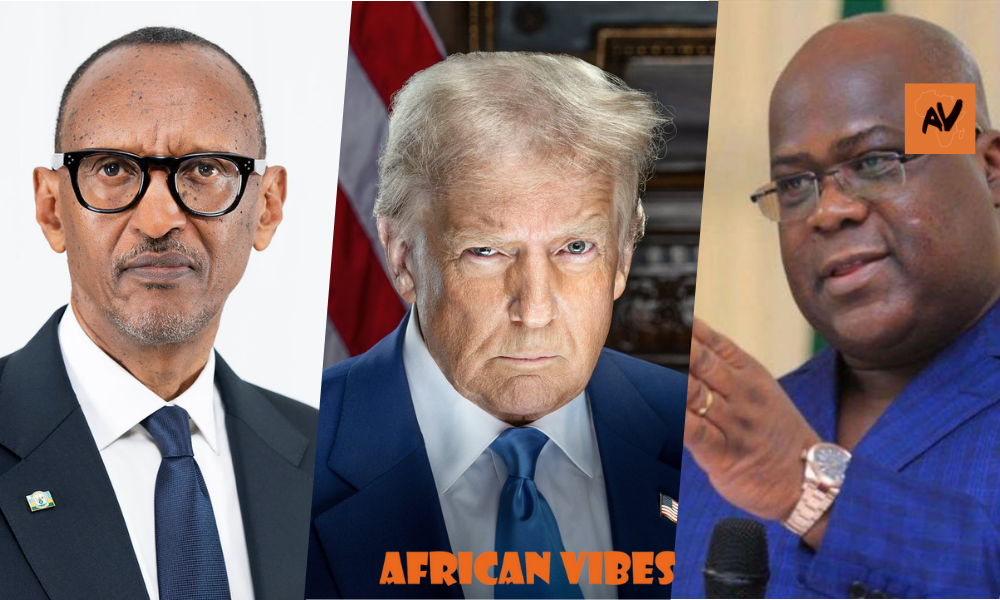
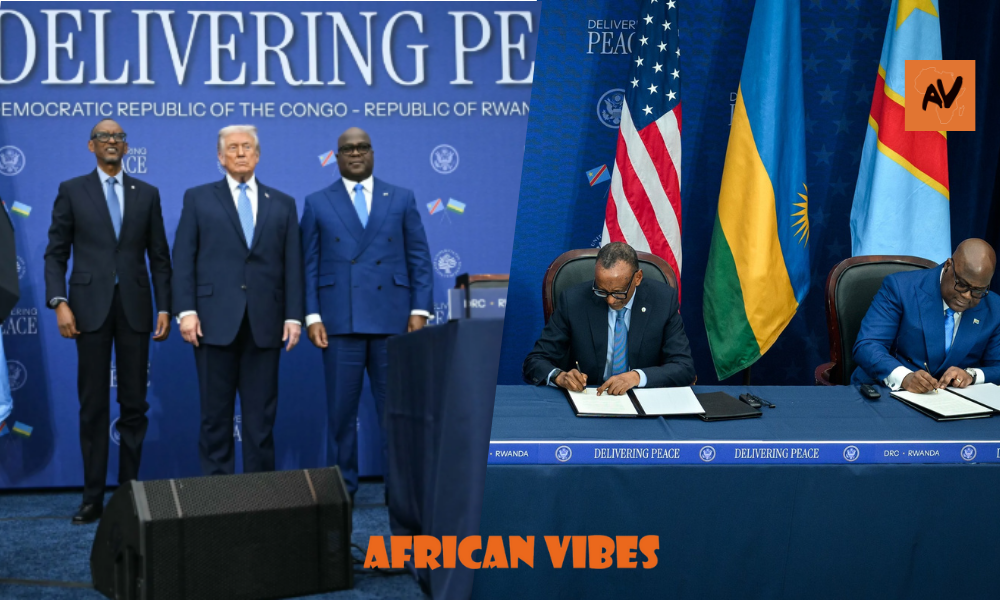
In a moment laden with both hope and historical weight, Presidents Félix Tshisekedi of the Democratic Republic of Congo (DRC) and Paul Kagame of Rwanda formally signed the Washington Accords for Peace and Prosperity on December 4, 2025. The ceremony, held in the ornate East Room of the White House and personally endorsed by the U.S. President, marks an unprecedented effort to resolve one of Africa’s most intractable conflicts.
The handshake between the two leaders, long embroiled in a cycle of mutual distrust and violence, was more than ceremonial. It symbolized a bold, high-stakes commitment to end decades of hostilities in the Great Lakes region—a conflict that has claimed hundreds of thousands of lives and displaced millions. For the residents of North and South Kivu, weary of recurring violence, the accord represents a fragile glimmer of stability.
ALSO READ: China Backs Nigeria Against US Military Threat — Ally or Calculated Interest?
The Roots of Conflict: Ghosts of the Great Lakes
The origins of the DRC-Rwanda tensions trace back to the 1994 Rwandan genocide. As the Rwandan Patriotic Front (RPF) took power, remnants of the genocidal regime and its military forces fled across the border into eastern Congo, eventually coalescing into the Forces Démocratiques de Libération du Rwanda (FDLR). Kigali has long viewed the FDLR as an existential threat, providing justification for repeated interventions in eastern Congo.
Kinshasa, in turn, accuses Rwanda of supporting proxy militias, including the March 23 Movement (M23), to maintain leverage over DRC’s resource-rich territories. The result has been a devastating cycle of retaliatory violence. Recent M23 offensives displaced over a million people, drawing the region to the brink of war. Previous peace initiatives—the Luanda and Nairobi processes—failed due to weak enforcement and deep-seated mistrust, making an international, high-profile mediation necessary.
The Washington Accords: A Framework for Peace
The Washington Accords distinguish themselves with two core pillars: security guarantees and economic incentives, designed to link peace directly to prosperity.
Security Commitments:
- Rwanda pledges a verifiable cessation of support for all non-state armed groups, including M23, and the withdrawal of any forces from Congolese territory.
- DRC commits to fully implement the Harmonized Plan for the Neutralization of the FDLR, a complex operation aimed at disarming, repatriating, or neutralizing the militia.
A Joint Security Coordination Mechanism will be established within 30 days to facilitate real-time monitoring, reducing the risk of border skirmishes triggering renewed conflict.
Economic Integration:
Perhaps most innovative is the Regional Economic Integration Framework (REIF), which ties peace directly to economic cooperation. By formalizing cross-border investment and transparent mineral trade, particularly in cobalt, coltan, and lithium, the accord seeks to create a “Kivu Peace Dividend.” The framework provides incentives for both nations to maintain stability, transforming historically exploited resources into a shared engine for development.
Humanitarian and Regional Implications
While the signing represents a diplomatic milestone, the human cost of ongoing conflict remains stark. South Kivu alone hosts over 1.2 million displaced people. Immediate priorities include safe repatriation, access to humanitarian aid, and the resumption of agricultural and commercial activity.
The REIF’s potential impact extends beyond the immediate region. By establishing a legally binding, investor-backed economic framework, the accord could transform the Great Lakes into a hub of ethically sourced critical minerals, integrating the region into global supply chains while reducing incentives for armed exploitation.
ALSO READ: Elon Musk and the Battle Over H-1B Visas in the Global Talent Economy
A New Chapter in African Diplomacy
The Washington Accords underscore a maturing African diplomacy, demonstrating that difficult compromises—here, between Tshisekedi and Kagame—can yield tangible prospects for peace. By taking steps to neutralize mutual security threats and incentivize economic cooperation, the leaders signal that regional stability is not merely a Western ideal but an African imperative.
Yet the path ahead is perilous. Treaties are only as strong as their implementation. Enforcement, transparency, and sustained political will will determine whether the accord brings lasting peace or collapses under the weight of spoilers and entrenched grievances.
For millions of Congolese and Rwandans, the true test of the accord will not be in Washington, but when displaced families safely return home, children can attend school without fear, and local markets reopen under the promise of security. In this sense, the Kivu Peace Dividend is more than a concept—it is the first measure of success in a region long denied stability.