


In the rolling green hills of Western Kenya, where sugarcane fields bend in the wind and the ancient Kakamega Forest hums with life, a different kind of tremor has been felt—not from tectonic plates, but from revelation.
Kenya has confirmed its most significant gold discovery in decades: an underground deposit in Kakamega County, at the Isulu–Bushiangala site, valued at an estimated $5.29 billion (Sh683 billion). The confirmation, announced following extensive driKenyalling by the British mining firm Shanta Gold Kenya Limited, instantly repositions the country within Africa’s extractive economy.
For a nation better known for elite athletes, wildlife tourism, and a globally admired technology sector, the find marks a turning point. But gold, history reminds us, is never just about wealth. It is about power, land, governance—and the lives of people who live where fortune strikes.
This discovery is more than a Kenyan story. It is a test case for the continent. At stake is whether Africa can finally prove that mineral wealth can be harnessed without dispossession, growth delivered without inequality, and development pursued without sacrificing dignity.
ALSO READ: Africa’s Largest Gold Producer in 2025
Beyond the Gold: An Economic Inflection Point
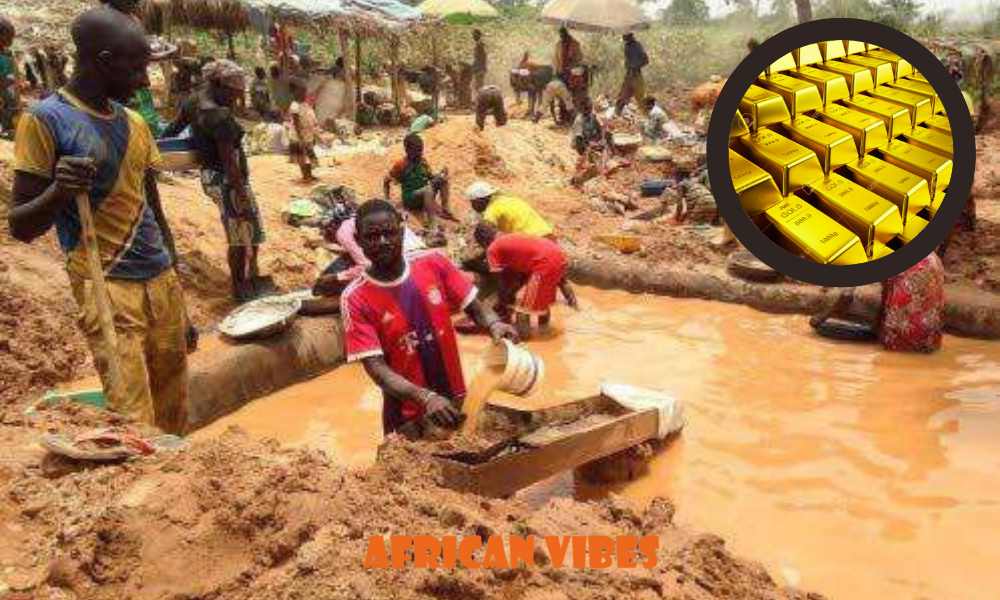
Shanta Gold’s confirmation of 1.27 million ounces of gold immediately elevates Kenya from a marginal gold producer into a serious emerging mining jurisdiction. Until now, gold extraction in the country has been dominated by informal artisanal mining—dangerous, environmentally damaging, and economically inefficient.
This discovery signals a structural shift.
The Isulu–Bushiangala project is designed as a fully industrial underground operation, with an initial eight-year mine life, a projected capital investment of $170–209 million, and infrastructure that includes a 1,500-tonne-per-day processing plant and a 12-megawatt power station.
For Kenya’s economy, the implications are profound. Mining currently contributes less than 1% of GDP. The government has made no secret of its ambition to raise that figure toward 10%, diversifying away from overreliance on agriculture, tourism, and services.
If successful, the project would not only generate state revenue and foreign exchange, but also anchor a new industrial ecosystem—engineering services, logistics, energy infrastructure, and technical training. In a region where unemployment, especially among youth, remains stubbornly high, the promise of skilled, formal-sector jobs carries generational weight.
This is how mineral wealth can matter—not merely as export figures, but as a catalyst for national transformation.
ALSO READ: Botswana and Angola’s Race to Own De Beers, the World’s Iconic Diamond Giant
A Continental Lens: The African Mining Vision in Action
Kenya’s approach, at least on paper, aligns with the African Mining Vision (AMV)—the African Union’s framework designed to ensure that extractive industries drive broad-based development rather than enclave wealth.
The AMV rejects the old model: Africa exporting raw materials while importing finished value. Instead, it prioritizes local processing, skills transfer, industrial linkages, and domestic ownership of development outcomes.
The Kakamega project reflects that shift. By emphasizing underground mining technology, on-site processing, and energy self-sufficiency, Kenya is signaling that it does not intend to be merely a pit-stop in the global commodities chain.
If managed well, the project could become a reference point across East Africa: proof that mining can be modern, regulated, and development-oriented—rather than chaotic, extractive, and externally controlled.
But alignment with continental visions means little without local legitimacy.
The Hard Question: Land, Livelihoods, and the Cost of Progress
The Isulu–Bushiangala project requires approximately 337 acres, much of it privately or communally owned. Estimates suggest that up to 800 households could be displaced—families whose lives are anchored in ancestral land, subsistence farming, and tightly knit social networks.
Predictably, resistance has emerged.
Community members in Bushiangala and Ikolomani have voiced fears familiar across Africa’s mining zones: inadequate compensation, loss of livelihoods, and exclusion from decision-making. Senator Boni Khalwale, among others, has publicly warned that development imposed without consent risks deepening injustice rather than curing it.
Across the continent, resource discoveries have too often followed a tragic script: national wealth rising on paper while host communities descend into poverty. The Kakamega discovery will be judged not by ounces extracted, but by whether it breaks this pattern.
Ubuntu Economics and the Meaning of Shared Prosperity
AfricanVibes.com’s philosophy is simple but demanding: development must be shared, or it is not development at all.
Shanta Gold has pledged compliance with Kenya’s Constitution, the Land Act, and international resettlement standards. Its Environmental Impact Assessment outlines options for relocation or cash compensation and proposes six resettlement sites.
But legality alone does not equal justice.
True Ubuntu economics requires participation, transparency, and respect for cultural value, not merely market value. Land is not just an asset; it is identity, memory, and security. If compensation processes are opaque or rushed, trust will evaporate—and with it, the legitimacy of the entire project.
This is the defining challenge: turning affected communities from passive victims into active stakeholders in the country’s new wealth.
Governance as Destiny: Kenya’s Mining Act and Resource Nationalism
Kenya enters this moment with an advantage many African states lacked during earlier resource booms: a modern legal framework.
The Mining Act of 2016 replaced colonial-era legislation with a model centered on transparency, equity, and national benefit. At its core is a clear royalty-sharing formula:
- 70% to the National Government
- 20% to the County Government
- 10% directly to the local community
This structure is not symbolic. It is redistributive by design.
By guaranteeing 30% of royalties to the host region, Kenya has embedded local ownership into law. County governments gain resources for infrastructure and services, while community trusts receive direct funding for schools, clinics, water projects, and local enterprises.
Even more significant is the Community Development Agreement (CDA) requirement, which mandates that mining companies contribute 1% of total production value directly to host communities—beyond taxes and royalties.
This is resource nationalism with a human face: asserting national control while insisting that wealth flows downward, not just upward.
Execution, however, will determine credibility. Without rigorous oversight, even the best laws can fail.
VI. Technology, Environment, and the Future of East African Mining
The Kakamega project also represents a technological break from the past.
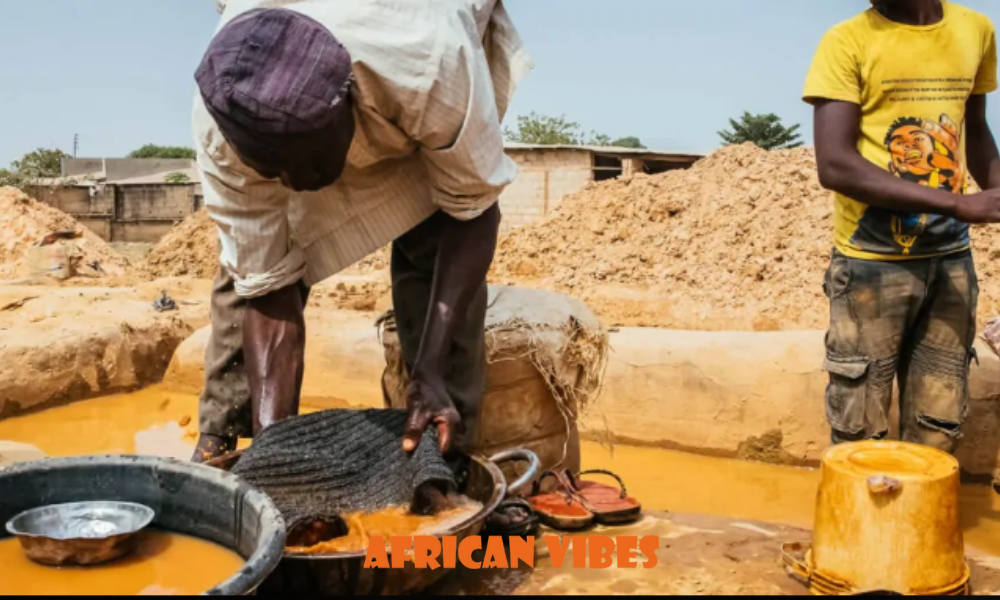
For decades, artisanal mining in the region relied on unsafe pits, mercury use, and uncontrolled waste disposal. The environmental cost—especially near the ecologically sensitive Kakamega Forest—has been severe.
Shanta Gold plans to deploy Long Hole Open Stoping, a modern underground method that maximizes ore recovery while minimizing surface disturbance. The project includes a dedicated Tailings Storage Facility, water recycling systems, and progressive land rehabilitation—subject to oversight by NEMA, Kenya’s environmental regulator.
Africa’s future cannot be built on poisoned rivers and degraded forests. If Kenya succeeds in balancing extraction with environmental stewardship, it could establish a new benchmark for responsible mining in the region—one that proves industrial scale need not mean ecological sacrifice.
Conclusion: Gold as a Measure of Governance
The $5.29 billion gold discovery in Kakamega County is a gift—but also a burden.
It offers Kenya a rare opportunity to diversify its economy, empower its regions, and demonstrate continental leadership in resource governance. But it also demands restraint, humility, and unwavering commitment to fairness.
The government must enforce its laws without compromise. Shanta Gold must operate not as an extractor, but as a partner. And communities must be heard—not managed.
If Kenya succeeds, Kakamega’s gold will become more than a commodity. It will stand as evidence that Africa can turn mineral wealth into shared prosperity, guided by law, accountability, and the enduring spirit of Ubuntu.
If it fails, it will simply join a long list of lost chances buried beneath the continent’s soil.
The gold is ready. The question is whether governance—and conscience—are ready too.