


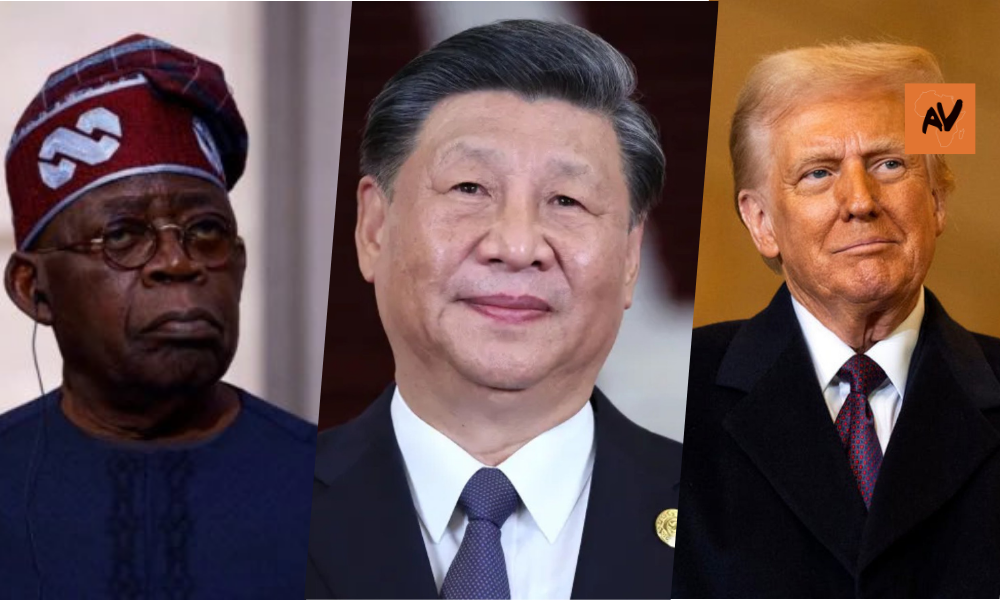
The global balance of power tilted sharply when former U.S. President Donald Trump threatened military intervention in Nigeria, citing alleged “widespread persecution of Christians.” The warning was met with outrage from Abuja, but what followed was even more striking — China’s swift and firm defense of Nigeria’s sovereignty.
Beijing, through its Foreign Ministry, condemned Washington’s remarks as “reckless interference” under the guise of religion and human rights. In doing so, China positioned itself as Nigeria’s loudest international defender and, symbolically, a protector of African self-determination.
But beneath the diplomatic niceties lies a larger question — is China’s support for Nigeria genuine solidarity, or a carefully calculated geopolitical play for influence and resources?
China’s Official Stance: Sovereignty Above All
China’s Foreign Ministry spokesperson Mao Ning declared that “China firmly supports the Nigerian government in leading its people on the development path suited to its national conditions.” She added that Beijing “firmly opposes any country using religion and human rights as an excuse to interfere in other countries’ internal affairs, and threatening them with sanctions or force.”
To many across Africa, this echoed long-standing frustrations with Western interventionism. For decades, the West’s conditional aid and military involvement in African affairs have often been criticized as thinly veiled attempts to maintain influence. By contrast, China’s non-interference doctrine resonates deeply: no lectures, no sanctions, just partnership.
This message — sovereignty first, diplomacy without judgment — has turned Beijing into a popular counterweight to Western dominance across the continent.
The Positive Face of China’s Support: Partnership That Delivers
China’s stance didn’t come out of nowhere. It’s backed by decades of economic partnership and infrastructure investment in Nigeria — investments that have reshaped the nation’s development landscape.
- The Lagos-Ibadan and Abuja-Kaduna railways, financed by China’s Exim Bank, now serve as lifelines for trade and mobility.
- In energy and telecommunications, Chinese firms have boosted Nigeria’s power generation and digital infrastructure.
- Most recently, over $1.3 billion in Chinese investment has flowed into Nigeria’s lithium and solid minerals sector through companies like Canmax Technologies and Jiuling Lithium — a game-changer in diversifying Nigeria’s economy away from oil.
For Nigeria, this partnership delivers visible results. Roads, bridges, and power plants emerge where Western loans once stalled. And now, with China defending its sovereignty on the world stage, Abuja sees Beijing as more than an investor — but a diplomatic shield in turbulent times.
China’s message is clear: We build, not bomb.
ALSO READ: Mali’s Reciprocity Policy Forces U.S. to Scrap Visa Bond in Rare Diplomatic Reversal
The Strategic Undercurrent: Self-Interest Behind Solidarity
However, Pan-African observers caution against viewing China’s actions as purely altruistic. In global politics, no support is without strategy.
Beijing’s industrial and technological ambitions depend on securing uninterrupted access to critical minerals such as lithium — the very resource Nigeria now exports in increasing quantities. By standing firmly with Abuja against the U.S., China is not only defending sovereignty — it’s also protecting its own multi-billion-dollar investments.
This is the essence of modern geopolitics: solidarity on the surface, strategy underneath.
China’s non-interference principle, while appealing, also conveniently shields its companies from scrutiny over environmental impact, labor standards, and contract transparency. As a result, African governments often face the risk of resource dependency or what critics call “debt diplomacy.”
Beijing’s opposition to U.S. involvement, therefore, can be read not just as moral conviction, but also as a calculated move to limit Western influence in Africa, where China now stands as the dominant external power.
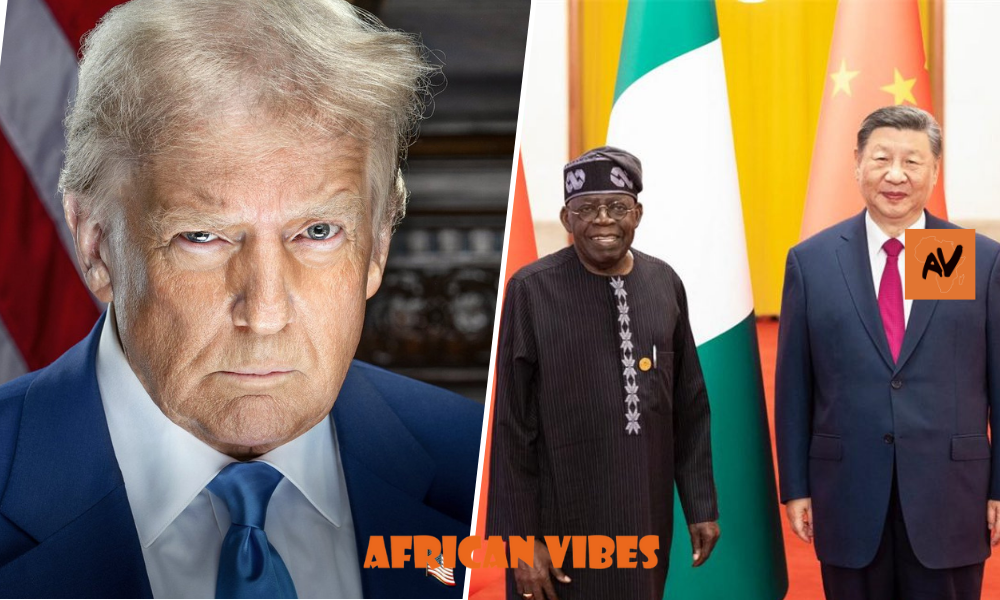
Can Africa Trust China Over the West?
The continent’s dilemma is not new — and it is not binary. Africa must ask: Who truly advances our sovereignty — the East or the West? The answer may be neither, but rather Africa itself.
- The West, for all its democratic ideals, carries the burden of historical exploitation and selective morality. Its aid often comes with conditions that undermine sovereignty.
- China, though respectful in tone and efficient in delivery, may create new forms of dependency — through opaque contracts, mineral extraction, and long-term debt obligations.
The path forward demands strategic agency, not blind alignment. African nations like Nigeria must leverage these rivalries to their advantage — extracting value, not just resources.
That means:
✅ Demanding local processing and job creation in every foreign deal.
✅ Insisting on technology transfer and skills development.
✅ Ensuring environmental protection and transparency in all contracts.
As Pan-African leaders from Nkrumah to Nyerere envisioned, independence means more than flags and borders — it means control over your economy, your narrative, and your destiny.
ALSO READ: Botswana’s Duty-Free Diamond Deal with the US Redefines Economic Sovereignty.
Conclusion: Mastering the Game, Not Playing It
China’s defense of Nigeria against U.S. military threats is a powerful image — one that taps into Africa’s long struggle for sovereignty and respect. It offers an appealing alternative to Western coercion and highlights the rise of South-South solidarity.
Yet Africa must read the fine print. China’s motivations are strategic, its interests economic. Its friendship, while valuable, must be balanced with vigilance.
In a world where superpowers jostle for Africa’s minerals and loyalty, true independence lies in mastering the rules, not accepting them.