


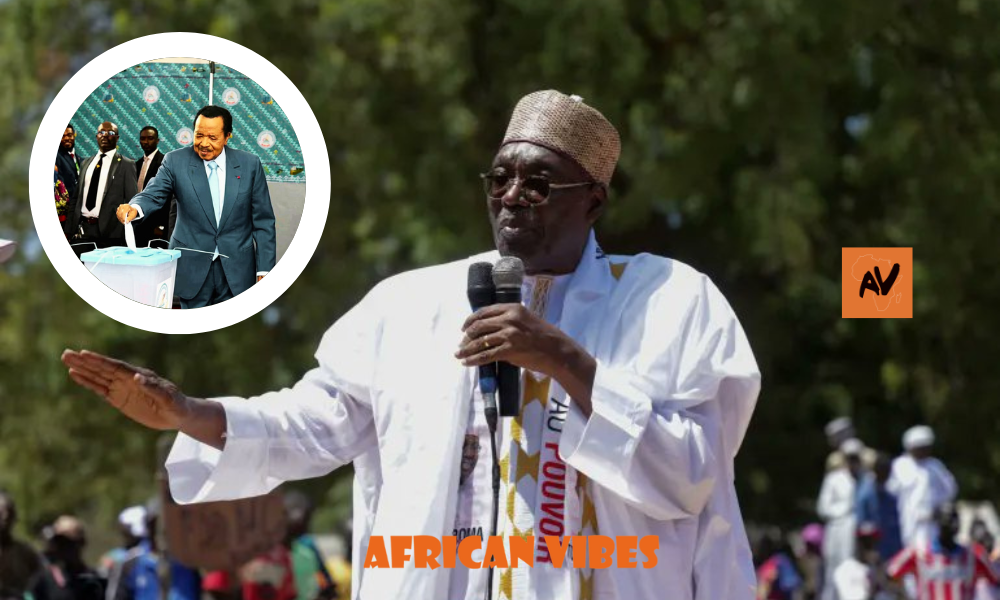
President Paul Biya, 92, the world’s oldest sitting head of state, is seeking a record eighth term — a continuation of a rule that began in 1982. But this time, the predictable rhythm of Cameroonian elections has been disrupted. His challenger and former ally, Issa Tchiroma Bakary, 76, has declared himself the winner, just two days after the October 12 vote — long before the official results are due on October 26.
“Our victory is clear and must be respected,” Tchiroma announced from his northern stronghold of Garoua. “President Biya must accept the truth of the ballot box — or risk plunging the nation into turmoil.”
It was an audacious move — part defiance, part political calculation — and it has thrown Cameroon, and perhaps Central Africa, into a moment of rare democratic suspense.
ALSO READ: 10 Times African Leaders Shook the UN General Assembly
The Biya Machine: Four Decades of ‘Stability’
To understand the gravity of Tchiroma’s declaration, one must first grasp the architecture of “le système Biya.”
For 43 years, Paul Biya has cultivated a political ecosystem built on control, co-option, and the narrative of peace. Since removing presidential term limits in a 2008 constitutional amendment, Biya has reigned virtually unopposed, presenting himself as the guarantor of stability in a volatile region often marred by coups.
That stability, however, masks deep fractures.
Cameroon today faces two major security crises:
- The Anglophone conflict, a violent secessionist war in the English-speaking North-West and South-West regions that has displaced hundreds of thousands.
- Boko Haram insurgency, which continues to destabilize the Far North — ironically, the only region where Biya held a campaign rally this year.
Economic hardship lingers beneath the surface. Despite decades of resource wealth — from oil to cocoa and timber — nearly 40 percent of Cameroonians live in poverty, according to UN estimates. The “stability” that Biya’s supporters tout increasingly feels, to many, like stagnation — a prolonged pause in a country yearning for motion.
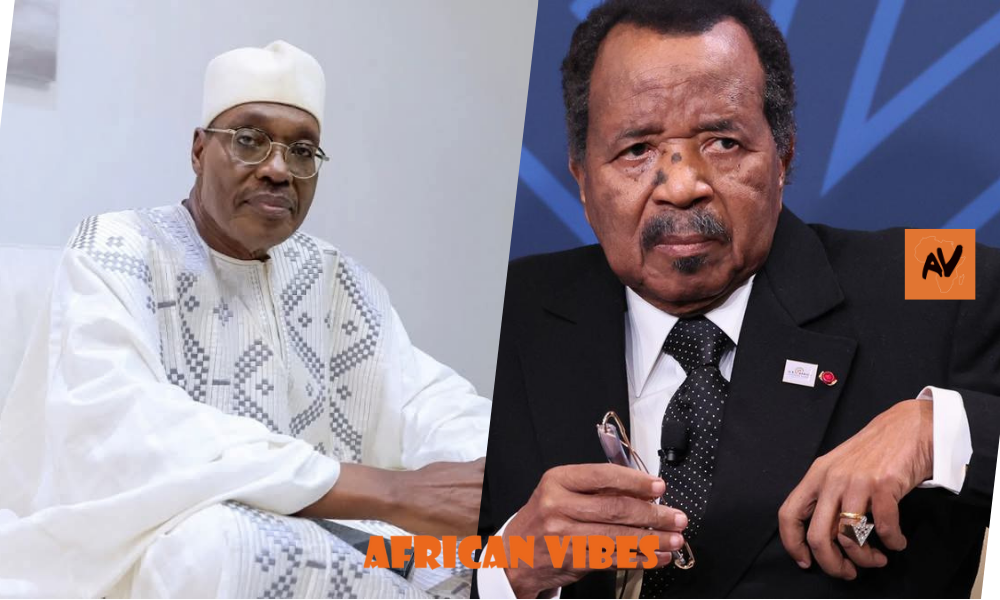
Tchiroma’s Gambit: A Declaration to Shape the Narrative
Once a loyal minister under Biya, Issa Tchiroma Bakary has evolved into a fierce critic. His decision to declare victory ahead of official results was not spontaneous — it was strategic.
In Cameroon, where public trust in institutions like the Electoral Commission (ELECAM) and the Constitutional Council is minimal, such a move carries weight. It reframes the narrative, shifting the battleground from opaque institutions to the public arena.
Political analysts say Tchiroma’s maneuver serves three key purposes:
- Preempting Fraud: By asserting victory early, he forces authorities to justify whatever outcome they announce.
- Energizing Supporters: In Garoua, celebrations erupted almost immediately after his speech — prompting security forces to disperse crowds with tear gas.
- International Optics: The move draws attention from foreign observers and the diaspora, pressuring institutions to maintain at least the appearance of transparency.
Still, history offers cautionary tales. Across Africa, premature victory declarations have often ended in repression, not revolution. Yet Tchiroma’s defiance, in the Cameroonian context, marks a political awakening — a symbolic rupture in a system long seen as immovable.
ALSO READ: Ramaphosa Declares Economic Emergency as South Africa
A Nation Divided by Generations
While the political duel pits two septuagenarians against each other, the true battle may be generational. Over 60 percent of Cameroonians are under 30, and most have never known a leader other than Biya. Their frustrations — unemployment, corruption, lack of opportunity — define a stark generational divide.
This digital-native generation is increasingly impatient with the slow pace of reform. During this election cycle, their discontent burst into the open through an unexpected voice: Brenda Biya, the president’s own daughter.
Her viral video urging Cameroonians not to reelect her father — later deleted — struck a national chord. For many, it symbolized a youth-led rejection of the old order, a moment when even the ruling dynasty showed cracks.
Across platforms like TikTok, X (formerly Twitter), and WhatsApp, young Cameroonians are rewriting the script of political participation. They stream rallies live, expose irregularities, and organize protests in real time. Their activism — supported by a politically engaged diaspora — underscores a new African consciousness: one that values transparency, mobility, and meritocracy over patronage.
“We are not just the future,” one young voter in Douala told AfricanVibes.com. “We are the present — and we’re tired of waiting.”
What Happens Next
As the Constitutional Council prepares to announce official results, few expect surprises.
The ruling Cameroon People’s Democratic Movement (CPDM) still controls the institutions that count — literally and figuratively. Analysts predict Biya will likely be declared the winner, preserving the status quo while deepening the chasm between citizens and the state.
If so, protests are almost inevitable. The youth-driven discontent, combined with mounting pressure from the diaspora and international observers, could mark the beginning of a sustained civic awakening. Whether it evolves into reform or repression will depend largely on the government’s response.
There are three possible trajectories:
- The System Endures: Biya is declared winner, asserting short-term stability while entrenching long-term uncertainty.
- Negotiated Pressure: Widespread unrest forces regional or international mediation — a rare but not impossible outcome.
- A New Consciousness: Regardless of the results, a cultural shift has already begun. The taboo of publicly challenging Biya has been shattered.
The Irreversible Pulse of Change
Whatever the Constitutional Council decides, Cameroon has already crossed a political Rubicon.
Tchiroma’s declaration of victory may not be legally binding, but it has ignited something far more enduring: a public belief that change is possible.
This awakening transcends political personalities. It is a generational demand for renewal, a collective insistence that leadership in Africa must evolve — not merely persist.
For Cameroon, and for much of the continent watching closely, this moment encapsulates the tension between stability and democracy. After four decades of one-man rule, the people’s voice has become louder, bolder, and digital. And though the road to reform may be long, its direction is now unmistakably clear.
The democratic pulse of Cameroon is beating again — and this time, it refuses to be silenced.