


Ethiopia has never been afraid of grand visions. From the towering Grand Ethiopian Renaissance Dam (GERD) to its new industrial corridors, the Horn of Africa nation has built a reputation for ambitious infrastructure projects that reshape its future.
Now, Addis Ababa is venturing into even more powerful territory: nuclear energy.
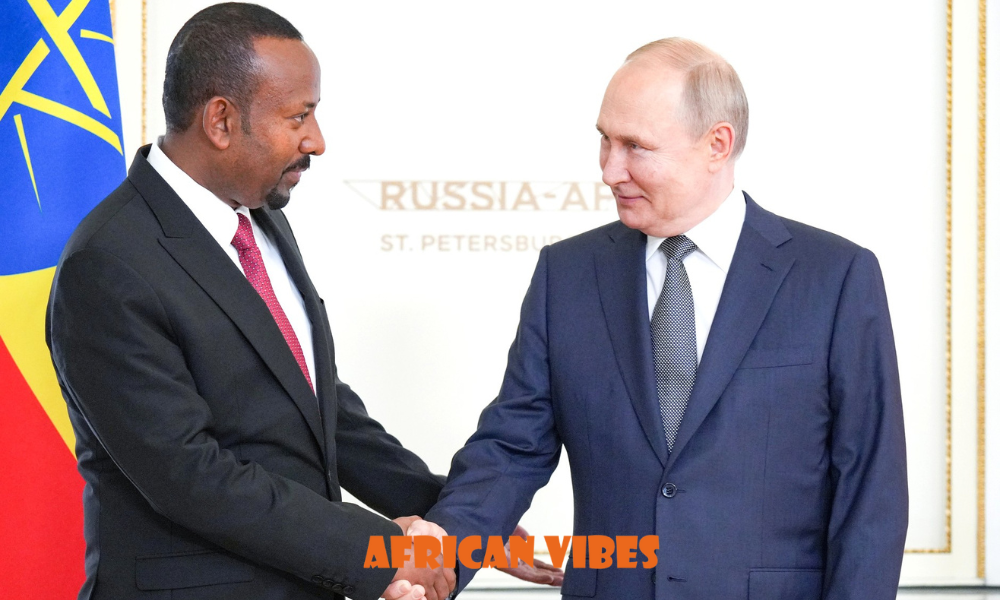
In late September, during World Atomic Week in Moscow, Ethiopia’s state utility, Ethiopian Electric Power (EEP), signed a landmark agreement with Russia’s Rosatom—one of the world’s leading nuclear corporations.
The deal, known as an Action Plan, lays the groundwork for Ethiopia’s first nuclear power plant. It includes feasibility studies, a detailed construction roadmap, and a comprehensive training program for Ethiopian scientists and engineers.
To its architects, this isn’t just about generating electricity. It’s about energy sovereignty—a decisive step to protect the nation’s growth from the shocks of climate change and erratic rainfall.
“Hydropower has carried us far,” says EEP CEO Ashebir Balcha. “But we must now secure our energy destiny.”
Why Ethiopia is Turning to Nuclear
Hydropower has long been Ethiopia’s energy backbone, supplying nearly 96.5% of its electricity. The GERD, the pride of the nation, stands as one of Africa’s most powerful hydroelectric projects.
But dependence on rivers comes with risks. Droughts across the Horn of Africa have slashed water levels, forcing electricity rationing and slowing industries. The economic toll is heavy—and increasingly unsustainable.
By adding nuclear energy, Ethiopia hopes to secure baseload power—steady, around-the-clock electricity generation that doesn’t depend on weather patterns. That reliability could transform its manufacturing and tech sectors, laying the foundation for long-term industrialization.
“We are investing not just in power, but in permanence,” Prime Minister Abiy Ahmed told Parliament earlier this year.
It’s a move that signals Ethiopia’s determination to control its energy destiny—one megawatt at a time.
Inside the Deal: Powering People as Much as Plants
The 2025 Action Plan marks the most concrete step yet in a partnership that began in 2017 with a framework memorandum and advanced through a 2019 roadmap.
The agreement goes beyond reactors. It focuses on capacity building—training Ethiopians to design, operate, and regulate their own nuclear facilities.
Rosatom will support a national Nuclear Science and Technology Centre, a hub for education and research in nuclear energy, medicine, and agriculture. Ethiopian engineers will undergo intensive training both locally and in Russia.
“Energy independence is only meaningful if it’s matched by human independence,” says an energy analyst in Addis Ababa.
The initiative is expected to create a new generation of Ethiopian nuclear professionals—scientists, regulators, and technicians capable of sustaining the industry domestically.
For a young country where tech startups and data-driven businesses are booming, reliable electricity could unlock new horizons—from cloud computing to AI-driven agriculture. Nuclear power, experts say, could be the spark that powers the next wave of African innovation.
ALSO READ: Niger Takes Full Control of Its Gold Mine from Australian Operator
Africa’s Quiet Nuclear Awakening
Ethiopia’s move places it among a growing group of African nations rethinking their energy future. South Africa remains the continent’s only operational nuclear power producer, but others—Egypt, Kenya, Ghana, and Niger—are fast-tracking similar programs.
The motivation is clear: as populations rise and industrial demand grows, renewable sources alone can’t always keep pace. Nuclear energy offers a low-carbon, high-capacity alternative that complements solar, hydro, and wind.
For Russia, it’s also a diplomatic opportunity. Through Rosatom, Moscow has become a key player in Africa’s infrastructure renaissance, offering turnkey reactor projects with state-backed financing and technology transfer.
Critics call it “nuclear diplomacy.” Ethiopia, however, frames it differently—as strategic diversification.
“This is not about East versus West,” says an official at the Ministry of Innovation and Technology. “It’s about choosing partners who respect our timelines and ambitions.”
Promise and Peril
The potential payoff is enormous. A single nuclear reactor could generate up to 1,200 megawatts of clean energy—enough to power millions of homes, factories, and data centers.
Stable electricity would strengthen manufacturing, attract foreign investment, and reduce reliance on costly diesel generators. It could even position Ethiopia as a regional energy exporter, sharing surplus power through the East African Power Pool.
But nuclear energy also comes with immense responsibility. The price tag for a single plant can exceed $10 billion, and construction takes a decade or more. Ethiopia must also establish a strong regulatory authority, ensure waste management, and maintain public trust.
Safety is paramount. Cooperation with the International Atomic Energy Agency (IAEA) will be essential to build a credible governance framework and meet global standards.
Public perception remains another hurdle. In Africa, nuclear energy still carries stigma, often shaped by fears of radiation and historic accidents. Transparency and community engagement will determine how smoothly Ethiopia’s nuclear vision takes root.
ALSO READ: Ramaphosa Declares Economic Emergency as South Africa Faces Major Pressure
The Long Game: Energy as Diplomacy
Beyond domestic supply, Ethiopia’s nuclear ambition also carries geopolitical weight.
With reliable power, the nation could become a regional stabilizer—exporting energy rather than competing for water resources. Such a shift would redefine its relationships with neighbors and enhance its influence within the East African Community.
It’s a vision that aligns with Prime Minister Abiy’s broader push to transform Ethiopia into an East African power hub—a nation that fuels growth both at home and across borders.
A Symbol of Confidence
In the global imagination, nuclear power has long stood for progress and mastery. For Ethiopia—a country rooted in ancient civilization but racing toward a digital future—the symbolism is striking.
This is not the Ethiopia of a generation ago. It is a nation determined to lead, to innovate, and to write its own energy story.
“We are not merely consuming energy,” an Ethiopian government spokesperson said after the signing. “We are mastering it.”
If successful, Ethiopia’s nuclear journey could become a model for Africa’s broader energy transition—a testament to how nations can blend bold vision with practical innovation to secure their future.
For now, the reactors exist only on paper. But in the quiet laboratories and training halls soon to rise across Addis Ababa, the pulse of a new energy era is already beginning to hum.