



A decisive recalibration is underway in the Sahel—one that signals not protest, but policy. For decades, global mobility has operated on an uneven axis: African travelers face exhaustive scrutiny, escalating fees, and arbitrary exclusions, while Western passport holders move across African borders with relative ease. As 2026 approaches, that imbalance is being challenged head-on.
Niger’s decision to suspend entry for U.S. citizens and Mali’s introduction of a $10,000 refundable entry bond are not isolated acts of defiance. They are expressions of statecraft rooted in reciprocity, dignity, and sovereignty. Together, they mark a turning point in Africa’s engagement with global migration regimes—one where African nations no longer absorb exclusion silently, but respond with equal measure.
At AfricanVibes.com, we view these developments not as diplomatic breakdowns, but as the emergence of a more assertive African foreign policy—one that insists on mutual respect rather than inherited hierarchy.
The Origins of the Reciprocity Doctrine
The Sahel’s current posture is best understood against the backdrop of long-standing “visa inequality.” African states have consistently promoted openness through initiatives such as the Year of Return, visa-on-arrival programs, and regional free-movement protocols. Yet these gestures have rarely been matched by Western governments.
In mid-2025, the United States issued Proclamation 10949, citing security vetting deficiencies as justification for stricter visa controls. By December 2025, this framework expanded into Proclamation 10998, imposing full or partial visa suspensions on 39 countries—disproportionately affecting African nations.
For leaders in Niamey, Bamako, and Ouagadougou, the implication was unmistakable: African sovereignty was being judged through a unilateral lens, with little room for dialogue or parity. The response, therefore, was not emotional—it was structural.
From Policy Imitation to Policy Assertion
Niger: Reciprocity as Principle
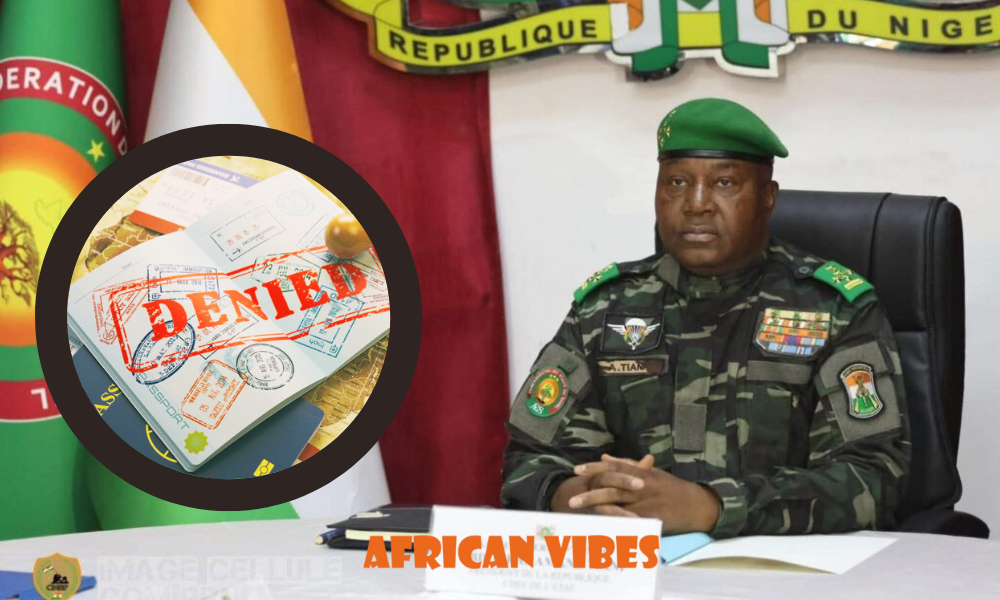
Following its placement on the U.S. “Full Ban” list in December 2025, Niger announced an indefinite suspension of visas for U.S. nationals. Officials framed the move as proportional and lawful, grounded in the principle that diplomatic relations must operate on equal terms.
This was not a severing of ties, but a recalibration. By mirroring Washington’s restrictions, Niamey sent a clear message: access to Niger is not automatic, and respect is reciprocal.
ALSO READ: China Backs Nigeria Against US Military Threat — Ally or Calculated Interest?
Mali: Economic Parity Through Policy
Earlier, in October 2025, Mali introduced a $10,000 refundable entry bond for U.S. tourists and business travelers—an intentional parallel to the U.S. Visa Bond Pilot Program. The policy underscores a simple but powerful assertion: if Malian citizens must post financial guarantees to prove intent and credibility, then American visitors can do the same.
Rather than rejecting engagement, Mali reframed it—placing Malian travelers and American travelers on equal footing within the global mobility system.
The AES Alliance and a Regional Reawakening
These actions gain greater significance within the framework of the Alliance of Sahel States (AES)—comprising Niger, Mali, and Burkina Faso. While Burkina Faso has not enacted identical restrictions, its diplomatic alignment and security coordination reflect a unified regional philosophy.
The AES is steadily crafting what can be described as a Sahelian doctrine of engagement: cooperation without subordination, partnership without presumption. In doing so, it challenges residual colonial power dynamics that continue to shape international travel, aid, and security relations.
Beyond Economics: The Psychological Dividend
Critics frequently cite potential losses in tourism, investment, or diplomatic goodwill. Yet such assessments often overlook a less tangible—but equally consequential—outcome: psychological sovereignty.
When an African nation asserts itself against a global superpower, it reshapes how its citizens—and the diaspora—understand their place in the world. These policies disrupt the narrative of Africa as a passive rule-taker and reposition the Sahel as an active architect of its global relationships.
This assertiveness is already resonating beyond the region. Across the continent, governments and civil society actors are calling for more coordinated African Union responses to visa discrimination. The Sahel’s stance is not isolationist; it is catalytic.
ALSO READ: DRC and Rwanda Sign Landmark Accord, Offering a Fragile Path to Regional Stability
Conclusion: Toward a More Balanced Global Order
As 2026 unfolds, the Sahel’s message is unequivocal: Africa remains open—to trade, diplomacy, tourism, and partnership—but only on the basis of equality. Security concerns cannot continue to function as a one-sided justification for exclusion.
Niger and Mali have demonstrated that sovereignty is not rhetorical—it is exercised through policy choices, even when those choices are uncomfortable. In asserting their value today, they are laying the groundwork for a future in which African passports, people, and nations are treated with the respect they deserve.