


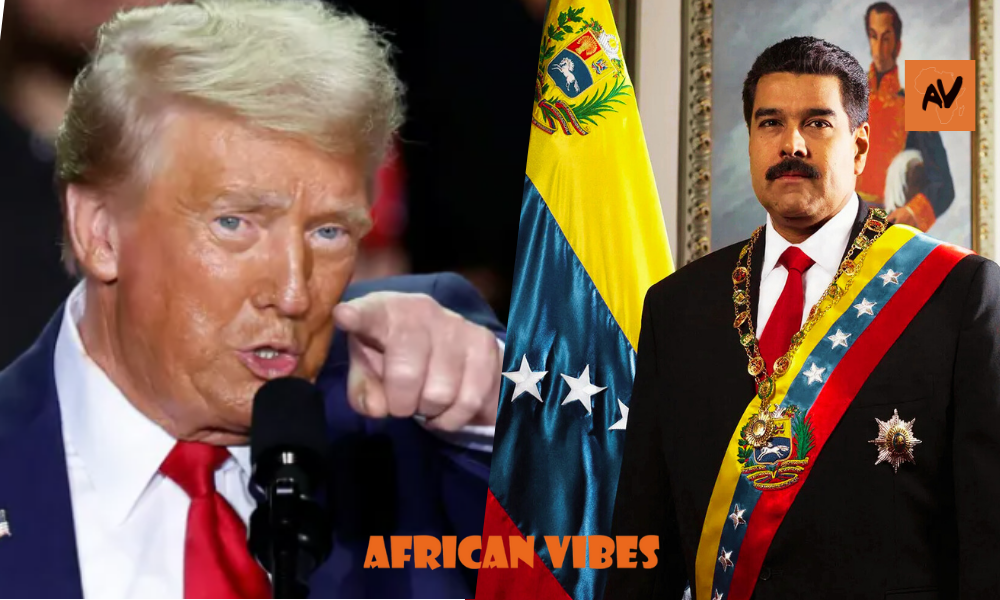
When former U.S. President Donald Trump framed his latest confrontation with Venezuela as a matter of “national security,” the response in much of Africa was neither surprise nor confusion. It was recognition.
Across the continent, analysts, academics, and ordinary citizens saw echoes of past foreign interventions justified by democracy, stability, and security, only to leave lasting damage in their wake.
From Venezuela’s vast oil reserves to Washington’s revival of Monroe Doctrine–era thinking, many Africans interpreted Trump’s move not as an isolated crisis in Latin America, but as part of a recurring global pattern that has long shaped the fate of resource-rich nations in the Global South.
A Script Africa Knows Well
For decades, Africans have watched foreign interventions unfold under remarkably similar narratives. From Iraq to Libya to Haiti, the promise has often been the same — restoring democracy, stabilizing a failed state, protecting civilians. The outcomes, however, have frequently been fragmentation, prolonged instability, and weakened sovereignty.
This pattern has shaped how Trump’s Venezuela rhetoric is interpreted across the continent.
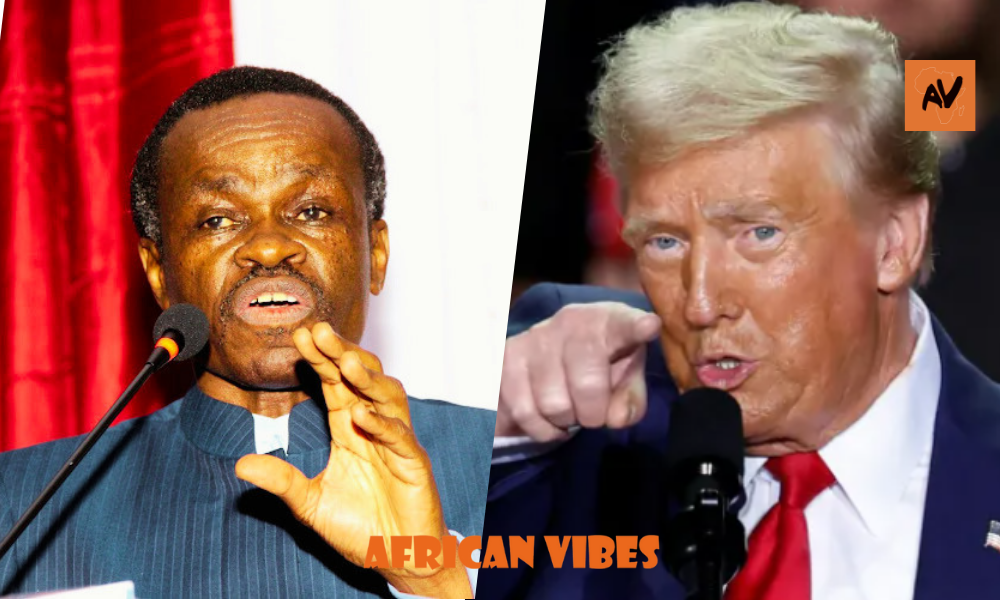
Kenyan lawyer and pan-African thinker PLO Lumumba, whose commentary circulated widely after Trump’s remarks, framed the moment as part of a broader tradition in which democracy becomes a justification rather than a destination. “Democracy,” he has argued, “has too often been weaponized — not delivered.”
In Africa, that argument resonates because it is experiential. Libya, once one of the continent’s most prosperous states by social indicators, remains fractured more than a decade after NATO’s intervention. Elections did not follow bombs. Stability did not follow regime change.
So when Washington speaks of restoring order, African audiences listen carefully — and skeptically.
The Resource Question, Unspoken but Understood
Venezuela holds the world’s largest proven oil reserves. That fact alone shaped African reactions.
From Nigeria’s oil-rich Niger Delta to the Democratic Republic of Congo’s vast mineral wealth, the continent has learned to trace a recurring pattern: foreign attention often intensifies in places where resources are abundant and governance is contested.
Trump did not emphasize oil in his public framing. He did not need to. For many African observers, the connection was implicit.
As Lumumba and others have long argued, global concern rarely concentrates on states with little to extract. Resource-rich nations, by contrast, often find their internal crises internationalized — their sovereignty debated, their leadership delegitimized, their futures negotiated elsewhere.
ALSO READ: Trump Administration to Reassess Green Cards from These African Nations
The Monroe Doctrine, Reheard Through Colonial Ears
Trump’s revival of rhetoric tied to the Monroe Doctrine — the 19th-century policy asserting U.S. dominance over the Western Hemisphere — landed heavily outside the Americas.
In Africa, it echoed a different historical reference point: the Berlin Conference of 1884–85, when European powers carved the continent into spheres of influence with little regard for existing societies or consent.
The underlying logic felt uncomfortably similar. This region is ours. External involvement is justified. Local autonomy is conditional.
For postcolonial states, such language is never neutral. It recalls a world order in which power, not principle, determines legitimacy.
Sovereignty and the Arrest of a President
The reported capture of Venezuelan President Nicolás Maduro — regardless of how one views his leadership — triggered a broader anxiety across the Global South.
If a powerful state can detain or remove a sitting head of state under the banner of international security, what protections remain for sovereignty?
Africa’s modern history offers many examples of leaders deposed with external backing, often in the name of stability. The precedent matters not because Maduro is admired, but because the rules governing international conduct appear increasingly flexible — and selectively applied.
ALSO READ: Elon Musk and the Battle Over H-1B Visas in the Global Talent Economy
Silence, and What It Signals
Equally striking to African observers was the muted response from many Western governments and institutions.
Where were the urgent debates at the United Nations? Where was the robust invocation of international law? Why did norms seem optional rather than binding?
This perceived silence reinforced a long-standing grievance: that the so-called “rules-based international order” is enforced unevenly, with powerful states exempt from the constraints imposed on others.
For countries that have lived under sanctions, conditional aid, and external monitoring, the contrast was stark.
BRICS and the Cost of Choosing Differently
Venezuela’s growing alignment with China and Russia added another layer to African interpretations.
Across the continent, governments are navigating an increasingly multipolar world — engaging with BRICS partners while maintaining ties with Western powers. Trump’s posture toward Venezuela was therefore read as a cautionary tale: alignment choices carry consequences.
The concern was not abstract. African states have already faced diplomatic pressure, aid withdrawals, and media scrutiny for deepening ties outside traditional Western alliances.
Why Lumumba’s Voice Traveled So Far
PLO Lumumba’s analysis resonated across African timelines not because it was incendiary, but because it was clarifying.
He articulated a worldview many Africans already hold: that global politics is often less about values than about interests; that sovereignty remains fragile; and that narratives of democracy can obscure asymmetries of power.
His message spread because it named a reality that official discourse often avoids.
Pattern Recognition, Not Paranoia
African social media users compared Venezuela to Libya, Trump to earlier imperial actors, and “intervention” to “occupation.” These were not casual memes. They were acts of historical interpretation.
For many Africans, this was not about Latin America. It was about recognizing a recurring structure in global affairs — one that continues to shape which nations are protected, which are pressured, and which are punished for asserting independence.
Beyond Venezuela
Ultimately, Africa’s reaction to Trump’s Venezuela move reveals less about Caracas than about the global order itself.
It reflects a growing skepticism toward moralized foreign policy, a demand for consistency in international law, and a shared Global South awareness that sovereignty remains contested terrain.
What happens in Venezuela, many Africans believe, will influence how power is exercised elsewhere — including on their own continent.
In that sense, the reaction was not ideological. It was precautionary.
History, after all, has taught Africa to pay attention when familiar songs begin to play — even when they are performed far from home.