


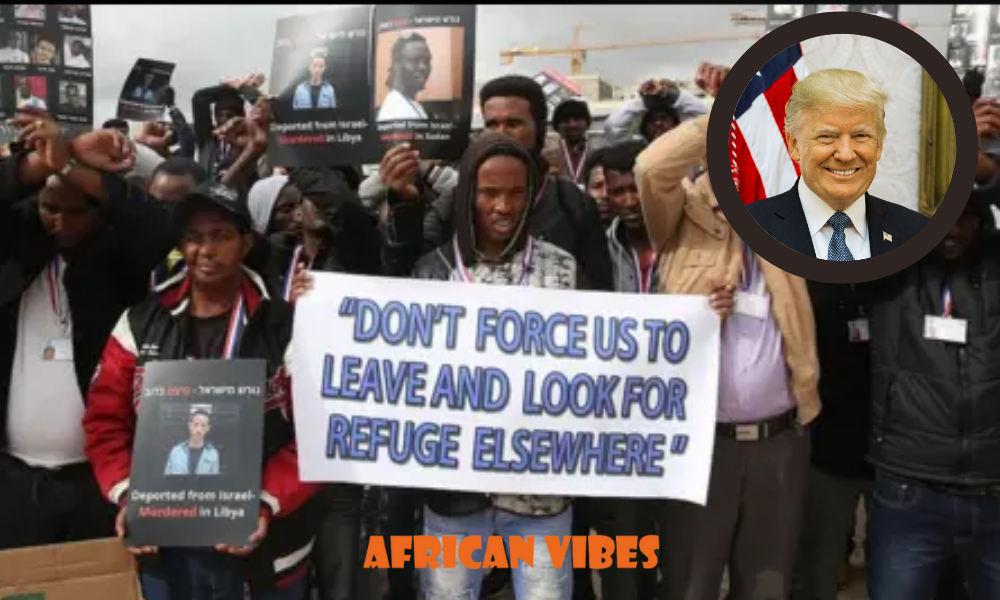
On January 14, 2026, a deportation flight quietly departed from Louisiana carrying nine migrants — none of whom were Cameroonian — and landed in Yaoundé, Cameroon.
The operation was conducted with little public disclosure. The migrants were reportedly handcuffed, blindfolded, and transferred despite existing US court protections preventing their removal to their home countries.
The move signals a major shift in US immigration enforcement: the expansion of a “third-country deportation strategy” that could reshape Africa’s role in global migration politics.
Why Cameroon? Why now? And what does this mean for African sovereignty, migrant safety, and US-Africa relations?
This article breaks down the event, its legal and geopolitical context, and the broader implications from an Afrocentric perspective.
ALSO READ: Why the U.S. Is Quietly Re-Entering the Sahel Through Mali
What Happened on January 14?
According to reports, nine migrants were deported from the United States to Cameroon under highly secretive conditions:
- None of the deportees were Cameroonian nationals.
- The individuals were reportedly restrained and blindfolded during transport.
- Some were under US court protections preventing deportation to their countries of origin.
- Upon arrival in Yaoundé, they were detained.
- There has been no publicly announced bilateral agreement between the US and Cameroon authorizing such transfers.
This marks the first known instance of the US using Cameroon as a third-country destination for deported migrants.
The secrecy surrounding the operation — combined with the lack of formal diplomatic transparency — has triggered concerns among immigration lawyers and former US immigration officials.
Understanding the Third-Country Deportation Strategy
The deportation is part of a broader strategy revived under the Trump administration’s second term.
Rather than returning migrants to their home countries — particularly where courts block removal due to risk of persecution — the US has increasingly sought agreements with third countries willing to accept deportees.
Under similar arrangements globally:
- The US has reportedly spent over $40 million negotiating and operationalizing deportation partnerships.
- These agreements often involve financial incentives, security cooperation, or diplomatic leverage.
- Host countries are not the migrants’ countries of origin and may have no legal or cultural ties to them.
This strategy allows US authorities to bypass home-country refusals and certain judicial barriers.
In previous years, US deportations involved returning Cameroonian asylum seekers back to Cameroon — a move widely criticized due to Cameroon’s internal conflict. But this latest development flips the script: Cameroon is now being used as a receiving country for migrants from elsewhere.

Risks for Migrants Sent to Cameroon
For the nine deportees, the implications are severe.
Third-country deportations create unique vulnerabilities:
- Migrants may face detention in unfamiliar environments.
- They may lack family, community, or legal support.
- They may be exposed to abuse, trafficking, or renewed persecution.
- They often have no pathway to permanent status in the receiving country.
Human rights advocates argue that such removals undermine due process protections and international asylum frameworks.
Importantly, reports suggest that none of the deported migrants had committed violent crimes — contradicting narratives that third-country removals are reserved for high-risk offenders.
Without a transparent agreement outlining their legal status in Cameroon, questions remain:
Are they temporary detainees? Permanent transferees? Stateless individuals?
So far, Cameroon’s government has remained publicly silent.
ALSO READ: Trump’s NATO Warning and the Global Shift Africa Cannot Ignore
Cameroon’s Role — Sovereignty or Leverage?
Cameroon’s acceptance of deported migrants raises critical geopolitical questions.
Why would an African nation accept third-country deportees from the US?
Potential factors include:
- Economic incentives or aid packages.
- Security cooperation agreements.
- Diplomatic leverage in trade negotiations.
- Broader alignment with US foreign policy priorities.
But the decision also risks:
- Domestic backlash.
- Human rights scrutiny.
- Becoming a precedent for further deportation transfers.
For African nations already grappling with youth unemployment, displacement crises, and internal migration pressures, becoming a destination for external deportees may strain fragile systems.
From an Afrocentric lens, the issue raises deeper concerns about sovereignty and global power asymmetries.
Is Africa being positioned as a buffer zone for Western migration control?
Legal and Human Rights Criticism
Immigration lawyers and former US officials have raised alarms, arguing that the Cameroon deportation may represent:
- Circumvention of court orders.
- Erosion of asylum protections.
- A dangerous precedent for offshoring deportations.
Human rights organizations warn that third-country transfers can violate international refugee law if migrants are sent to countries where they face indirect harm or lack durable legal status.
African media outlets, including Nation.Africa and diaspora-focused platforms, have amplified these concerns, framing the move within a broader pattern of shifting migration burdens onto developing nations.
On social media, critics argue that the strategy disproportionately affects Black and Global South migrants — reinforcing systemic inequalities within the global migration regime.
The Bigger Picture: US-Africa Relations Under Trump 2.0
This deportation comes amid a broader recalibration of US-Africa relations.
Under the current administration, migration has increasingly become a diplomatic bargaining chip — linked to:
- Trade negotiations
- Security partnerships
- Visa policy
- Development aid
Similar third-country discussions have reportedly been explored with other nations outside Africa.
If Cameroon becomes a model, other African states may face pressure to enter similar arrangements.
The risk? Migration control could become embedded within economic dependency frameworks — where financial incentives override long-term human rights considerations.
For Africa, this represents more than an immigration issue. It is a question of geopolitical positioning.
ALSO READ: Why Trump’s Venezuela Move Struck a Nerve Across Africa
What This Means for Africa
The January 14 deportation flight may involve just nine individuals — but its implications are much larger.
It signals:
- Expansion of US third-country deportations.
- Africa’s emerging role in global migration enforcement.
- Growing tension between sovereignty and economic leverage.
- Heightened vulnerability for displaced African and Global South migrants.
If left unexamined, this could normalize a system where African nations absorb the consequences of Western immigration policies.
Conclusion
The secret deportation of nine migrants to Cameroon is more than an isolated enforcement action. It marks a turning point in how the United States manages migration — and how African countries may be drawn into that system.
As migration politics intensify globally, Africa’s role in third-country deportation deals deserves scrutiny.
Will more African nations follow?
What protections exist for deported migrants?
And how should African governments respond?
The answers will shape not just migration policy — but the future of US-Africa relations.