


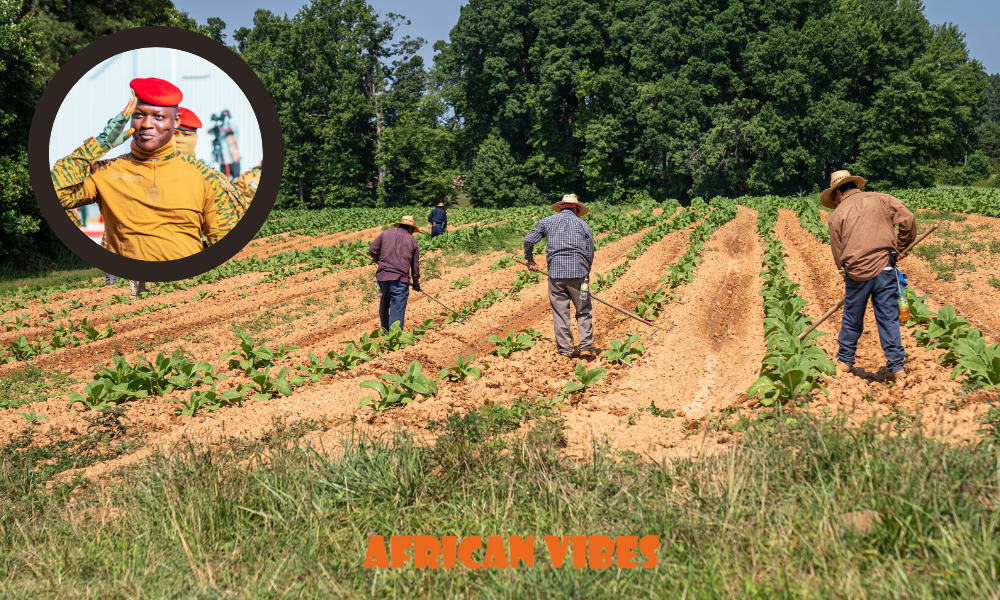
Burkina Faso, under the dynamic leadership of Captain Ibrahim Traoré, is embarking on an audacious journey of prison reform, a bold initiative that seeks to transform correctional facilities from mere holding pens into vibrant centers of rehabilitation and agricultural productivity.
In the heart of West Africa, where justice systems have long grappled with the specter of overcrowding, underfunding, and the grim reality of high recidivism rates, a striking new chapter is being written.
This visionary approach, which allows inmates to earn sentence reductions through farm labor, represents a significant, yet complex, departure from conventional punitive models, aiming for a more rehabilitative and self-reliant African justice system.
The very notion of inmates tilling the land to cultivate their future, rather than simply languishing in cells, is a powerful symbol of the new era Traoré envisions for Burkina Faso. It’s a testament to a growing continental desire for African solutions to African problems, an optimistic yet factual stride towards redefining justice in a manner that truly serves the nation and its people.
A System in Crisis: The Legacy of Overburdened Prisons
For decades, Burkina Faso’s correctional facilities have epitomized the struggles faced by many nations across Africa. Prior to the current reforms, the prison system was characterized by severe overcrowding, dilapidated infrastructure, and a conspicuous lack of resources for meaningful rehabilitation programs.
Inmates often found themselves in environments that did little to prepare them for reintegration into society, perpetuating a disheartening cycle of crime and incarceration. Reports, including those from the International Commission of Jurists (ICJ) as far back as 2018, highlighted a judiciary susceptible to executive interference, contributing to a widespread sense of impunity and limited access to fair trials for many citizens.
Beyond the prison walls, deep-seated socio-economic factors fueled this crisis. Widespread poverty, limited educational opportunities, and a scarcity of employment prospects created a fertile ground for criminality.
For many, the criminal justice system became a revolving door, with ex-offenders frequently returning to a life of crime due to a lack of viable alternatives and the pervasive stigma associated with incarceration. The advent of significant security challenges in recent years further exacerbated these issues, pushing an already strained system to its breaking point.
It was against this backdrop of systemic weakness and urgent national need that Captain Traoré’s administration recognized the imperative for radical transformation, moving beyond rhetoric to tangible action.
ALSO READ: Burkina Faso Dissolves Electoral Commission in Bold Political Move
Seeds of Change: The Genesis of Traoré’s Reforms
At the core of Captain Traoré’s sweeping prison reforms lies the innovative agricultural labor program. Under this initiative, inmates who participate in farm work can reduce their sentences by an impressive three months for every month of labor completed.
This isn’t just about reducing sentences; it’s about providing a tangible pathway to skill acquisition and productive engagement. Agricultural fields, once seen as symbols of the nation’s struggle for food security, are now becoming open-air classrooms where inmates learn vital farming techniques, contribute directly to the national economy, and cultivate a sense of purpose.
Early reports indicate that prisoners are involved in growing a variety of crops, from staple grains like wheat to fruits such as bananas and avocados, directly bolstering Burkina Faso’s quest for agricultural self-sufficiency.
Complementing this, the Traoré administration has also undertaken significant efforts to address the chronic issue of prison overcrowding through a series of pardons. Since the beginning of 2025, over 1,000 inmates have been granted pardons, a move that provides immediate relief to overburdened facilities and reflects a commitment to a more humane approach to incarceration.
These pardons are not indiscriminate; they are part of a calculated strategy to identify individuals who can be reintegrated into society, often those who have demonstrated a willingness to embrace change or whose offenses were less severe.
The philosophical underpinning of these reforms, frequently articulated by Captain Traoré himself, is a powerful narrative of “returning to African values.” He posits that traditional African justice systems prioritized rehabilitation and communal responsibility over punitive isolation, focusing on restoring individuals to their rightful place within society.
This resonates strongly with the pan-Africanist ideals popularized by figures like the revered Thomas Sankara, whose legacy of self-reliance and national pride continues to inspire many in Burkina Faso.
Traoré’s vision of Ibrahim Traoré justice is thus not merely about penal reform but about a broader societal reorientation towards self-sufficiency, dignity, and a profound re-engagement with an authentic African identity. This approach seeks to foster not just individual transformation, but collective progress for the Burkinabè nation.
ALSO READ: Eswatini Becomes A Destination for US Convicted Deportees of Serious Crimes
Impact and Analysis: A Dual Perspective
The early impacts of Traoré’s prison reforms present a dual narrative of promising progress and persistent challenges. On the one hand, the tangible benefits are becoming increasingly evident. The pardons have undoubtedly alleviated some of the immediate pressure on prison capacities, leading to slightly improved living conditions for those who remain.
More significantly, the agricultural program is providing inmates with practical, marketable skills. Reports from the ground speak of prisoners gaining hands-on experience in farming techniques, which, for a predominantly agrarian society like Burkina Faso, are invaluable upon release.
This directly addresses one of the primary drivers of recidivism: the lack of economic opportunities for ex-offenders. Furthermore, the produce from these prison farms contributes directly to national food security, aligning with the government’s broader goals of self-reliance and reducing dependence on external aid.
For many inmates, this program represents a genuine ray of hope – a chance to re-skill, contribute meaningfully, and ultimately reclaim their lives with dignity.
However, the reforms are not without their complexities and criticisms, particularly from human rights organizations. While the intent is framed as rehabilitation, concerns have been raised about the potential for the agricultural labor program to border on forced labor, especially given the context of a military-led transitional government.
Human Rights Watch, for instance, in its recent communications concerning the Sahel region, has underscored the importance of upholding human rights even amidst security crises.
Questions persist regarding the voluntariness of participation, the adequacy of remuneration (even if in the form of sentence reduction), and the oversight mechanisms in place to ensure humane working conditions and prevent exploitation.
Without robust, independent monitoring, there is a risk that these well-intentioned reforms could inadvertently lead to abuses.
Furthermore, the long-term sustainability of these programs and the resources allocated for comprehensive reintegration support remain critical points of discussion. While agricultural skills are valuable, a successful return to society requires more: access to capital, land, and robust social support networks.
The broader human rights landscape in Burkina Faso under the current administration, including reports of restrictions on civil liberties and alleged arbitrary detentions in the fight against terrorism, adds a layer of complexity to the narrative of prison reform. It underscores the necessity of these reforms being part of a holistic commitment to the rule of law and human dignity, rather than an isolated initiative.

The Road Ahead: Cultivating a Just Future
As Burkina Faso navigates this ambitious path of prison reform, the road ahead is undoubtedly challenging but holds immense promise. The sustainability and scalability of these initiatives will hinge on consistent political will, adequate financial investment, and the development of robust, transparent oversight mechanisms.
Crucially, the collaboration with civil society organizations, both local and international, will be paramount. These organizations, with their expertise in human rights monitoring and community reintegration, can provide invaluable support in ensuring the reforms are implemented ethically and effectively, protecting the rights of inmates while fostering their rehabilitation.
Burkina Faso’s unique experiment offers profound lessons for the entire continent. It serves as a compelling case study for other African justice systems grappling with similar challenges – a potential model for how nations can reimagine their correctional facilities to serve not just punishment, but genuine transformation and societal benefit.
The focus on vocational training, particularly in agriculture, could inspire similar initiatives tailored to the specific economic needs of different African countries.
In a continent where justice often remains elusive for many, Captain Ibrahim Traoré’s prison reforms represent a powerful attempt to cultivate a more humane and effective future.
While the complexities and human rights concerns demand vigilant attention, the spirit of innovation and self-reliance embedded in these initiatives resonates deeply with African aspirations for sovereignty and progress.
The journey towards a truly rehabilitative and just system in Burkina Faso is ongoing, but the seeds of change have been sown, promising a future where justice is not merely punitive, but truly restorative for both individuals and the nation.