


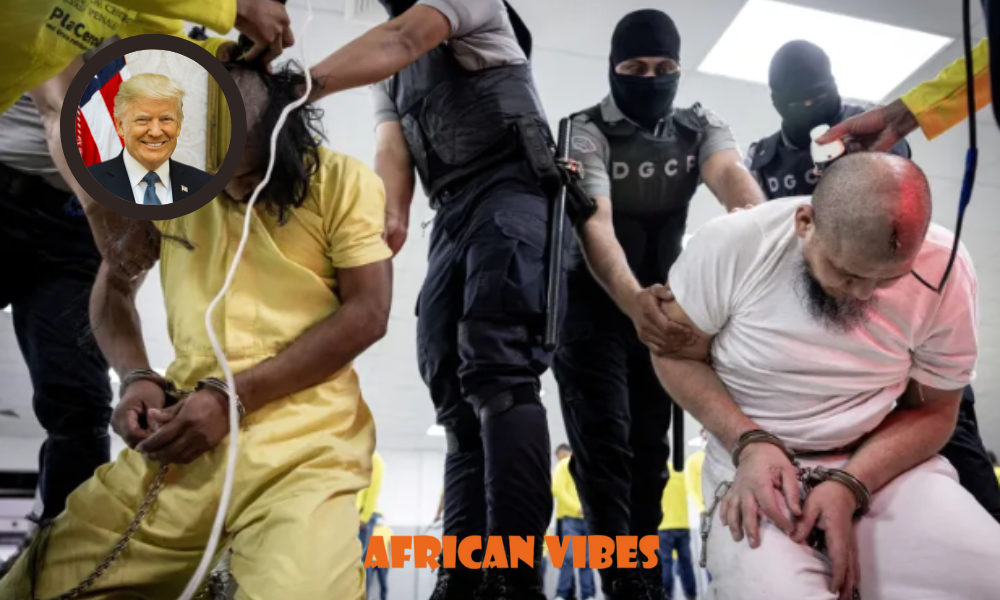
In a move cloaked in secrecy but brimming with geopolitical implications, the Kingdom of Eswatini has accepted five foreign nationals convicted of serious crimes in the United States, including murder and child rape. Deported under the U.S. government’s controversial “third-country” program, these individuals are now being held in solitary confinement in Eswatini—a nation grappling with its own political and human rights concerns.
While Eswatini’s decision is drawing fierce backlash, it contrasts sharply with the stance taken by two of Africa’s largest democracies. Nigeria and South Africa have consistently rejected similar U.S. overtures, making it clear that they will not allow their nations to be used as repositories for foreign convicts. These divergent paths reflect a broader continental tension between political expediency and the assertion of African sovereignty.
ALSO READ: Meloni’s Mattei Plan Aims to Slash African Debt and Redefine EU-Africa Ties
What Is the “Third-Country” Deportation Program?
The U.S. has long faced a diplomatic dilemma: how to deport foreign criminals when their home countries refuse to accept them. In response, the Department of Homeland Security has quietly developed a “third-country” strategy, where deportees are sent to alternate nations willing to take them in. Often, the individuals involved are labeled “too dangerous” to return home.
Eswatini’s acceptance of five such individuals follows a similar transfer to South Sudan, raising alarms among international human rights groups. Critics say the practice skirts due process, violates international norms, and places undue strain on smaller, less-resourced countries.

ALSO READ: Rwanda and DRC Ink Historic Peace Accord, Paving Way for Regional Prosperity
Eswatini: A Kingdom Under the Spotlight
The five individuals—believed to hail from Yemen, Jamaica, Cuba, Vietnam, and Laos—are currently held at the Matsapha Correctional Complex, near Eswatini’s capital Mbabane. Although the government insists they are merely “in transit,” this claim appears to contradict U.S. officials who argue their home nations have refused repatriation.
Civil society groups in Eswatini and beyond have decried the lack of transparency. Some allege that the decision was linked to diplomatic concessions or foreign aid from Washington—an implication that, if true, reflects how powerful nations can exploit weaker states in desperate need of financial support.
Eswatini’s track record on human rights—including reports of police brutality, political repression, and dire prison conditions—further complicates the optics. Rights advocates argue that accepting such deportees not only endangers the men involved but erodes public trust and national dignity.

ALSO READ: South Africa’s Trailblazer Julius Malema banned from entering the UK
Nigeria and South Africa Say “No”
By contrast, both Nigeria and South Africa have stood firm in their rejection of similar U.S. proposals. Nigeria notably turned down a request to accept Venezuelan deportees, citing sovereignty concerns and national interest. South Africa, though facing its own challenges related to migration and xenophobia, has not participated in the program either.
These decisions reflect a broader trend of assertiveness among Africa’s geopolitical heavyweights. Rather than succumbing to U.S. pressure, these nations are increasingly demanding equitable, respectful partnerships—not transactional arrangements that place the burden of American policy failures on African soil.
Their firm resistance sends a clear message: Africa is no longer content to play second fiddle in global affairs. It will not be a convenient solution to Western dilemmas.

ALSO READ: African countries offering visa-free entry to all African nationals as of 2025
What’s at Stake for the Continent?
The Eswatini case underscores a dangerous precedent—one where wealthier nations might view smaller African states as vessels for offloading difficult political problems. But it also reveals a new fault line in African diplomacy: between nations willing to trade sovereignty for short-term gain and those ready to define their own path, regardless of external pressures.
For Africa, the stakes are high. If more countries follow Eswatini’s lead, the continent risks being viewed not as a rising global force, but as a fallback zone for decisions made in Washington, Brussels, or Beijing.
On the other hand, the principled stance of Nigeria and South Africa offers a blueprint for a more empowered African future—one rooted in mutual respect, legal integrity, and strategic autonomy.
ALSO READ: Namibia and Botswana Partner to Build Joint Oil Refinery, Target Fuel Independence
Conclusion: The Future of African Sovereignty
Eswatini’s quiet acceptance of U.S. deportees has ignited a debate that reaches far beyond its borders. At its heart is a crucial question: Will African nations continue to be shaped by the agendas of more powerful states, or will they assert control over their destinies?
The contrasting actions of Eswatini, Nigeria, and South Africa illustrate a pivotal moment in Africa’s international engagement. As the continent continues to rise, decisions like these will define how the world perceives African leadership, resilience, and unity.
For Eswatini, the fallout may just be beginning. For the rest of the continent, the lesson is clear: sovereignty is not just a right—it’s a responsibility.