


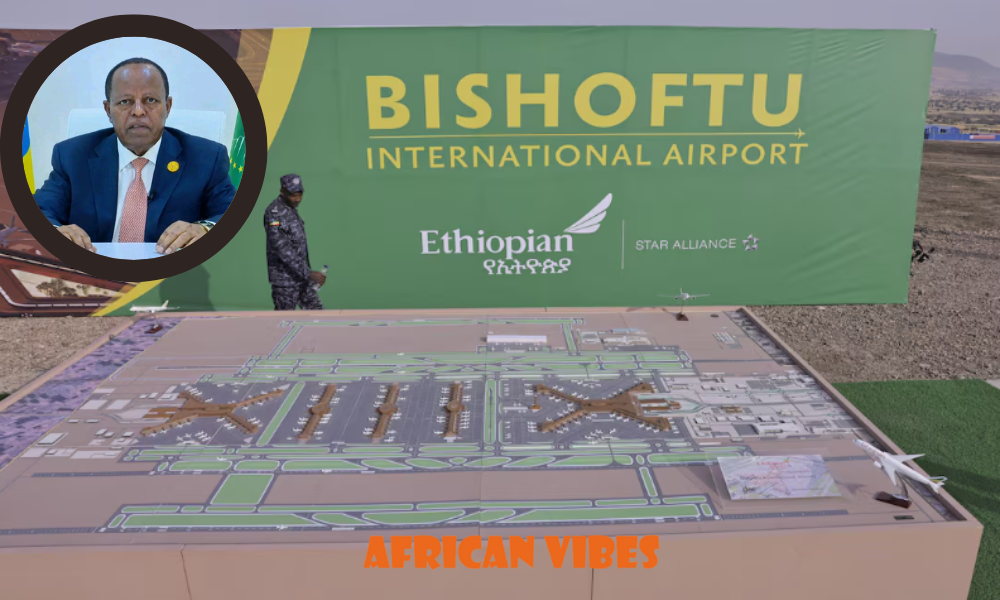
On a sun-drenched Saturday in Bishoftu, the air was thick not with the usual dust of the East African highlands, but with the palpable energy of a continent in motion. On January 10, 2026, Prime Minister Abiy Ahmed and Ethiopian Airlines Group CEO Mesfin Tasew laid the foundation stone for what is officially the most ambitious infrastructure project in the history of African aviation: the Bishoftu International Airport.
With a staggering price tag of $12.5 billion, this is more than a construction project; it is a declaration of intent. It is Ethiopia’s signature on the future of global trade, a $12.5 billion bet that the “New Africa” will be the crossroads of the world.
The Lion’s New Roar: Why Now?
For decades, Ethiopian Airlines has been the undisputed “Lion of the Skies.” While many national carriers across the continent struggled with mismanagement, Ethiopia’s flag carrier thrived, turning a profit even through the darkest days of the global pandemic. In 2025 alone, the airline reported record-breaking revenues of $7.6 billion, a testament to a corporate culture rooted in safety, resilience, and Pan-African service.
However, success brings its own challenges. The current hub, Addis Ababa Bole International Airport, despite recent multi-million dollar expansions, is nearing its capacity of 25 million passengers. At peak hours, the terminal hums with a dizzying array of languages—Amharic, Swahili, Mandarin, English, and French—as travelers from across the globe wait for their connecting flights. To keep pace with the airline’s “Vision 2040” strategy, Ethiopia knew it needed a “Mega-Hub” that could match the scale of its ambitions.
ALSO READ: 10 African Construction Projects That Will Transform Cities by 2030
The Bishoftu Blueprint: A City Within a Terminal
Located just 40 kilometers southeast of the capital in Abusera, the new airport is designed to be a marvel of modern engineering and cultural storytelling. The design, spearheaded by a consortium including the world-renowned Zaha Hadid Architects, aims to handle a staggering 110 million passengers annually upon full completion.
To put that in perspective, this would place Ethiopia in the same league as global giants like Dubai International and Hartsfield-Jackson Atlanta.
- Four Parallel Runways: Ensuring that delays are a thing of the past and allowing for the simultaneous take-off and landing of the world’s largest wide-body aircraft.
- The Aerotropolis: This isn’t just a place to catch a plane. The project includes a comprehensive “Airport City” featuring luxury hotels, world-class shopping malls, and dedicated cargo zones capable of moving 3.73 million tons of freight.
- Sustainable Soul: In line with modern environmental standards, the terminal design emphasizes natural light, modular steel arches that eliminate the need for interior columns, and integrated solar arrays to power operations.

Connecting the “Single African Sky”
The true brilliance of the Bishoftu project lies in its alignment with the African Union’s Agenda 2063. For too long, traveling between African capitals required a detour through Europe. The Bishoftu International Airport acts as the physical manifestation of the Single African Air Transport Market (SAATM) and the African Continental Free Trade Area (AfCFTA).
“Bishoftu is the gateway that will finally make intra-African trade a seamless reality,” notes aviation analyst Sean Mendis. By lowering the altitude of the primary hub (Bishoftu sits about 400 meters lower than Addis Ababa), aircraft can take off with more fuel and cargo, enabling more direct long-haul flights to the Americas and East Asia.
A Compromise of Progress: The Human Element
True to the African ethos, we must acknowledge that such monumental progress often requires difficult sacrifices. The construction site spans roughly 35 square kilometers of land that was once home to local farming communities.
In a move that sets a new standard for African infrastructure projects, Ethiopian Airlines has allocated $350 million specifically for livelihood restoration and the resettlement of affected families. Prime Minister Abiy Ahmed emphasized during the ceremony that the project’s success would be measured not just in concrete and steel, but in the opportunities it creates for the youth of Bishoftu and the dignity provided to those who made way for this national dream.
The Financial Foundation: A Global Partnership
The financing of a $12.5 billion project is a masterclass in modern African diplomacy. While Ethiopian Airlines is providing 30% of the equity from its own robust profits, the African Development Bank (AfDB) has stepped in as the lead arranger, pledging $500 million and coordinating nearly $8.7 billion in debt from a diverse pool of international lenders. From the United States to China, and from Europe to the Middle East, the world is eager to buy into the Ethiopian success story.
ALSO READ: China Backs Nigeria Against US Military Threat — Ally or Calculated Interest?
Conclusion: A Continent Taking Flight
As the first earthmovers begin their work in the red soil of Bishoftu, the message to the world is clear: Africa is no longer just a destination; it is the hub. The Bishoftu International Airport represents the resilience of the Ethiopian spirit and the collective hope of a continent determined to define its own destiny.
By 2030, when the first 60 million passengers pass through these gates, they won’t just be seeing an airport. They will be witnessing the heart of a rejuvenated, integrated, and soaring Africa.