


For over a century, the name De Beers has been a global symbol of luxury, its entire foundation built on the diamond-rich earth of Southern Africa. Yet, its story has long been a paradox: African mineral wealth, foreign control. Now, that historical imbalance is set for a monumental correction.
In a powerful demonstration of African Economic Sovereignty, two of the continent’s diamond powerhouses, Botswana and Angola, are locked in a strategic, high-stakes competition to acquire a majority stake in De Beers. This bold move is far more than a commercial transaction; it is a profound reclamation—a definitive push to own the narrative, the value chain, and the ultimate destiny of Africa’s most iconic commodity.
The fact that the most credible, active bidders for the controlling 85% stake (valued by Anglo American at $4.9 billion) are two African nations marks a seismic shift. This Botswana Angola Diamond Race is the new face of Pan-African Resource Governance.
The Contenders: Botswana vs. Angola
The contest is between two nations with distinct, yet equally potent, claims to the diamond throne.
Botswana: The Strategic Insider
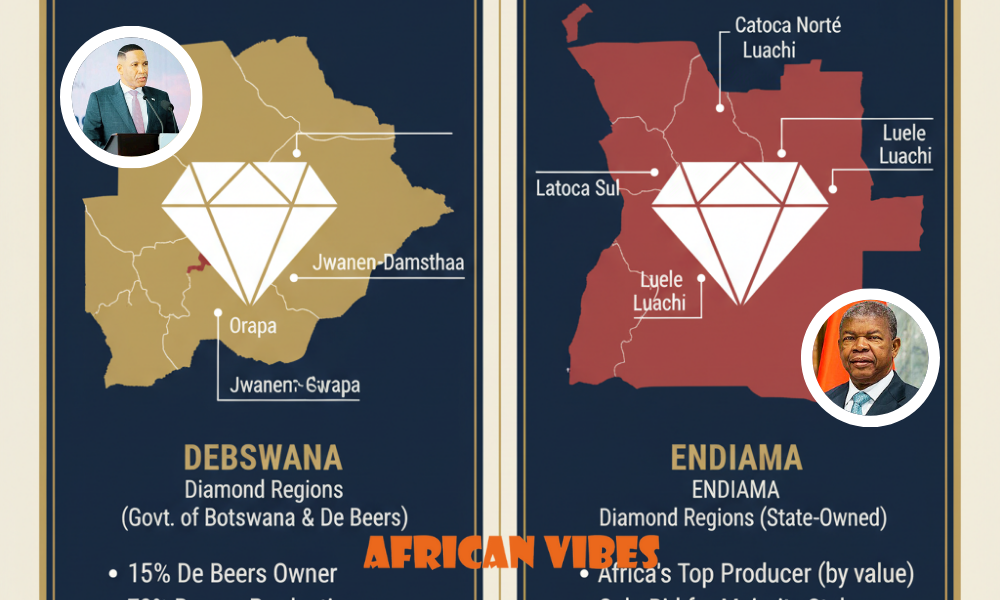
Botswana has been the steady hand of the diamond industry. Its 50/50 joint venture with De Beers, known as Debswana, has been the engine of its national success, transforming the country into a stable, high-middle-income economy.
- Existing Leverage: Botswana already owns 15% of the parent company and supplies a staggering 70% of De Beers’ rough diamond production.
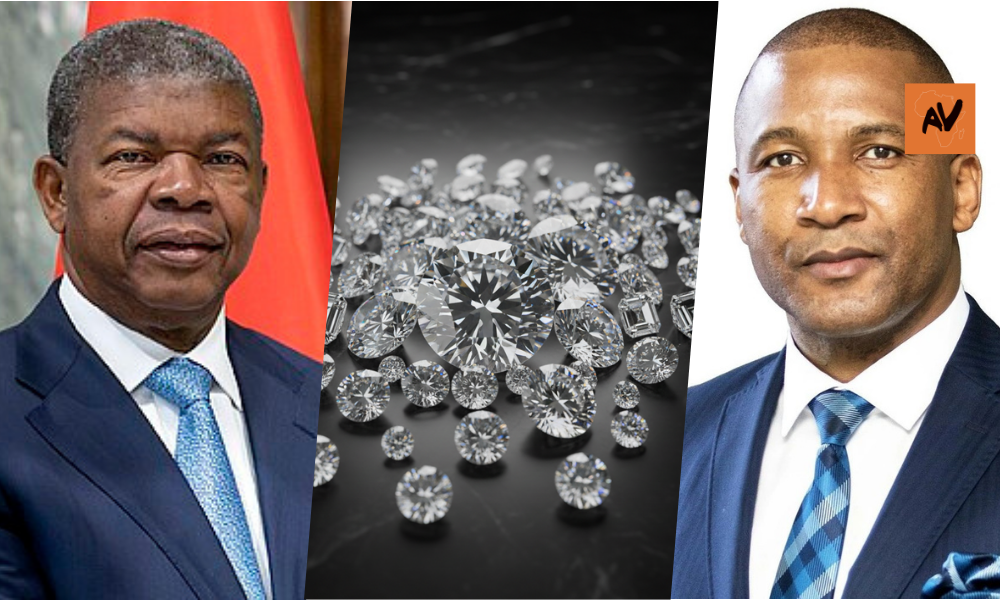
- The Intent: President Duma Boko has been unambiguous, declaring that securing a majority share is a “matter of economic sovereignty.” This is the logical next step after securing a crucial 2025 deal that increases Botswana’s share of rough stones from Debswana to 50%. Gaborone is leveraging its institutional knowledge and existing ownership to cement its position as the global diamond capital.
Angola: The Rising Force
Angola, backed by the state-owned Endiama, is the continent’s rising diamond star. Driven by sector reforms, Angola recently overtook Botswana as Africa’s top diamond producer by value for the first time in two decades.
- Angola initially proposed a sweeping Pan-African consortium before pivoting to a solo bid for a majority stake. Its strategy is focused on leveraging De Beers’ proprietary technology, global brand, and marketing system to accelerate its own local industrialization, moving rapidly from extraction to value-added processing in Luanda.
The high-level talks held between the mining ministers in Gaborone in November 2025, while confirming ongoing dialogue, underscore the delicate balance: are they destined for a bidding war, or a joint, Pan-African alliance to share ownership? Market analysts suggest a split ownership is increasingly likely, pooling their financial and technical might to counter rival bids from global investment groups.
The Quest for Value Chain Control
The ultimate prize in this De Beers Takeover Bid is not just the mines—it is the brand, the distribution networks, and the right to set the price.
For too long, the narrative of “blood diamonds” overshadowed the tremendous contribution of African Mineral Wealth to the development of countries like Botswana. The challenge now is to flip the script: to establish African-owned excellence as the global benchmark for ethical sourcing and luxury quality.
African Economic Sovereignty in this context means more than simply being a shareholder; it means exercising control over the entire diamond value chain.
An African-owned De Beers could usher in transformative changes:
- Branding from the Source: Control over the iconic De Beers brand offers an opportunity to tell the authentic African story of the diamond, creating a powerful, ethical luxury narrative that resonates with a modern, conscious global consumer.
- Local Industrialisation Mandate: A core goal for both nations is to maximize in-country value-addition. This translates to an influx of investment in sophisticated cutting and polishing facilities in Gaborone and Luanda. This process creates high-skill jobs, fosters a technical knowledge base, and moves the continent away from simply exporting rough stones.
- Setting Global Governance Standards: By taking the helm, Botswana and Angola can establish new standards for Pan-African Resource Governance, ensuring profit retention is high and environmental standards are robust. This sets a precedent for resource sectors across the continent, from copper to gold.
This effort is a 21st-century economic reclaiming, a powerful act of self-determination where African capital is buying out the colonial-era legacies that once constrained its economic future.
Competition, Cooperation, and the Geopolitical Chessboard
The diplomatic tension peaked in November 2025, as the mining ministers of Botswana and Angola met in Gaborone. The talks took place amidst a global flurry of bids, including those from powerful investor groups led by former De Beers executives, wealthy Indian diamond firms, and Qatari investment funds.
The core question hanging over the talks was simple: Would the Botswana Angola Diamond Race devolve into a bidding war, or would it spark a historic alliance?
Market speculation heavily favoured the idea of a joint acquisition, or at least a tacit agreement to divide the spoils. Botswana’s Minister of Mines, Bogolo Joy Kenewendo, underscored the need for unity, speaking of a “collaborative effort in bringing back the spark and the shine to the industry.”
This spirit of Pan-African Resource Governance suggests a strategic understanding: a united African front, even with complex joint-ownership models, would be a stronger global player than two competing African entities driving up the sale price for Anglo American.
The Hurdles Remain
The path to ownership is not without challenges:
- Financing: Securing the substantial financing for an estimated $3-4 billion purchase without compromising financial stability is a complex financial manoeuvre. Solutions range from leveraging sovereign wealth funds like Botswana’s Pula Fund to securing innovative, asset-backed international development finance.
- Operational Integration: Taking over a global entity like De Beers requires a seamless transition of operational expertise across its worldwide mining, trading, and retail segments. The true test of African Economic Sovereignty will be the ability of the new African-led leadership to manage this complex multinational operation effectively and profitably.
A successful joint acquisition, perhaps incorporating the original idea of a wider Southern African consortium involving Namibia and South Africa, would create an undeniable, resource-rich bloc that controls the majority of the world’s natural diamond supply—a true exercise in Pan-African Resource Governance.
ALSO READ: Botswana’s Duty-Free Diamond Deal with the US Redefines Economic Sovereignty.
A New Dawn for African Diamonds
The De Beers Takeover Bid is more than just a headline; it is a profound marker of Africa’s rising economic ambition. Regardless of the final outcome—whether a single nation wins the majority stake, or a collaborative alliance is formed—the very act of this credible, high-level competition between two African states for a historically Western-controlled symbol of African wealth marks the true, economic completion of decolonization in the diamond industry.
They are setting a powerful template for what African Economic Sovereignty can and should look like: a future where the profits, the prestige, and the destiny of Africa’s mineral wealth are finally controlled by the people of the continent.