


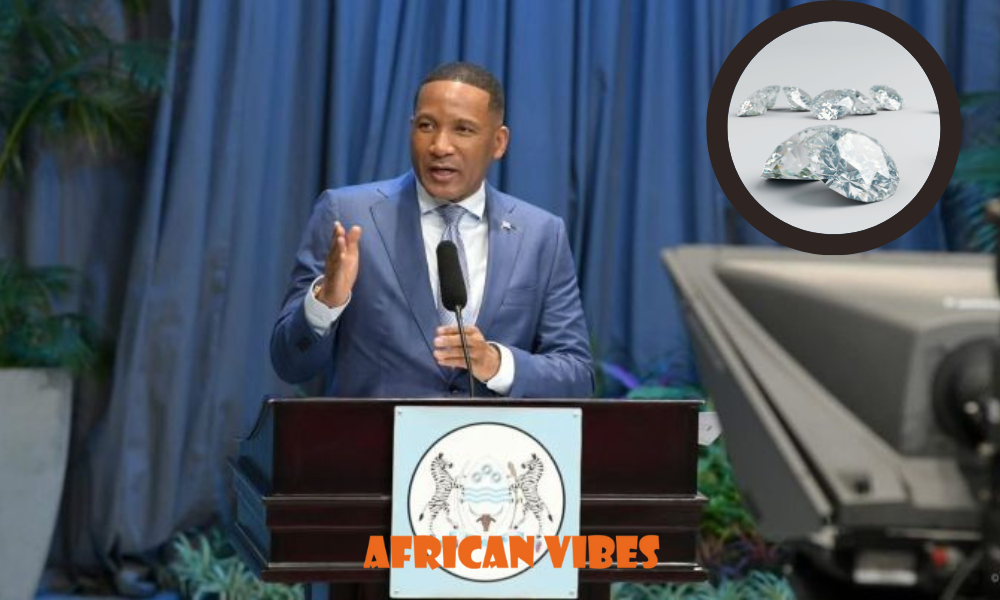
For decades, Botswana has stood as a model of African excellence — a country where good governance, democratic stability, and diamond wealth converged to lift a once-impoverished nation into middle-income status. Since independence in 1966, its story has sparkled as brightly as the stones beneath its soil.
But diamonds, no matter how brilliant, are finite. And Botswana, ever the pragmatic visionary, knows that the future demands more than mineral wealth.
In a bold step toward economic reinvention, the government has unveiled the Impact Investment Program (IIP) — Africa’s first citizenship-by-investment initiative. Announced in September 2025 and set for official launch in early 2026, the program seeks to attract global capital through a model that blends accessibility, accountability, and African ambition.
With a minimum contribution of $75,000, Botswana is offering not only one of the world’s most affordable entry points into citizenship but also a blueprint for African economic diversification. This is not merely a financial initiative; it is a philosophical statement — a declaration that the continent’s future will be funded not by aid or extraction, but by strategic partnership and shared prosperity.
The Diamond Pivot: Why Change Is Imperative
Botswana’s economic rise was built on diamonds. Through its joint venture with De Beers, the country mastered resource management, channeling profits into infrastructure, education, and health care. Its disciplined approach earned it Africa’s highest credit ratings and a reputation as a paragon of fiscal prudence.
Yet dependence on a single, nonrenewable commodity has long been a strategic weakness. The global diamond market has shifted, challenged by synthetic alternatives and softer consumer demand. Economic forecasts now predict contractions for 2024 and 2025 — a wake-up call for policymakers in Gaborone.
President Duma Boko’s administration has responded decisively. Alongside efforts to acquire a controlling stake in De Beers, the government is moving to attract non-mining capital through the IIP. It’s a twin-track strategy: securing control of the existing diamond value chain while planting seeds for a post-diamond economy.
This is not a sellout of national identity. It is, instead, a calculated trade — a small concession of citizenship in exchange for long-term, structural resilience.
ALSO READ: Botswana and Angola’s Race to Own De Beers, the World’s Iconic Diamond Giant

Inside the Impact Investment Program
The IIP is designed with a clear dual mandate: to invite global investors while preserving Botswana’s integrity.
Investment Threshold:
The minimum contribution stands at $75,000 for a single applicant, rising to $90,000 for families. Including due diligence and processing fees, total costs remain under $100,000 — positioning Botswana as the most accessible open CBI program worldwide.
Governance and Oversight:
To protect its reputation, the government has partnered with Arton Capital, a globally respected investment migration firm. Applicants will undergo rigorous background checks to ensure legitimacy and compliance with international financial standards.
Controlled Access:
Enrollment will be capped under a quota system to preserve exclusivity and ensure that funds are strategically deployed into Botswana’s development priorities. Early interest has already emerged from investors in India, the U.S., South Africa, and Nigeria — underscoring its global appeal.
Redirecting Capital for Sustainable Growth
Unlike many citizenship programs that funnel funds into real estate speculation, Botswana’s IIP explicitly channels investment into transformative national sectors.
1. Renewable Energy – Driving solar and green infrastructure projects to reduce fossil dependence and make Botswana an energy leader in Southern Africa.
2. Housing and Infrastructure – Financing affordable homes and construction initiatives to spur employment and urban growth.
3. Luxury Tourism and Conservation – Expanding eco-luxury tourism around the Okavango Delta, balancing revenue generation with environmental stewardship.
4. Financial Services – Strengthening the regulatory and fintech ecosystem to position Gaborone as a regional finance hub.
5. Mining Value Addition – Funding local diamond cutting, certification, and technology transfer to retain value within Botswana’s borders.
These investments aim to do more than diversify — they intend to future-proof Botswana’s economy while enhancing the livelihoods of its citizens.
A Passport of Prestige and Purpose
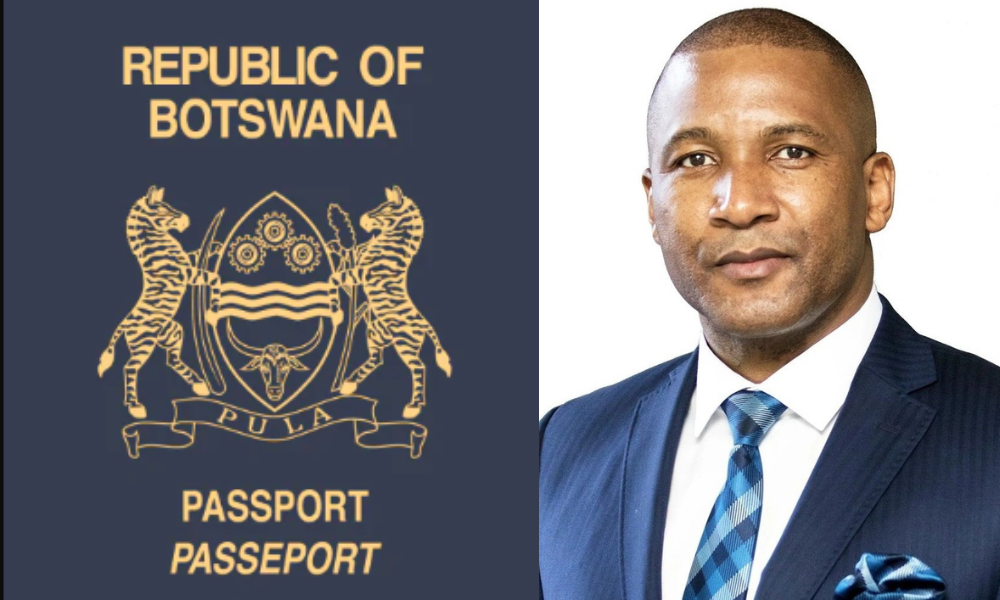
A subtle yet strategic ambition underpins the IIP: to make the Botswana passport the strongest in Africa by 2027. Currently granting visa-free or visa-on-arrival access to 84 destinations, the government hopes to expand its reach through new diplomatic agreements — leveraging its investment program to strengthen global partnerships.
Every new investor contributes not only to Botswana’s coffers but to the credibility and mobility of all Batswana citizens. It’s a form of nation branding — building soft power through policy innovation.
Balancing Integrity with Opportunity
The global investment migration market is fraught with controversy — allegations of lax oversight, money laundering, and “citizenship for sale” schemes abound. Botswana, acutely aware of these pitfalls, has framed its initiative as impact-driven, not opportunistic.
Its stringent due diligence, transparent fund allocation, and integration into a broader national diversification plan distinguish it from the opaque CBI programs that have tainted the industry’s image. The IIP’s credibility lies precisely in Botswana’s reputation — a country where stability, clean governance, and long-term vision converge.
For investors, this means not only a “Plan B” passport but also a stake in one of Africa’s most ethically governed and secure economies.
A Pan-African Model for Economic Resilience
Botswana’s move into citizenship-by-investment is far more than a domestic policy innovation — it is a continental signal.
It reimagines how African nations can engage with global capital on their own terms. Instead of relying on aid or external loans, Botswana is creating a self-financing mechanism to fund national priorities. And by pricing its program accessibly, it extends an open hand to the African diaspora, inviting those who left to invest back home not as donors, but as partners.
This is the heart of the IIP: Sustainable African Growth built on African design, African discipline, and African ambition.
Investing in the African Century
Botswana’s $75,000 Impact Investment Program is more than a policy experiment — it’s a statement of intent. It declares that Africa can define the future of global mobility and development finance, guided by transparency, equity, and purpose.
For Batswana citizens, it promises jobs, innovation, and a diversified economy. For global investors, it offers one of the most stable, well-governed pathways to African citizenship — and a chance to participate in a continent rewriting its own destiny.
Botswana, the jewel of Southern Africa, is no longer just mining diamonds. It is mining the future.
Next Steps for Prospective Investors
The IIP officially launches in early 2026, with registration of interest already open. Given its limited quota, early engagement through authorized advisors is advised. Investors should seek guidance from certified immigration consultants familiar with Botswana’s evolving regulatory framework and due diligence requirements.