


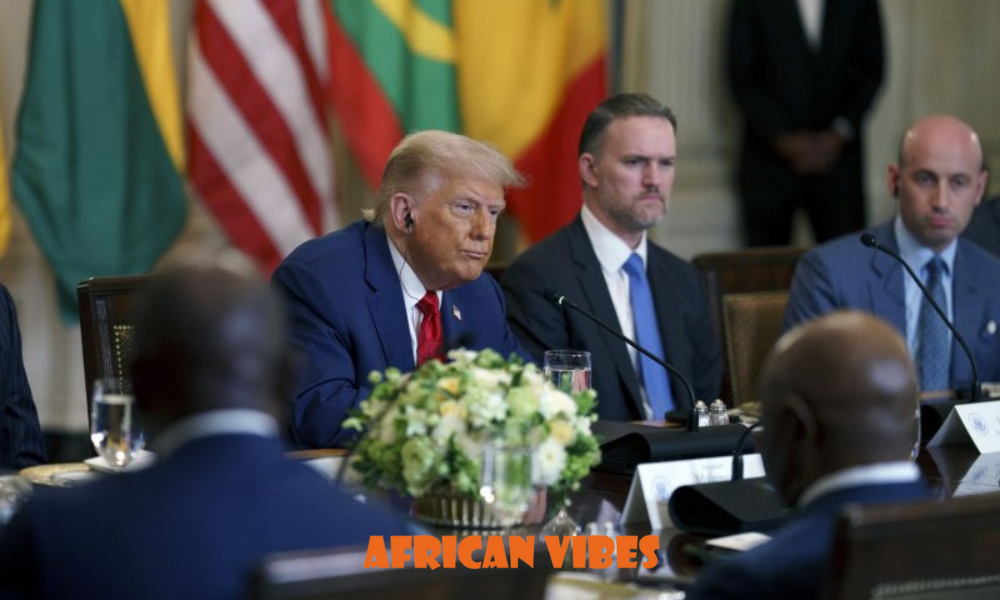
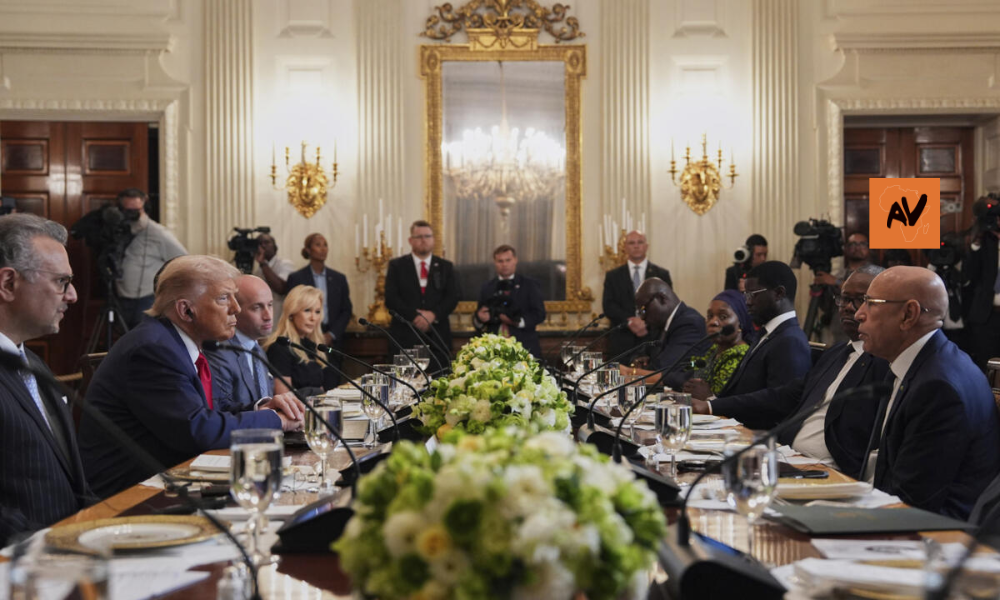
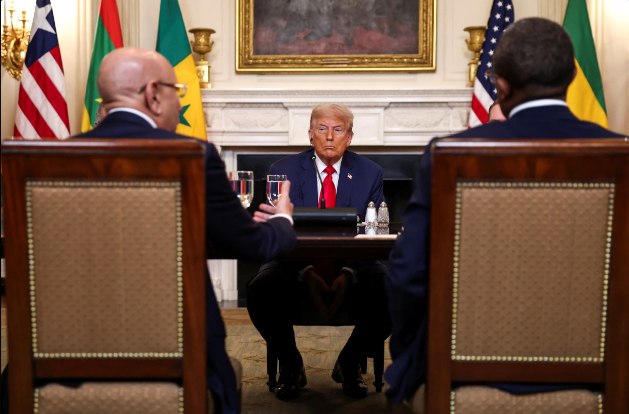
In a significant diplomatic overture, leaders from five West African nations – Gabon, Guinea-Bissau, Liberia, Mauritania, and Senegal – recently converged in Washington D.C. for a three-day summit with the US President.
Held from July 9th to 11th, the summit signaled a nuanced recalibration of Africa-US relations, pivoting from traditional aid frameworks to sustainable economic partnerships rooted in trade, investment, and mutual benefit. It is a development that underscores Africa’s mounting influence on the global stage and its determination to redefine its international relationships on its own terms.
A New Chapter in Africa-US Engagement
The summit marked a notable shift in the US administration’s approach to Africa. As global competition for influence on the continent intensifies, with China, Russia, and the European Union vying for prominence, the US is seeking to reassert itself as a reliable, transparent partner.
The summit also served to rebuild trust and reinvigorate US-Africa ties that have sometimes waned under the “America First” policy ethos. African leaders arrived not as supplicants, but as negotiators of equal standing, prepared to chart a new path of collaboration based on mutual respect and shared economic interests.
“Africa is no longer asking for aid. Africa is demanding investment, partnership, and opportunity,” said President Mohamed Ould Ghazouani of Mauritania. “We bring resources, strategic positioning, and youthful energy to the global table. The time of one-sided arrangements is over.”
ALSO READ: South Africa Faces 30 Percent US Tariff Blow to Exports
Spotlight on Critical Minerals and Local Value Chains
The summit’s economic discourse revolved around fostering robust trade, enhancing industrial capacity, and securing foreign direct investment. At the heart of the discussions was the growing demand for critical minerals such as lithium, cobalt, manganese, and uranium – resources central to clean energy transitions and digital infrastructure. Africa, particularly its western corridor, is rich in these minerals, but historically has exported them raw, forfeiting enormous value in the global supply chain.
President Brice Oligui Nguema of Gabon emphasized the urgent need to industrialize and process raw materials domestically. Gabon, endowed with vast manganese and potash reserves, has long exported raw materials with minimal beneficiation. “We must move from being mere exporters of raw materials to creators of finished products. Our minerals must power African factories before fueling global markets,” Nguema noted.
In alignment with this vision, the US International Development Finance Corporation (DFC) announced preliminary funding for the development of the Banio Potash Mine in Mayumba, Gabon. This investment aims to facilitate domestic processing infrastructure, stimulate job creation, and anchor Gabon’s transition from a resource-exporting nation to a value-adding economy.
A Tour of National Priorities and Sectoral Strengths
Each West African delegation used the summit platform to spotlight their nation’s competitive advantages and sectoral opportunities.
Liberia: President Joseph Boakai highlighted Liberia’s bauxite, iron ore, and gold reserves while inviting US companies to invest in its energy, mining, and agribusiness sectors. With political stability returning after a peaceful democratic transition, Liberia is actively seeking partners to help rebuild and expand its economic base. President Boakai emphasized governance reforms aimed at creating an investor-friendly climate.
Senegal: Recently elected President Bassirou Diomaye Faye focused on tourism and coastal infrastructure. Senegal, strategically located on the Atlantic and just a 6-hour flight from New York, is positioning itself as a premier destination for high-end tourism, including eco-tourism and cultural heritage circuits. The president outlined plans to develop luxury resorts, expand international airports, and incentivize diaspora investment.
Mauritania: A key point in the critical mineral supply chain, Mauritania boasts significant deposits of iron ore, gold, and uranium, with emerging prospects for lithium and rare earth elements. President Ghazouani presented his nation as a reliable gateway to Sahelian markets, highlighting an improved business environment and reduced bureaucratic hurdles.
Guinea-Bissau: While often overshadowed by its neighbors, Guinea-Bissau’s delegation spoke confidently about the country’s burgeoning cashew industry, fisheries, and offshore oil exploration zones. As a member of ECOWAS, Guinea-Bissau seeks to integrate its economy with broader regional value chains and attract investment in sustainable agriculture and marine conservation.
Security and Stability: A Prerequisite for Growth
The leaders acknowledged the intersection of security and economic development. Maritime insecurity in the Gulf of Guinea, transnational drug trafficking, and irregular migration were highlighted as shared challenges requiring joint solutions. While previous US engagements have often been dominated by security aid, African leaders pushed for a paradigm where economic development and security reinforce each other.
“When young people see hope in jobs, education, and innovation, the allure of extremism or migration fades,” said Senegal’s Faye. This sentiment was echoed by US officials, who pledged to bolster initiatives that combine security support with development financing, especially in fragile coastal states.
ALSO READ: Trump’s White South African ‘Refugees’ Get Red Carpet Treatment At The Airport
Africa’s Emerging Voice on Global Trade
This summit, despite involving countries not always seen as continental heavyweights, marked a pivotal moment in global economic realignment. It reinforced the growing influence of smaller African states with untapped potential. The leaders made a compelling case for being central to global supply chain diversification, particularly as Western nations seek alternatives to Chinese-dominated mineral markets.
The diplomatic choice to engage these five nations also reflected a broader US strategy to foster resilient, inclusive partnerships. By empowering smaller economies with strategic resources, the US can help build a more balanced and distributed model of African development that transcends traditional power centers.
The Role of the African Diaspora and Private Sector
A significant sidebar event during the summit brought together African diaspora leaders, American entrepreneurs, and policymakers to explore new investment frameworks. From venture capitalists to agritech innovators, the private sector was positioned as a critical engine of progress.
US-based African entrepreneurs emphasized the need for better market data, simplified cross-border regulations, and diaspora-friendly investment vehicles. They also called for a rebranding of Africa in US media to reflect innovation, resilience, and rising prosperity rather than poverty and conflict.
Meanwhile, African governments signaled readiness to streamline business registration, enforce contract laws, and protect investor rights – reforms essential to attract long-term US capital.
Strategic Implications and Global Response
Global observers are closely watching the outcomes of the summit. China, already deeply entrenched in Africa’s infrastructure and mining sectors, may see this renewed US engagement as a challenge to its dominant position. Russia, too, has sought influence through military cooperation and resource deals. However, what distinguishes this US approach is its emphasis on transparency, democracy, and sustainable value creation.
European partners, facing their own challenges in maintaining influence in Francophone Africa, may seek alignment with this new model. In essence, the summit could signal a geopolitical pivot where African countries, particularly in West Africa, become the fulcrum of global mineral diplomacy.
A Call for Ongoing Engagement
While the summit concluded with broad agreements and investment pledges, its real success will depend on sustained implementation. African leaders called for mechanisms to track progress, monitor compliance, and ensure that pledges translate into real-world impact.
There was also consensus on the need for annual or biennial reviews, hosted alternately between the US and Africa, to maintain momentum and deepen trust. These reviews would include progress reports on investment flows, infrastructure development, and youth empowerment initiatives.
Toward a New Era of Equitable Partnerships
The Washington summit of July 2025 may come to be seen as a turning point in Africa-US relations. It was a forum where African agency was on full display, where nations with strategic resources demanded not sympathy, but solidarity and partnership. The summit was about far more than diplomatic pageantry – it was about laying the foundation for a new era of global economic cooperation grounded in mutual benefit.
This is a message AfricanVibes.com is proud to amplify: Africa is not a problem to solve. Africa is a partner to engage. With its youthful population, immense natural wealth, and visionary leadership, the continent stands ready to co-author the next chapter of global progress.
As we move forward, the legacy of this summit will depend on how boldly both African and American stakeholders act on its promises. What is certain, however, is that Africa is no longer waiting. The continent is moving – and the world must keep up.