


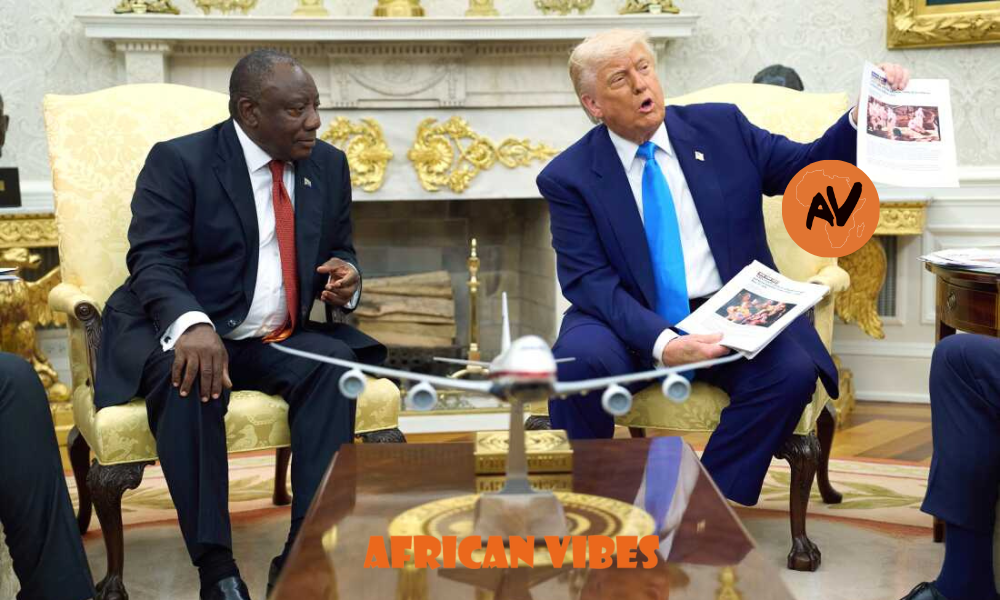
A high-profile diplomatic meeting between former U.S. President Donald Trump and South African President Cyril Ramaphosa took an unexpected turn this week, as Trump confronted Ramaphosa over controversial claims surrounding the treatment of white South African farmers.
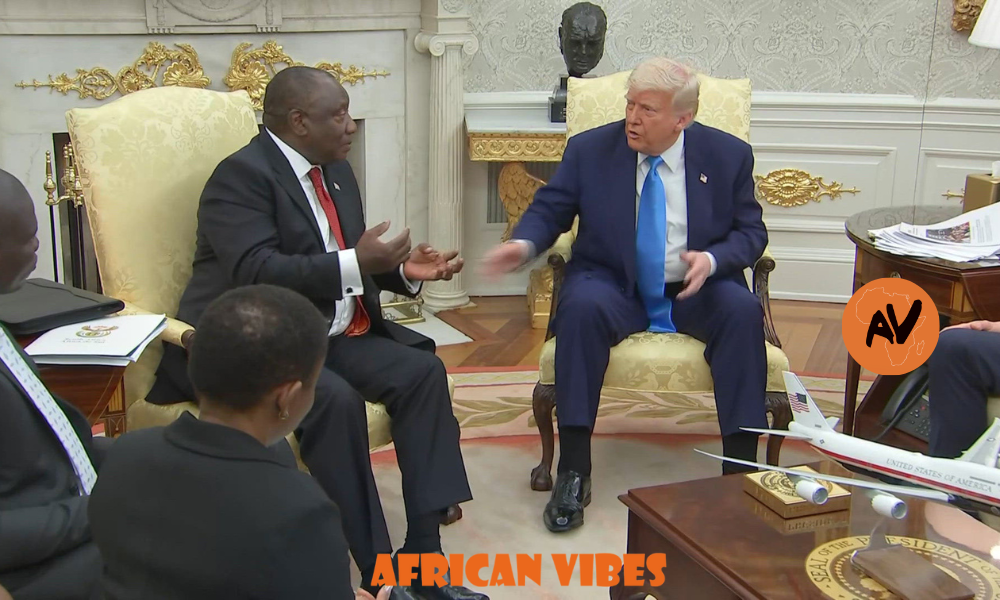
The tense Oval Office exchange overshadowed initial plans to strengthen economic ties and discuss trade opportunities between the two nations.
Trump-Ramaphosa Meeting Overshadowed by White Farmer Allegations
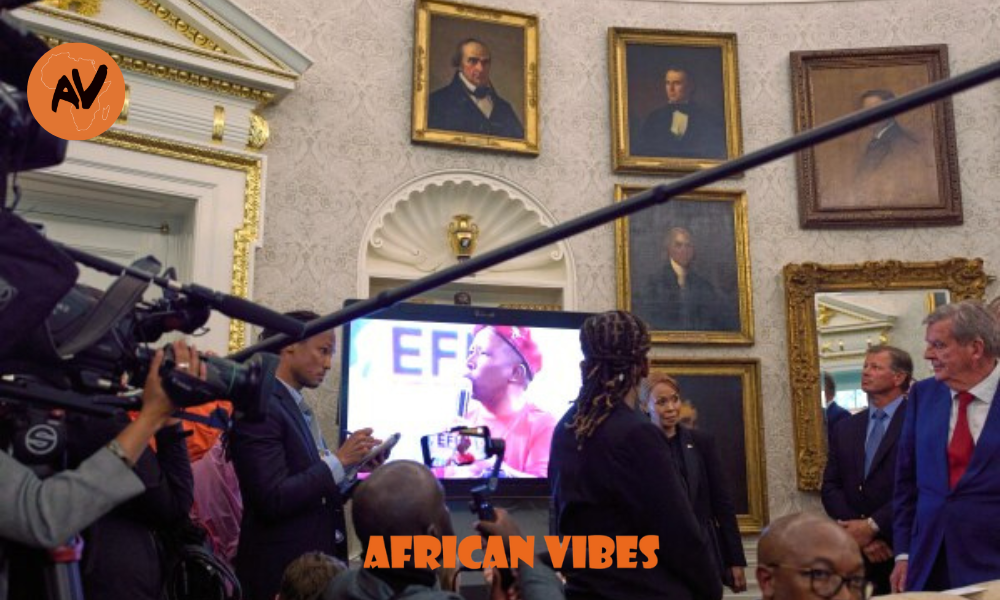
The Oval Office gathering, intended to signal improved U.S.–South Africa relations, was derailed when Trump presented Ramaphosa with media clips and images he claimed showed systemic violence against white Afrikaner farmers.
Among the materials shown were videos of opposition politicians chanting anti-apartheid slogans and a series of white crosses—allegedly representing slain white farmers.
According to Trump, the South African government had permitted land expropriation without compensation, creating what he labeled an environment of “racial persecution” targeting white landowners.
“The world is watching what’s happening to farmers in your country,” Trump reportedly said, pointing to what he described as “a crisis of human rights.”
ALSO READ: South Africa Land Reform or ‘White Genocide’? Unpacking Trump’s Claims
Why Trump Revived the White South African Farmer Debate
This is not the first time Trump has commented on South Africa’s land reform policies. In 2018, he tweeted about “large-scale killing of farmers” after watching a Fox News segment, prompting South Africa’s Department of International Relations and Cooperation to formally request an explanation.
Land reform in South Africa remains a politically sensitive issue. The government has supported constitutional amendments to allow land expropriation without compensation in an effort to reverse historical injustices from the apartheid era, where the majority of land was owned by the white minority.
Ramaphosa Defends South Africa’s Democracy and Diversity
Ramaphosa strongly rejected Trump’s claims, asserting that violent crime affects all South Africans regardless of race, and that the majority of crime victims are, in fact, Black citizens. He emphasized that the videos Trump cited featured members of fringe political groups with no affiliation to his administration.
“There is no state-sponsored campaign against white farmers,” Ramaphosa said during the meeting, according to sources present. “We are a constitutional democracy that protects the rights of all its citizens.”
The South African leader also called for mutual respect in addressing domestic policy differences, urging that diplomatic channels should not become battlegrounds for misinformation or political point-scoring.
Strain on U.S.–South Africa Relations
The confrontation reignited diplomatic tensions that have simmered since Trump’s earlier criticisms of South Africa’s land policy and his administration’s decision to freeze certain U.S. aid allocations. Analysts warn that such episodes could complicate trade negotiations and collaborative development initiatives.
“Diplomatic relations require nuance,” said one senior African policy expert. “Dragging contentious domestic narratives into bilateral meetings doesn’t help either side.”
ALSO READ: Mali Takes A Controversial Stand Against Australia’s Resolute Mining And Wins Big
Reactions Across the Globe
Reaction to the Oval Office clash has been swift and divided. Right-wing media outlets in the U.S. praised Trump for “speaking out” on what they claim is underreported violence, while South African media and international analysts largely dismissed the confrontation as a political distraction.
In South Africa, many citizens took to social media to support Ramaphosa’s stance, applauding his composure and his defense of democratic principles.
Looking Forward: Ramaphosa’s Call for Diplomacy
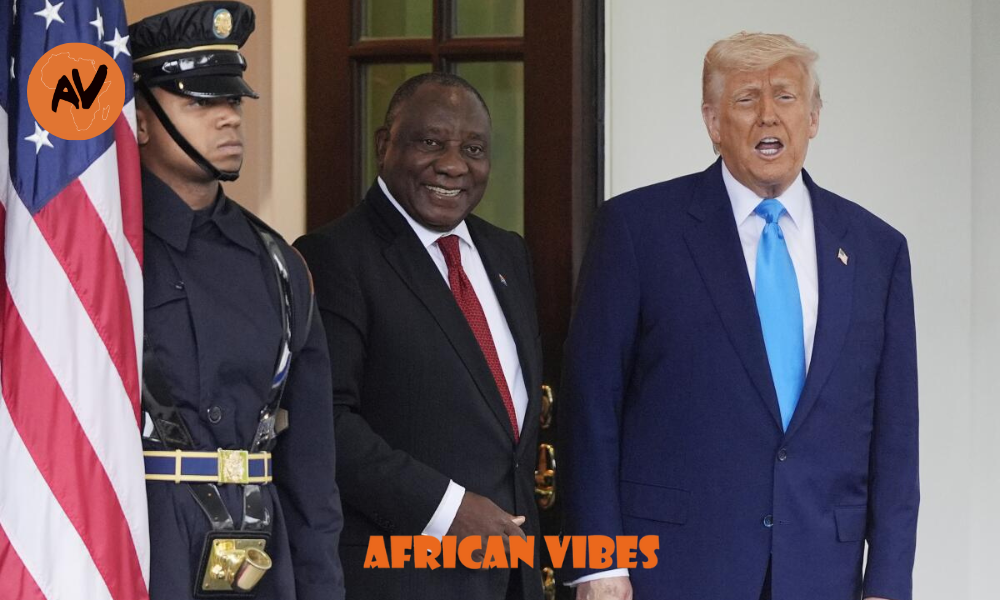
Despite the heated exchange, Ramaphosa sought to defuse tensions by redirecting the conversation toward future cooperation. He extended an invitation to Trump to visit South Africa and explore economic investment opportunities, stressing that the two countries share common goals on trade, innovation, and development.
“We will not be bullied,” Ramaphosa later stated in a press conference. “But we remain open to respectful dialogue based on facts, not fear.”
As South Africa continues its journey of land reform and reconciliation, the Oval Office clash is likely to remain a flashpoint in the broader conversation about global diplomacy, racial justice, and political accountability.