


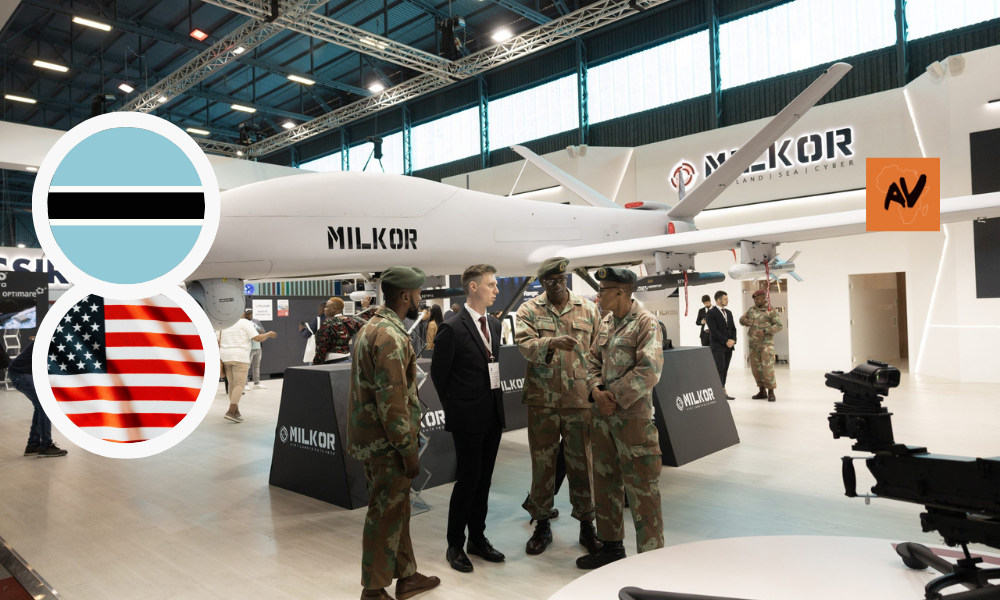
Botswana has formally accepted another C-130H Hercules military transport aircraft from the United States, deepening one of Washington’s longest-running defence partnerships in Southern Africa and giving the Botswana Defence Force (BDF) a stronger hand in humanitarian relief, peacekeeping, and regional security missions.
The US Embassy in Gaborone confirmed the acceptance, calling it “another milestone” in decades of defence cooperation between the two countries. The aircraft comes through the US Air Force’s Excess Defence Articles (EDA) programme, the same mechanism that delivered Botswana’s first C-130H in May 2024.
This article breaks down everything currently known about the new donation — the numbers, the history, the aircraft itself, and how Botswana’s experience compares with other countries receiving similar US military hand-me-downs — so you don’t need to go digging through half a dozen other pages to get the full picture.
The Announcement: What Just Happened
The path to this newest aircraft began well over a year ago. In February 2025, Kelli L. Seybolt, the US Deputy Under Secretary of the Air Force for International Affairs, visited Botswana and announced that the BDF had been selected to receive additional Hercules aircraft. Then, on 5 August 2025, the US government formally notified Congress of a proposed donation of two additional C-130H aircraft to Botswana, each valued at roughly $12 million. That notification is a required legal step under US arms transfer law before any EDA grant can proceed.
Botswana’s formal acceptance of the aircraft was announced by the US Embassy in Gaborone, which said the donation “will strengthen Botswana’s strategic airlift capability and further deepen the long-standing partnership between our two countries.” The acceptance follows the standard EDA sequence: congressional notification, aircraft inspection, negotiation of any additional investment required from the recipient country, and then formal transfer.
Under the EDA programme, aircraft are handed over on an “as is, where is” basis — meaning Botswana takes on the cost and responsibility of preparing the aircraft for service, including any refurbishment, spare parts, and pilot or maintainer training, rather than receiving a factory-new plane.
ALSO READ: African Union Agenda 2063: A Promising Trajectory For Africa
Quick Facts: Botswana’s C-130H Fleet
| Detail | Information |
|---|---|
| Aircraft type | Lockheed Martin C-130H Hercules |
| Programme | US Air Force Excess Defence Articles (EDA) |
| First C-130H delivered | 24 May 2024 (handover ceremony 27 June 2024) |
| First aircraft value | Approx. $30 million |
| Newest aircraft(s) value | Approx. $12 million each |
| Number of new aircraft proposed | Two, following congressional notification in August 2025 |
| Operator | Botswana Defence Force (BDF) Air Wing / Air Arm Command |
| Predecessor fleet | Three C-130B Hercules (1997–2023) |
| Legacy fleet designations | OM1, OM2, OM3 |
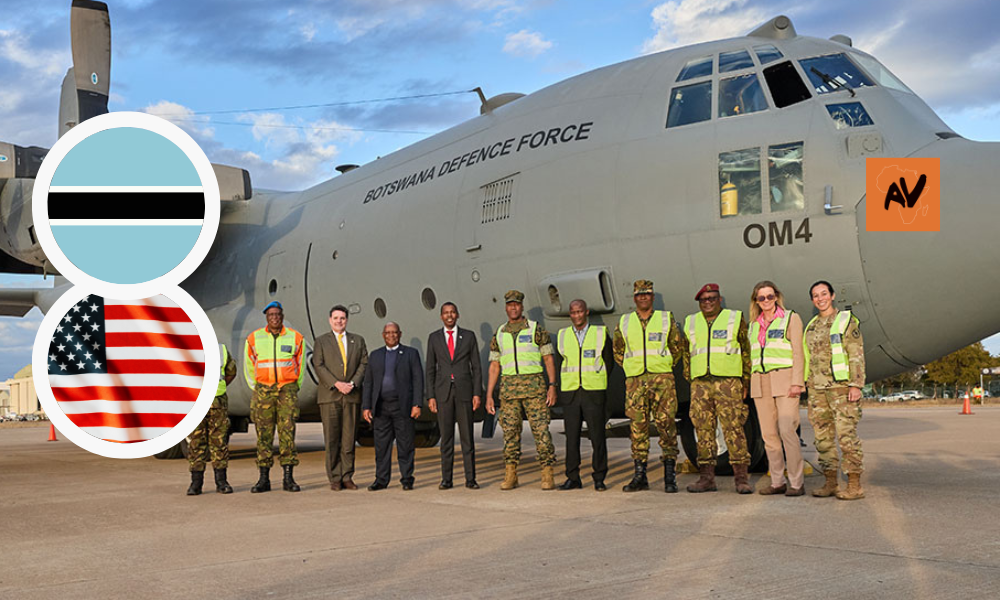
| New aircraft designation | OM4 (first C-130H) |
| Recent support package | ~$1 million in spare parts, delivered January 2026 |
Why the Aircraft Values Differ So Much
Readers often ask why one C-130H is valued at $30 million while the newer ones are pegged at around $12 million each. The answer comes down to condition and configuration at the time of transfer. EDA valuations reflect the aircraft’s assessed worth based on its airframe hours, avionics standard, engine condition, and how much work is needed before it’s flight-ready — not a fixed “sticker price” for the C-130H type. Botswana’s first Hercules, delivered in 2024, was an upgraded model selected through a competitive process that began in early 2023, which likely accounts for its higher valuation compared with the two aircraft approved in 2025.
Filling a Real Capability Gap
This donation isn’t happening in a vacuum — it’s replacing a fleet that quite literally wore out. The BDF’s airlift story goes back to 1997, when Botswana acquired three former US Air Force C-130B Hercules — designated OM1, OM2, and OM3 — from the North Carolina Air National Guard through the National Guard Bureau’s State Partnership Programme. For a quarter of a century, that trio was the backbone of Botswana’s air mobility, used for troop transport, disaster relief, medical evacuation, and international peacekeeping.
But age caught up with the fleet. OM1 was eventually placed in storage, and by 2023 the remaining B-model aircraft had been withdrawn from active service after decades of hard use, leaving Botswana with a serious airlift gap just as regional security demands were rising.
The first C-130H (OM4) arrived in 2024 specifically to close that gap. It has already supported humanitarian and regional missions, including work connected to the Southern African Development Community (SADC) Mission in Mozambique, and has helped move humanitarian aid — including medicines transported from Zambia for distribution inside Botswana.
ALSO READ: Rwanda and DRC Ink Historic Peace Accord, Paving Way for Regional Prosperity
Sustaining the Fleet, Not Just Growing It
New aircraft are only useful if they can actually fly, and the US-Botswana relationship has increasingly reflected that reality. In mid-January 2026, the US government delivered a support package of spare parts and maintenance equipment for the C-130 fleet worth nearly $1 million, handed over in a ceremony at Sir Seretse Khama International Airport by US Ambassador to Botswana Howard Van Vranken.
The shipment — 26 pallets containing more than 12,000 individual components, including seals, hydraulic parts, avionics spares, and ground-support and propeller maintenance equipment — was assembled after direct consultation with BDF maintenance teams to address specific sustainment problems they had identified, rather than being a generic parts drop. US officials described it as a deliberate shift toward long-term sustainment of aircraft already in service, on top of simply donating more airframes.
That distinction matters. Because EDA aircraft are transferred “as is, where is,” a donated Hercules can become a maintenance liability rather than an asset if the recipient air force lacks spares, trained technicians, and logistics support. The January 2026 delivery was explicitly framed as building Botswana’s autonomous maintenance capability and reducing dependence on external supply chains, strengthening the Air Logistics Squadron at Thebephatswa Air Base in the process.
The Bigger Strategic Picture
Officials on both sides have tied the donation to broader goals beyond Botswana’s own borders. The US Embassy has said the aircraft donations align with the US Strategy Toward Sub-Saharan Africa, which prioritises security cooperation and defence capacity-building across the continent. US officials have also framed the Hercules programme as supporting Botswana’s role in regional stability — from SADC peacekeeping to disaster response across Southern Africa.
Botswana’s own security picture is relatively calm by regional standards — the country’s last major terror-related attack occurred in the mid-1980s — but it still contends with urban crime, cyber threats, transnational organised crime, poaching, and illegal immigration, all of which benefit from reliable airlift for personnel and equipment movement. The C-130’s versatility, often described as making it “the workhorse of the skies,” suits exactly this mix of missions: it can carry troops, cargo, or humanitarian supplies with equal ease.
BDF officials have also been vocal about the value of the relationship on their own terms. At a previous handover, a Botswana official pushed for additional support — spare parts and an avionics upgrade — signalling that acquiring aircraft is only the first step; sustaining them long-term is the harder, ongoing part of the partnership. US officials have echoed that the BDF itself deserves credit for maintaining its aircraft and keeping crews current, even while relying on US-provided equipment and training.
Is Botswana the Only Country Getting C-130s This Way? No — Here’s Who Else Is
Botswana’s donation is part of a much wider pattern. The Excess Defence Articles programme has been quietly reshaping airlift fleets across US partner nations for years, and several other countries have gone through, or are currently going through, a very similar process.
The Philippines received two refurbished C-130H aircraft through the EDA programme, with the first delivered in January 2021 and the second arriving at Clark Air Base in February 2024. Both aircraft were intended to boost the Philippine Air Force’s disaster-relief and peacekeeping capacity, and the country has separately ordered new-build C-130J-30 Super Hercules aircraft directly from Lockheed Martin to further expand its fleet — showing how EDA donations often function as a bridge while a country pursues newer purchases.
Morocco has also sought ex-US C-130H aircraft through the EDA programme, requesting a transfer of Hercules aircraft to bolster the Royal Moroccan Air Force’s transport fleet, according to reporting tied to US congressional documentation on proposed EDA grants.
Sri Lanka is set to receive C-130 aircraft from both the United States and Australia, with deliveries scheduled across 2026 and 2027 as part of a broader package of foreign military donations that also includes helicopters and surveillance aircraft — though Sri Lankan officials and analysts have publicly noted the risks of leaning too heavily on donated equipment rather than building independent defence-modernisation funding.
Elsewhere in Southern Africa, the contrast is notable: South Africa’s own C-130BZ fleet, once the backbone of the South African Air Force’s strategic and tactical airlift, has in recent years suffered chronic serviceability and availability problems — a reminder of how quickly even a well-established Hercules fleet can decline without sustained investment in maintenance and spares, which is precisely the gap the US spare-parts package aims to help Botswana avoid.
What the EDA Programme Actually Is
For readers unfamiliar with the mechanism behind these donations, the Excess Defence Articles programme is a US government initiative under the Arms Export Control Act and the Foreign Assistance Act of 1961 that allows the President to transfer military equipment no longer needed by US forces to eligible foreign governments, typically at no direct cost to the recipient country beyond transport, refurbishment, and sustainment expenses. Recipient countries must be on an eligibility list included in the State Department’s annual Congressional Presentation for Foreign Operations, and any proposed transfer must be formally notified to Congress before it can proceed — which is exactly the step Botswana’s newest aircraft went through in August 2025.
Historically, the programme has moved billions of dollars in equipment worldwide — from uniforms and vehicles to ships and aircraft — as a way for the US to support partner-nation capacity without the higher costs of Foreign Military Sales.
What Comes Next for Botswana
With the acceptance now confirmed, the next steps typically involve final aircraft inspections, any agreed additional investment, and preparation for delivery and a formal handover ceremony — following the same pattern as the 2024 aircraft, which arrived in the country before its official handover a month later. Given the emphasis both governments have placed on sustainment, expect continued attention to spares, technician training, and possibly further avionics upgrades as Botswana works to keep its expanding Hercules fleet mission-ready rather than simply larger on paper.
For now, the donation stands as another concrete marker of a defence relationship that has spanned nearly three decades — from the original C-130Bs handed over in 1997 to a modern C-130H fleet that Botswana’s military and the US government both describe as central to national defence, regional stability, and Botswana’s ability to answer the call when neighbours need help.