


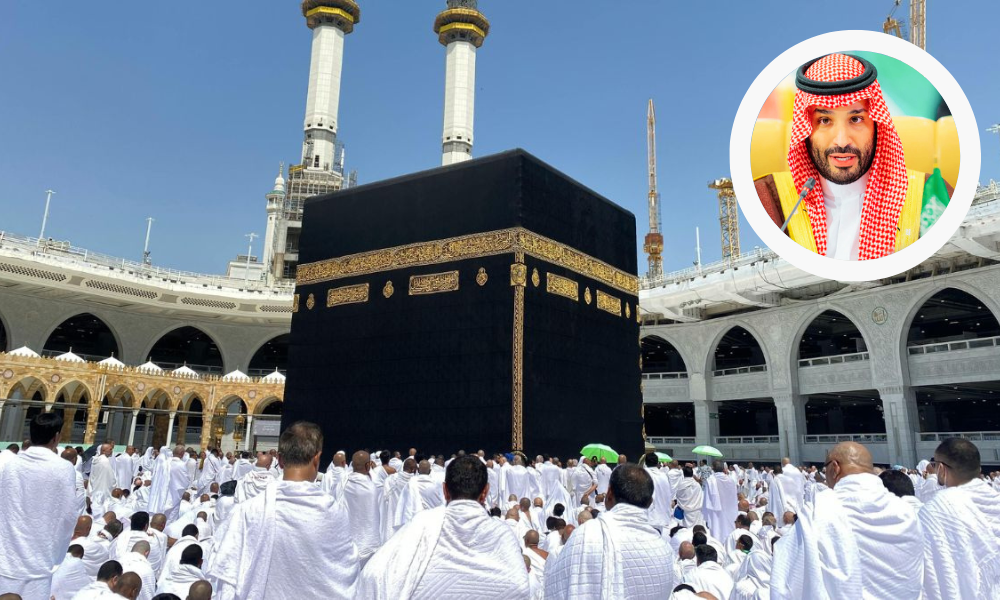
In June 2024, the annual Hajj pilgrimage turned deadly. Over 1,300 pilgrims perished in Mecca, as temperatures soared past 51.8°C (125°F) in one of the deadliest seasons on record. Many of the deceased were unregistered or unauthorized pilgrims, unable to access official facilities, transportation, or medical care.
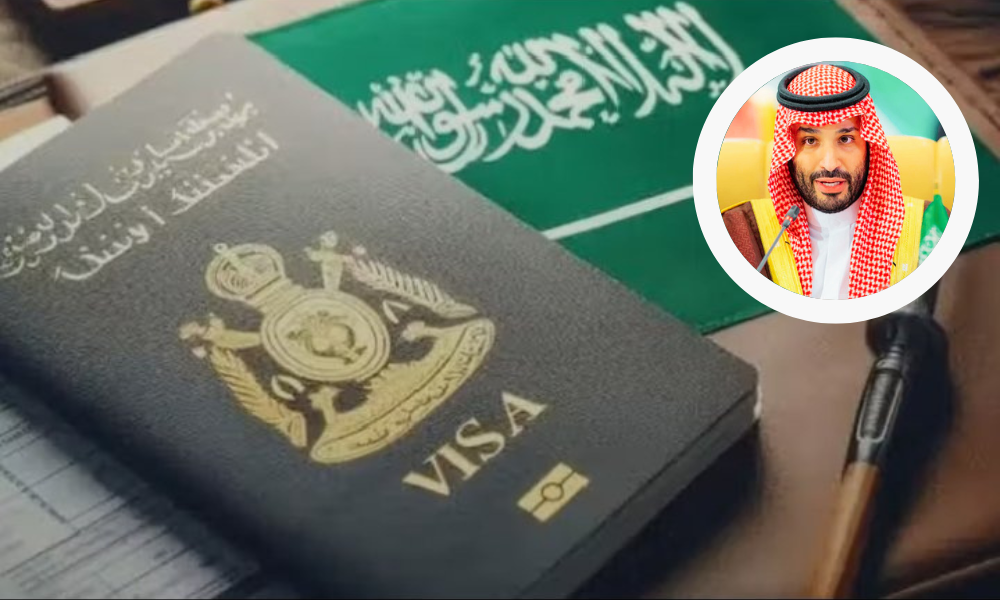
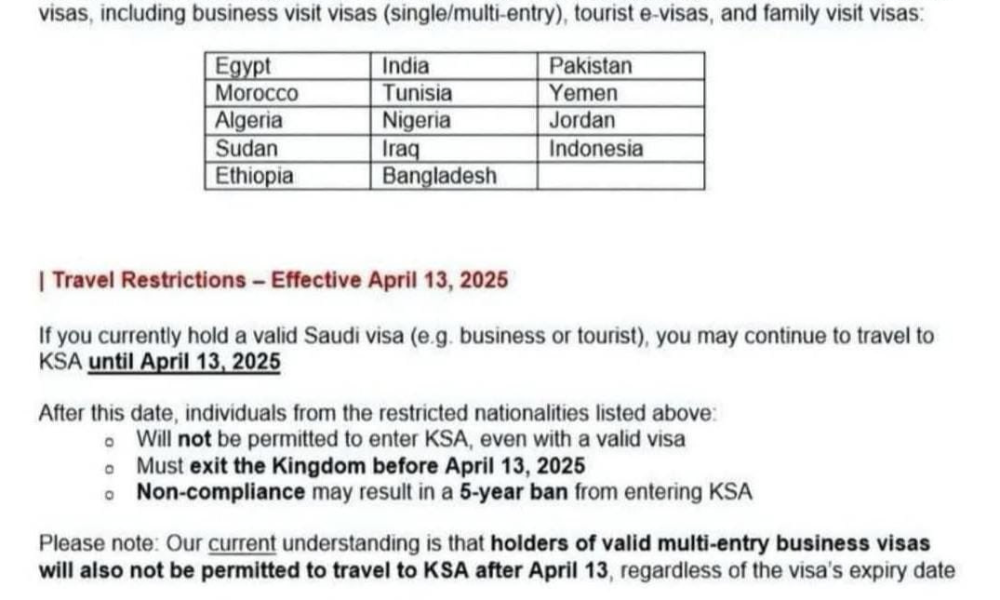
Now, as Hajj 2025 approaches, Saudi Arabia is responding with one of its most sweeping preemptive moves in recent memory: a suspension of visa issuance to 14 countries — including five from Africa. Citizens of Nigeria, Egypt, Ethiopia, Sudan, and Algeria are among those suddenly barred from obtaining Umrah, business, or family visit visas. The ban is in place through mid-June.
Saudi officials describe the move as a public safety necessity, intended to reduce overcrowding and enforce tighter control over who is allowed to perform the pilgrimage. But across Africa, where millions of Muslims save for years to fulfill this religious duty, the decision is igniting a firestorm of backlash, confusion, and diplomatic tension.
ALSO READ: Trump’s Self Deportation CBP Home App: A Humane Tool or Trap for Immigrants?
African Governments Push Back
The announcement may have been quietly delivered through consulates, but its impact in Africa has been loud and far-reaching. In Nigeria, the National Hajj Commission (NAHCON) issued a cautious statement acknowledging the Saudi decision while expressing “deep concern over the lack of consultation and the short notice,” especially given that many pilgrims had already begun processing payments and travel arrangements.
In Egypt, where religious travel is a billion-dollar industry and a deeply embedded cultural tradition, members of the Parliament’s Religious Affairs Committee have demanded clarification from both the Ministry of Foreign Affairs and the Saudi Embassy. One MP described the move as “disrespectful to African Muslims who have long upheld the rites of pilgrimage with reverence and order.”
Privately, officials in Sudan and Ethiopia voiced frustration over being grouped with larger countries accused of violating Saudi regulations. “We understand the need for safety,” said a senior Ethiopian religious affairs official, “but a blanket suspension feels indiscriminate. It punishes those who have always complied with Saudi systems and discourages future participation.”
In Algeria, religious tour operators protested outside the Ministry of Religious Affairs in Algiers, demanding state intervention. “This isn’t just about visas,” one organizer said. “It’s about dignity. It’s about being treated as part of the global Ummah, not as a problem to be managed.”
Across African social media, hashtags like #HajjBan and #AfricaExcluded trended for days. Prominent Muslim scholars and influencers called the suspension “humiliating” and questioned whether African nations are being unfairly scapegoated for broader issues in Saudi Arabia’s pilgrimage management.
“The tragedy of Hajj 2024 was not only the heat,” said Dr. Zainab Bakare, a Nigerian scholar of Islamic jurisprudence. “It was the breakdown of communication, logistics, and inclusion. This ban is a symptom of that same failure — but now it’s pre-emptive and punitive.”
There’s also growing concern about the lack of transparency in how the list of 14 countries was determined. Notably absent are large Muslim-majority nations like Turkey, Malaysia, and Iran, whose pilgrims have historically entered via unofficial channels in some cases. Several African commentators have asked: Why are we being singled out?
While Saudi Arabia has not released a formal explanation for the country list, officials insist it reflects data-driven risk assessments based on visa misuse and logistical strain from previous pilgrimage seasons. But without evidence or dialogue, African stakeholders say, even reasonable policy feels like exclusion.
ALSO READ: Namibia Ends Visa-Free Travel for Non-Reciprocating Countries
What Sparked the Ban?
While the visa ban has stirred outrage, Saudi authorities insist it is rooted not in politics, but in prevention — a bid to avoid a repeat of what many now call the “Black Hajj” of 2024.
Last year, an estimated 1.8 million pilgrims from across the world gathered in Mecca for the annual rite. But as they converged in the holy city, a brutal heatwave pushed temperatures to 51.8°C (125°F) — the highest ever recorded during the pilgrimage. Air-conditioned shelters and hydration points were overwhelmed. Emergency services were stretched thin. By the time the rites concluded, over 1,300 people were confirmed dead — many of them unregistered pilgrims traveling without access to the regulated amenities provided to officially sanctioned Hajj participants.
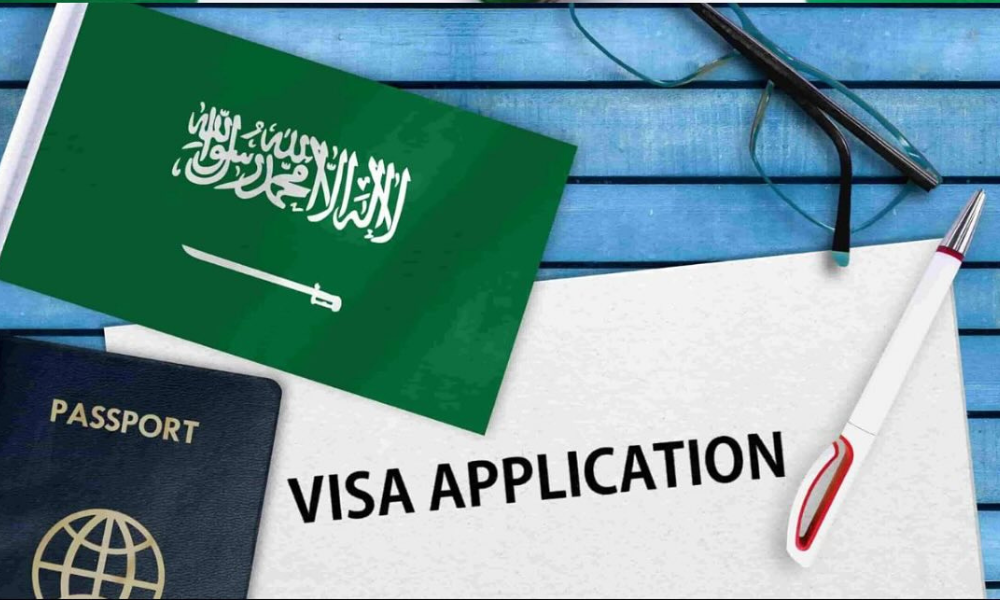
The tragedy became a flashpoint for criticism, particularly regarding unauthorized pilgrims — those who enter Saudi Arabia on tourist, Umrah, or visit visas and attempt to perform Hajj without official permits. These individuals often sleep in unregulated housing, lack guidance from recognized Hajj missions, and place additional stress on infrastructure that is meticulously calibrated to accommodate a fixed quota of pilgrims.
Saudi Arabia’s Ministry of Hajj and Umrah issued a post-mortem report in early 2025 that pointed squarely to visa misuse as a key factor in overcrowding and fatalities. The report recommended tighter visa issuance processes, especially for countries where non-quota pilgrimage has historically been higher.
“Safety is our foremost concern,” the Ministry said in a public statement. “We are not banning faith — we are preserving lives.”
The data supports the urgency: according to Saudi health authorities, nearly 70% of the deaths in 2024 involved pilgrims who were not part of any official Hajj delegation. Many of the bodies took days to be identified. Others had no traceable next of kin or medical records, making repatriation or burial arrangements immensely difficult.
While most African countries adhere strictly to official Hajj quotas, the reality is more complex. In Nigeria, for instance, tens of thousands of would-be pilgrims who fail to secure limited Hajj slots turn to Umrah or business visas as a workaround — often coached by informal travel brokers who promise “alternative” routes to the Kaaba. Similar patterns have been observed in Egypt, Sudan, and parts of North Africa.
The Saudi response in 2025 aimed at shutting these channels down altogether, at least temporarily.
But critics argue that the blanket suspension is an overcorrection, one that punishes millions of legitimate travelers and fails to address structural issues within the Kingdom’s own visa enforcement and pilgrimage coordination.
“Saudi Arabia had time to invest in digital tracking, crowd control, and embassy-based preclearance,” said Professor Ahmed Rachid, a political scientist at the University of Algiers. “Instead, they’re hitting the off switch on entire populations. That’s not safety — it’s avoidance.”
Even health experts sympathetic to Riyadh’s concerns caution against blunt tools. “We need smarter Hajj regulation, not fewer pilgrims,” said Dr. Lulit Tadesse, an Ethiopian epidemiologist who studies mass gatherings. “Climate change will continue to make Hajj dangerous. The solution isn’t exclusion. It’s innovation.”
Why Are African Nations Disproportionately Affected?
While Saudi officials maintain that the 14-country visa ban is based on data and safety concerns, the list of affected nations has sparked difficult questions — particularly around why Africa has borne the brunt of the policy.
Of the 14 countries suspended from receiving Umrah, visit, or business visas, five are African — more than any other region represented. These include not only large Muslim-majority nations like Nigeria and Egypt, but also Ethiopia, Sudan, and Algeria — all with significant histories of religious pilgrimage, strong diplomatic ties to Riyadh, and official Hajj delegations that traditionally cooperate with Saudi systems.
To many observers, the regional imbalance raises eyebrows.
“There seems to be a pattern — and it’s not just about crowd size,” said Dr. Amina Lawal, a West African policy analyst specializing in religious affairs. “If this were purely logistical, one would expect larger countries like Turkey or Malaysia to also be on the list. But they’re not.”
The discrepancy may reflect uneven capacities in digital pilgrimage infrastructure. Saudi Arabia has long encouraged countries to adopt online pre-registration portals, biometric screening, and centralized visa systems to streamline Hajj preparation. While Gulf states, Southeast Asian countries, and Turkey have largely complied — in part due to deeper investments in e-governance — many African states lag behind.
In Nigeria, for example, Hajj registration remains heavily paper-based in rural areas, with thousands of local agents operating outside the national quota framework. In Sudan and Ethiopia, economic instability and government transitions have hampered digital reforms. Even in relatively advanced systems like Egypt’s, there remain parallel pathways for pilgrimage travel that operate beyond official oversight.
Saudi Arabia has repeatedly signaled that it wants one pilgrim, one permit, one traceable visa. African countries — due to systemic challenges, not malice — are seen as the least compliant with that vision, making them more vulnerable to blanket enforcement.
But critics argue this framing fails to account for decades of underinvestment, migration patterns, and informal religious economies that developed precisely because of the restrictive Hajj quota system. For many African Muslims, Hajj and Umrah are not just sacred rites — they’re generational aspirations that often require years of savings, community fundraising, and local coordination.
“When formal systems fail to absorb demand, informal ones fill the gap,” said Hawa Elgizouli, a Sudanese sociologist who has studied pilgrimage migration. “Saudi Arabia knows this. The real question is: have they done enough to support a transition to more equitable systems?”
There is also a perception that Africa is easier to penalize, both politically and diplomatically. Saudi Arabia’s growing influence on the continent — through funding of mosques, schools, and infrastructure — may discourage governments from speaking out forcefully, even when public anger is rising.
In contrast, no Gulf nation is on the ban list, despite significant undocumented flows of internal Hajj pilgrims. Nor are countries with complex regional politics like Iran included — a fact not lost on observers tracking Saudi Arabia’s shifting geopolitical calculus.
“It’s hard to ignore the optics,” said Dr. Rachid of the University of Algiers. “Five out of 14 is not a coincidence. It’s a message — whether intended or not — about who is in control of access to Mecca.”
Discuss more on our social