



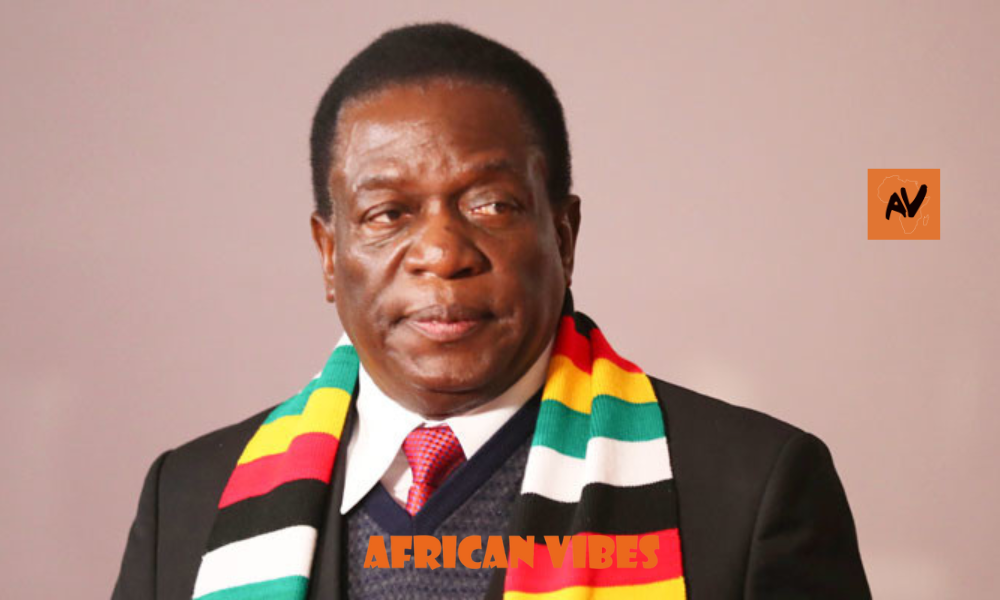
Zimbabwean President Emmerson Mnangagwa took center stage at the World Governments Summit in Dubai this week, delivering one of his most direct international defenses yet of Zimbabwe’s controversial land reform program.
“We seized the land and gave it to our people, so sanctions were imposed on us,” Mnangagwa declared during a panel discussion that drew global attention.
His remarks reignited a long-running debate: Did Zimbabwe’s land reform restore sovereignty after colonial dispossession — or did it trigger economic isolation that still haunts the country today?
The discussion, which featured U.S. media figure Tucker Carlson, quickly evolved into a broader conversation about race, reparations, sovereignty, and the true cost of defying Western political and economic interests.
The Colonial Land Question: A Legacy of Dispossession
To understand Zimbabwe’s land reform, one must begin with colonial history.
Under British colonial rule — particularly during the era of Rhodesia — vast tracts of fertile agricultural land were controlled by a small white minority, while the Black majority was confined to less productive communal areas. By independence in 1980, approximately 4,000 white commercial farmers owned the majority of prime farmland.
Land inequality became one of the most unresolved legacies of colonial rule. Although early post-independence reforms were structured around a “willing buyer, willing seller” framework supported by Britain, progress was slow and frustrations grew.
By the late 1990s, mounting political pressure and economic strain set the stage for a dramatic shift.
ALSO READ: America Is Back in Africa —But Africa Is No Longer Desperate
The Fast-Track Land Reform Programme
Beginning in 2000 under then-President Robert Mugabe, Zimbabwe launched the Fast-Track Land Reform Programme (FTLRP), accelerating land redistribution from white commercial farmers to Black Zimbabweans.
More than 4,000 large-scale farms were redistributed. Supporters framed the move as a long-overdue correction of colonial injustice — a reclaiming of sovereignty and economic agency.
Critics, however, argued that the program was chaotic, politically manipulated, and economically destabilizing. Violent farm invasions, sudden displacement, and lack of structured agricultural support led to a steep decline in commercial farming output.
The result was severe economic turbulence:
- Agricultural production fell sharply.
- Food shortages increased.
- Investor confidence collapsed.
- Hyperinflation spiraled in the late 2000s, reaching historic levels.
Western governments — including the United States and United Kingdom — imposed targeted sanctions on key political figures and state-linked entities, citing human rights concerns and governance issues.
Zimbabwe, however, has consistently framed the sanctions as punishment for redistributing land.
Mnangagwa vs. Carlson: Sovereignty or Racial Targeting?
During the Dubai panel, Tucker Carlson pressed Mnangagwa on whether the land reform program amounted to racial targeting of white farmers.
Mnangagwa rejected that framing.
He emphasized that the reforms were about correcting historical injustice, not race, arguing that land ownership under colonialism was itself racially structured. According to him, Zimbabwe’s actions were an assertion of national independence — not ethnic persecution.
For Mnangagwa, sanctions were not merely policy disagreements but geopolitical retaliation.
“The land question was fundamental to our sovereignty,” he implied, reinforcing a narrative long embraced by Zimbabwe’s ruling party: land reform completed the liberation struggle that began decades earlier.
ALSO READ: African Union Agenda 2063: A Promising Trajectory For Africa
The Sanctions Debate: Targeted or Transformational?
Western governments maintain that sanctions on Zimbabwe have been targeted, aimed at individuals and entities linked to governance abuses — not the general population.
Zimbabwe’s leadership counters that even so-called “targeted sanctions” have had broader economic consequences, limiting access to credit lines, multilateral financing, and international investment.
Over the past few years, Mnangagwa’s administration has intensified efforts to re-engage with global financial institutions, clear debt arrears, and normalize relations.
In 2020, Zimbabwe agreed to a $3.5 billion compensation framework for white commercial farmers, covering improvements made on seized land (though not the land itself). The move was widely interpreted as an attempt to unlock international goodwill and attract foreign investment.
Economic Fallout and the Road to Recovery
Two decades after the Fast-Track reforms, Zimbabwe’s economy still reflects the program’s disruptive impact.
While land ownership patterns have shifted dramatically in favor of Black Zimbabweans — a historic structural change — agricultural productivity has struggled to return to previous commercial levels.
Inflation has remained volatile, and currency instability continues to affect daily life. Yet the government argues that resilience, mineral exports, and agricultural recovery efforts signal gradual stabilization.
Mnangagwa’s appearance in Dubai can be viewed as part of a broader diplomatic campaign: reposition Zimbabwe as open for business while defending its liberation-era policies.
A Broader African Question: Sovereignty vs. Sanctions
The land reform debate transcends Zimbabwe.
Across Africa, questions persist about:
- Who controls land and natural resources?
- How post-colonial states address historical injustice
- Whether sanctions function as accountability tools — or geopolitical leverage
For some Pan-African thinkers, Zimbabwe’s land seizures symbolize radical self-determination in action.
For others, they represent a cautionary tale about governance, economic management, and the unintended consequences of abrupt reform.
Mnangagwa’s statement in Dubai revives this tension at a time when Africa is increasingly asserting economic independence through new alliances in the Gulf, China, and BRICS nations.
The Unfinished Conversation
Did land reform make Zimbabwe more independent — or more isolated?
The answer may depend on perspective.
What is clear is that the land question remains central to Zimbabwe’s national identity, its economic future, and its diplomatic positioning.
As Mnangagwa continues his push for debt relief and global reintegration, the legacy of the Fast-Track reforms will remain both a symbol of sovereignty and a source of controversy.
And in Dubai, before a global audience, Zimbabwe’s president made one thing unmistakable:
The land issue is not closed.