


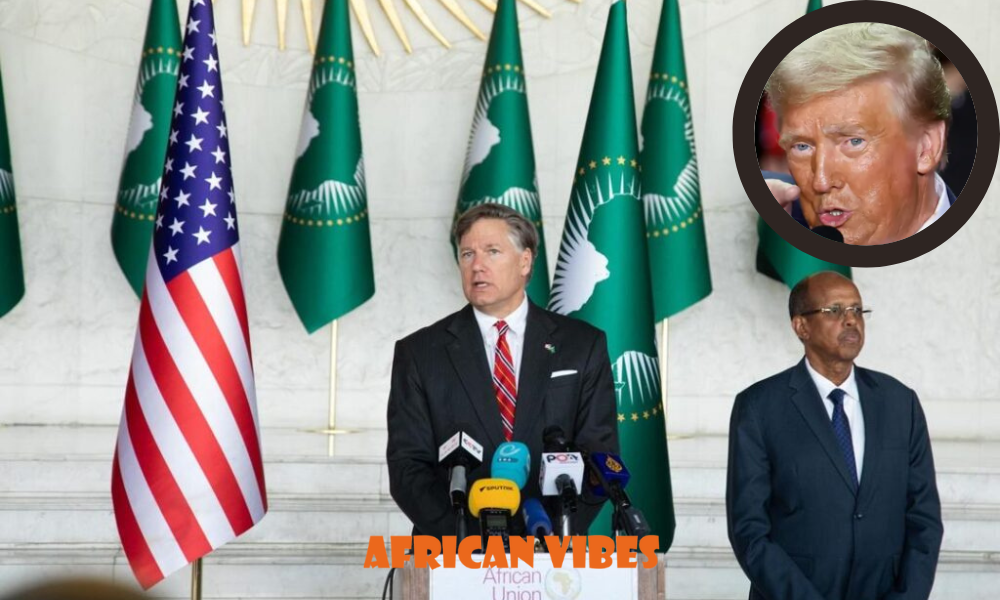
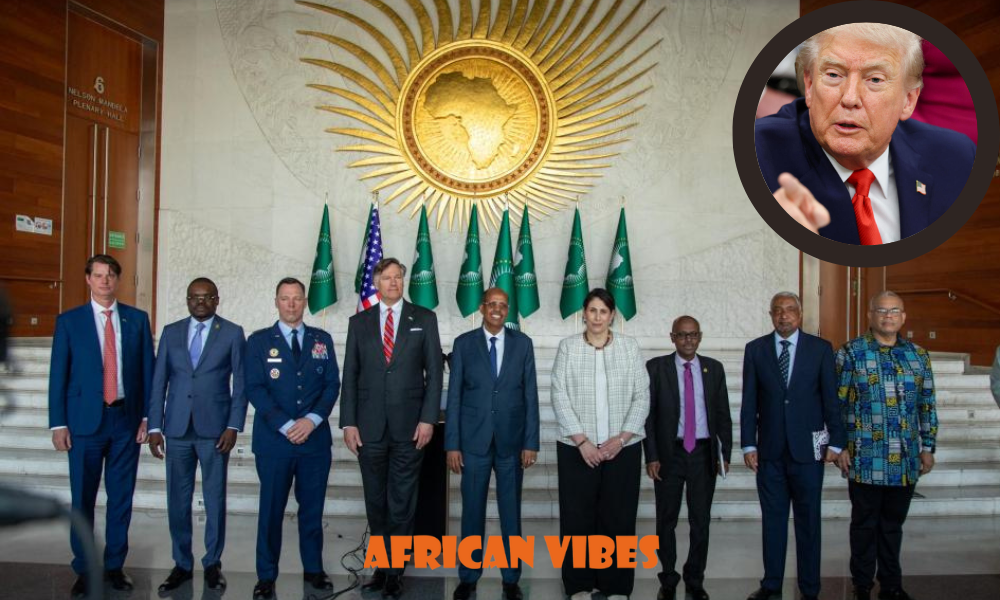
After years of perceived disengagement, the United States has launched a renewed push into Africa—this time anchored in an “investment-first” strategy rather than traditional aid. On January 28, 2026, in Addis Ababa, US Deputy Secretary of State Christopher Landau joined African Union leaders to unveil the Strategic Infrastructure and Investment Working Group (SIWG), a new framework focused on transport, energy, digital infrastructure, and critical minerals.
Marketed as a shift toward “durable, profitable investments,” the initiative reflects Washington’s attempt to reassert influence on a continent that has become central to global economic and geopolitical competition. But with China deeply entrenched and Russia expanding its security footprint, the key question remains: will this strategy deliver tangible gains for Africa—or simply repackage old power dynamics?
Africa’s Strategic Moment
Africa is no longer a peripheral player in global affairs. By 2050, the continent’s population is projected to reach 2.5 billion, its consumer markets are expanding rapidly, and its reserves of lithium, cobalt, and rare earths are critical to the global green transition.
For Washington, Africa is increasingly viewed not as an aid dependency but as a future growth engine, strategic partner, and supply-chain anchor. The investment-first pivot reflects this recalibration—one driven as much by opportunity as by competition.
ALSO READ: Rwanda Takes Britain to Arbitration Over Scrapped Migration Deal
What “Investment-First” Really Means
The new US approach marks a departure from aid-heavy engagement models. Instead, it prioritizes private capital mobilization through instruments such as the US International Development Finance Corporation (DFC), renewed talks on extending and reforming the African Growth and Opportunity Act (AGOA), and incentives for American firms to invest in energy, technology, manufacturing, and logistics.
US officials argue that this model promotes transparency, job creation, and long-term sustainability—distinguishing it from state-led financing approaches that have raised debt concerns in parts of Africa.
Crucially, the strategy is framed as aligning with Africa’s own development frameworks, including the African Continental Free Trade Area (AfCFTA) and Agenda 2063, and as a tool to help close the continent’s estimated $68–108 billion annual infrastructure financing gap.
Still, African analysts caution that investment alone is not a guarantee of development. Without clear safeguards, strong regulation, and African-led priorities, foreign capital can just as easily reinforce extractive relationships.
Global Rivalry—and Africa’s Growing Leverage
The US re-entry comes amid intensified competition. China continues to dominate large-scale infrastructure through the Belt and Road Initiative, Russia is expanding security and defense partnerships, and the European Union is pushing green trade and regulatory alignment.
Rather than choosing sides, many African governments are leveraging this rivalry to negotiate better terms—playing partners against one another in ways that were unthinkable a decade ago.
| Aspect | US Model | China Model |
|---|---|---|
| Speed | Methodical, governance-focused | Rapid infrastructure delivery |
| Financing | Private capital, DFC-backed, debt-conscious | State-backed loans, often debt-heavy |
| Conditions | Transparency, labor standards | Minimal political conditions |
| African Upside | Technology transfer, market access | Fast roads, ports, and rail |
For African leaders, ideology matters less than outcomes. The priority is clear: jobs, industrialization, and growth without debt traps.
ALSO READ: 10 African Construction Projects That Will Transform Cities by 2030
What’s at Stake for African Economies
If structured well, increased US investment could accelerate growth in renewable energy, digital infrastructure, agro-processing, and manufacturing—key sectors needed to deepen intra-African trade, which currently stands at just 18%.
However, the risks are equally real. Weak regulatory frameworks could allow extractive deals that export value while leaving little behind. Civil society groups and economists increasingly argue for local content rules, equity participation, and enforceable skills-transfer commitments to ensure investments translate into shared prosperity.
African Voices: Optimism Tempered by Caution
Across the continent, reactions to the US pivot are mixed. Policymakers welcome the diversification of partners and the potential to reduce over-reliance on any single global power. At the same time, civil society organizations are calling for transparency, accountability, and measurable outcomes.
AU Commission Chairperson Moussa Faki Mahamat has repeatedly emphasized that Africa seeks partnerships built on mutual benefit, not dependency—a sentiment echoed by business leaders and youth movements alike.
The Politics Beneath the Investment
Despite its economic framing, US engagement in Africa remains closely tied to political and security considerations. Governance standards, democratic norms, and counterterrorism priorities continue to shape diplomatic relationships.
Whether the investment-first strategy can truly decouple economics from politics—or whether geopolitical pressures will once again dominate—remains an open question.
What Success Would Look Like
For Africa, success will not be measured by headline investment pledges or summits. It will be judged by jobs created, skills transferred, industries built, and infrastructure that supports AfCFTA trade corridors.
Projects aligned with continental priorities such as the Programme for Infrastructure Development in Africa (PIDA), and negotiated on African terms, will determine whether this renewed engagement marks a turning point—or just another cycle of unmet expectations.
Africa Is No Longer Just a Chessboard
In this emerging multipolar era, Africa holds unprecedented negotiating power. The continent is no longer merely a stage for global rivalry—it is an active author of its own future.
Whether the US investment-first strategy becomes a game-changer will depend less on Washington’s rhetoric and more on Africa’s ability to set the terms. If managed wisely, competition for influence could be transformed into a catalyst for genuine economic transformation.