


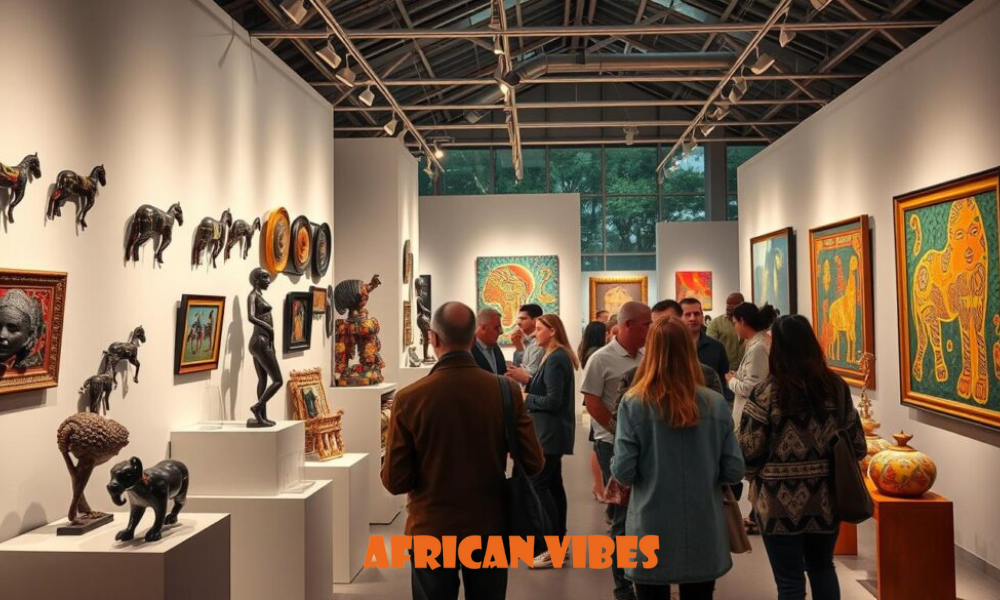
As we enter the Völklingen Ironworks, a UNESCO World Heritage site near the German-French border, we start a journey that changes how we see Africa. The “The True Size of Africa” exhibition runs from November 9, 2024, to August 17, 2025. It showcases 26 works, including photos, paintings, videos, and sculptures. This exhibition aims to show Africa’s rich culture, challenge stereotypes, and highlight its intellectual traditions.
The exhibition features artists from many African countries, like Nigeria, Ghana, and South Africa. It also includes artists from Cuba and the UK with African roots. This mix of talents shows the diversity and creativity of Africa, moving beyond the usual one-sided views.
Key Takeaways
- The “The True Size of Africa” exhibition at the Völklingen Ironworks UNESCO World Heritage site features 26 captivating works by artists from across Africa and the diaspora.
- The exhibition aims to explore Africa’s rich cultural history, intellectual traditions, and challenge stereotypes about the continent.
- The diverse array of artists, including those from Nigeria, Ghana, Congo, Senegal, and more, showcases the vibrant and multifaceted nature of African creativity.
- The exhibition runs from November 9, 2024, to August 17, 2025, providing a unique opportunity to rethink our perceptions of Africa.
- The exhibition’s location at the Völklingen Ironworks, a UNESCO World Heritage site, adds to the cultural significance and global impact of this groundbreaking showcase.
ALSO READ: Burkina Faso Breaks Colonial Ties: Drops French as Official Language
Understanding Africa’s Historical Misrepresentation in Global Context
The “The True Size of Africa” exhibition in Germany challenges the long-held misconceptions about Africa’s size and importance. It comes at a time to mark the 140th anniversary of the 1884 Berlin Conference. This event saw colonial powers divide Africa without African input or agreement.
The exhibition aims to tackle these biases and offer fresh views on Africa’s history, today, and tomorrow. It sheds light on how Africa, the birthplace of humanity, has been overlooked on world maps since the Mercator projection era.
The show also looks at how Africa has been misrepresented globally. It examines colonial exhibitions, missionary collections, and orientalist stories that have reduced Africa and its cultures.
It’s vital to challenge these misrepresentations, as they harm how young people see and interact with Africa. The exhibition wants to fight these negative impacts and help people understand Africa’s true identity, heritage, and global role.
“This is not Africa – Unlearn what you have learned” – a recent exhibition’s title shows the urgent need to challenge stereotypes and create new standards of what it means to be African.
The exhibition invites viewers to rethink their assumptions and connect with the varied and complex cultures of Africa. It features works by 26 artists linked to Africa, like Athi-Patra Ruga and Nolan Oswald Dennis. Their pieces explore themes of trauma, decolonization, and the African diaspora’s global influence.
As we discuss decolonization, eurocentrism, and racialization, shows like “The True Size of Africa” are key. They help reshape the narrative and empower people to value African art, history, and culture.
The True Size of Africa Exhibition: A Groundbreaking Cultural Showcase
The “True Size of Africa” exhibition challenges common misconceptions about Africa. It uses various art forms to show the continent’s true size. This approach helps visitors understand Africa’s past, present, and future in depth.
At the exhibition’s core are works by contemporary African artists. These pieces offer fresh views on Africa, highlighting its rich cultural history. The show features terracotta, textiles, manuscripts, and glass shards, celebrating Africa’s diverse art.
The exhibition includes rare artifacts from Mali, Morocco, and Nigeria. These pieces, from ancient times to modern art, offer a deep dive into Africa’s culture. They make history come alive in a unique way.
| Event | Date | Location |
|---|---|---|
| The Limbo Museum’s Grand Opening | November 6, 2024 | Accra, Ghana |
| The Jewel of Africa Art Fair Featuring Dr Esther Mahlangu | October 29, 2024 | London, United Kingdom |
| The 36th Bienal de São Paulo Unveiling | October 24, 2024 | São Paulo, Brazil |
| The Deutsche Börse Photography Prize 2025 Shortlist Announcement | October 23, 2024 | Frankfurt, Germany |
The exhibition breaks the mold of traditional art museums. It combines fragments with artworks from various times and places. This sparks a deeper understanding of Africa’s cultural history and artistic perspectives.
“The exhibition generates a dense network of impressions and modes of perception, aiming to facilitate a sustained and multi-layered encounter with Africa’s true size in its past, present, and future.”
The “True Size of Africa” exhibition celebrates Africa’s rich and diverse art. It fosters appreciation for Africa’s global artistic connections and its impact on the world.
Völklingen Ironworks: A UNESCO Heritage Site Transformed
The Völklingen Ironworks is a UNESCO World Heritage site. It’s the setting for this amazing exhibition. The historic blower hall shows African sculptures and objects from Saarland collections alongside industrial machinery. This mix of old and new, of industry and culture, is at the heart of the show.
Once a hub for steel, the Völklingen Ironworks now celebrates its industrial past. It’s a UNESCO site that offers a unique backdrop for the völklingen ironworks exhibition. Here, visitors can see the wide range of african art exhibitions near french border. It’s a journey into how industry and culture connect.
The exhibition is set in a unesco world heritage exhibitions setting. It makes us think about how humans and nature are linked. By pairing the ironworks’ power with Africa’s art and culture, it challenges our views. It offers a new way to see the world.
| UNESCO World Heritage Site | Year Inscribed | Unique Characteristics |
|---|---|---|
| Völklingen Ironworks | 1994 | Exceptional example of the development of large-scale industry in Europe, showcasing the architectural and technological evolution of ironworks from the late 19th to the mid-20th century. |
| Valcamonica | 1979 | Contains over 140,000 prehistoric petroglyphs carved over 8,000 years, depicting themes related to agriculture, navigation, war, and magic. |
| Florence | 1982 | Symbol of the Renaissance, showcasing 600 years of extraordinary artistic activity under the Medici family’s economic and cultural pre-eminence in the 15th and 16th centuries. |
| Venice | 1987 | Spread over 118 small islands, became a major maritime power by the 10th century, with architectural masterpieces by renowned artists like Giorgione, Titian, Tintoretto, and Veronese. |
The völklingen ironworks exhibition explores the links between industry, culture, and art. By using the UNESCO-recognized Völklingen Ironworks, it promises a deep and impactful experience for everyone who visits.
Featured Artists and Their Global Origins
The “The True Size of Africa” exhibition at the Völklingen Ironworks UNESCO Heritage Site showcases a diverse array of contemporary african artists. Their work challenges preconceptions and celebrates the rich cultural heritage of the African continent. These artists come from all over the world, offering a dynamic and multifaceted perspective on african diaspora art.
Yinka Shonibare’s vibrant and thought-provoking art installation is a standout piece. It explores the intersection of identity, colonialism, and globalization. The British-Nigerian artist’s work is a powerful commentary on cultural exchange and the quest for self-expression.
The striking roméo mivekannin portraits are also captivating. They depict famous figures like former U.S. President Barack Obama and current Vice President Kamala Harris. This Beninese artist’s work reminds us of the global reach and impact of contemporary african artists.
The exhibition also features bold and evocative works by artists like Zanele Muholi and Kara Walker. Muholi is a South African visual activist known for documenting the LGBTQ+ community. Walker is an American artist whose silhouette installations tackle complex issues of race, gender, and power.
Together, these contemporary african artists and their diverse african diaspora art offer a multifaceted exploration of identity, history, and the human experience. They invite visitors to engage with the rich tapestry of African creativity and its global influence.
Powerful Installations: Exploring African Identity and Heritage
The “The True Size of Africa” exhibition at the Völklingen Ironworks is a captivating exploration of African identity and heritage. It features powerful art installations. One standout piece is by British artist Yinka Shonibare. It shows a woman in vibrant African clothing climbing a grand staircase with a globe for a head, placing Africa where her face would be.
This thought-provoking piece challenges the historical misrepresentation of Africa on the global stage.
Another remarkable installation is by the Kongo Astronauts collective from the Democratic Republic of the Congo. Their video installation uses striking imagery of astronauts. It comments on the current situation in their country, linking the aspirations of space exploration to the realities of their nation’s struggles.
These powerful installations showcase the exhibition’s ability to explore the complexities of African identity in global art and art on African intellectual traditions. By providing a platform for diverse artistic voices, the exhibition encourages visitors to reflect on the kongo astronauts art installation. It has broader implications for understanding the African continent’s past, present, and future.
African Diaspora Voices in Contemporary Art
The “The True Size of Africa” exhibition in Germany highlights the vibrant voices of the African diaspora. It shows how African culture influences art worldwide. Artists with African roots share their experiences and views through their art, breaking down cultural and geographical barriers.
Susana Pilar Delahante Matienzo, a Cuban in Amsterdam, calls the exhibition a “big family all over the world.” Her words beautifully capture the exhibition’s spirit. They highlight the global impact of african diaspora influences in art, cross-continental african art, and global art featuring african culture.
The exhibition features works by Kerry James Marshall, Theaster Gates, and Aaron Douglas, among others. It also includes international artists like Eustáquio Neves and Senèque Obin. The show explores the African diaspora’s legacy through six themes, including “Maps and Margins” and “Everyday Lives.”
The exhibition goes beyond the gallery, challenging our views of history. It presents new narratives that have been overlooked. This fresh perspective on african diaspora influences in art, cross-continental african art, and global art featuring african culture is offered in Washington, D.C.
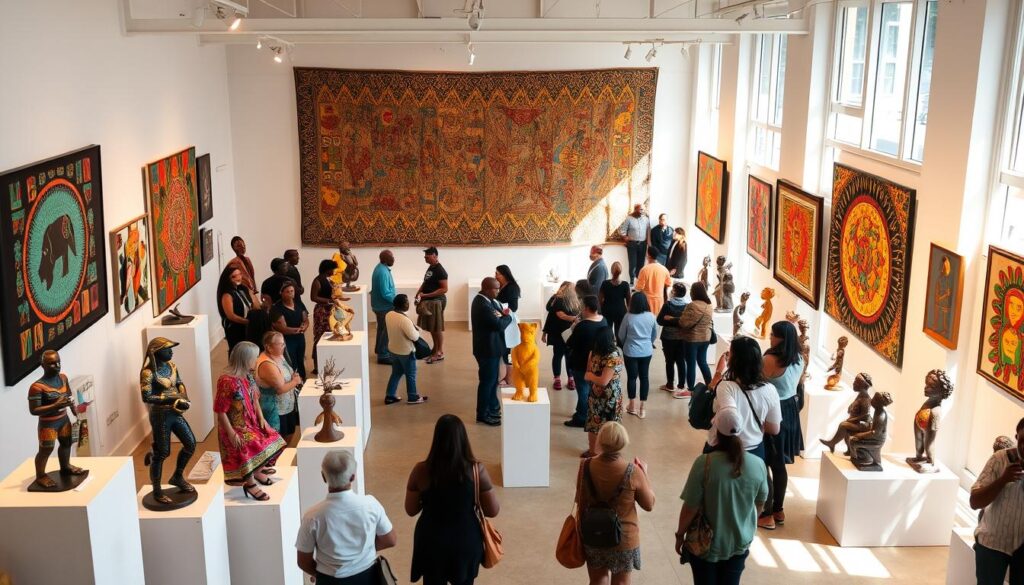
Exploring the exhibition, we see the lasting impact of the African diaspora on art. It celebrates the resilience and creativity of these artistic voices. The show invites us to appreciate the rich diversity of african diaspora influences in art, cross-continental african art, and global art featuring african culture.
Addressing Resource Exploitation Through Artistic Expression
The “The True Size of Africa” exhibition features artworks that tackle the big issue of resource exploitation in Africa. The Kongo Astronauts collective’s video installation highlights the use of coltan, a key mineral in electronics, in the Democratic Republic of the Congo. Artist Pisko Crâne uses astronauts in his work to show how resource extraction affects his country.
These artworks not only bring attention to african resource exploitation art. They also make us think about the art depicting african challenges the continent faces. By using african art on resource exploitation, these artists push us to face the truth about resource extraction. They show us how it impacts local communities and the environment.
“The True Size of Africa” exhibition is a powerful platform for artists to speak out against resource exploitation in Africa. Their works make us question our global systems and aim for a more sustainable future.
The exhibition’s installations make us think about our part in these challenges. By engaging with african resource exploitation art, we can better understand the art depicting african challenges. We can also look for ways to support more ethical and responsible african art on resource exploitation.
Cultural Workshops and Educational Programs
The “The True Size of Africa” exhibition is all about understanding and loving African art, culture, and heritage. It features over 250 sculptures from across the continent. The organizers also offer cultural workshops and educational programs to engage visitors deeply.
These programs include interactive storytelling and hands-on workshops. They let you explore traditional techniques and mediums. You’ll get to see the vibrant creativity of Africa up close.
The educational programs aim to correct common misconceptions about Africa. They highlight the continent’s rich history and diverse artistic expressions. Expert curators and cultural ambassadors lead these programs, expanding your view of Africa’s cultural heritage.
Whether you love art, teach, or just want to learn, the workshops and programs at “The True Size of Africa” will impact you. They invite you on a journey through African storytelling through art.
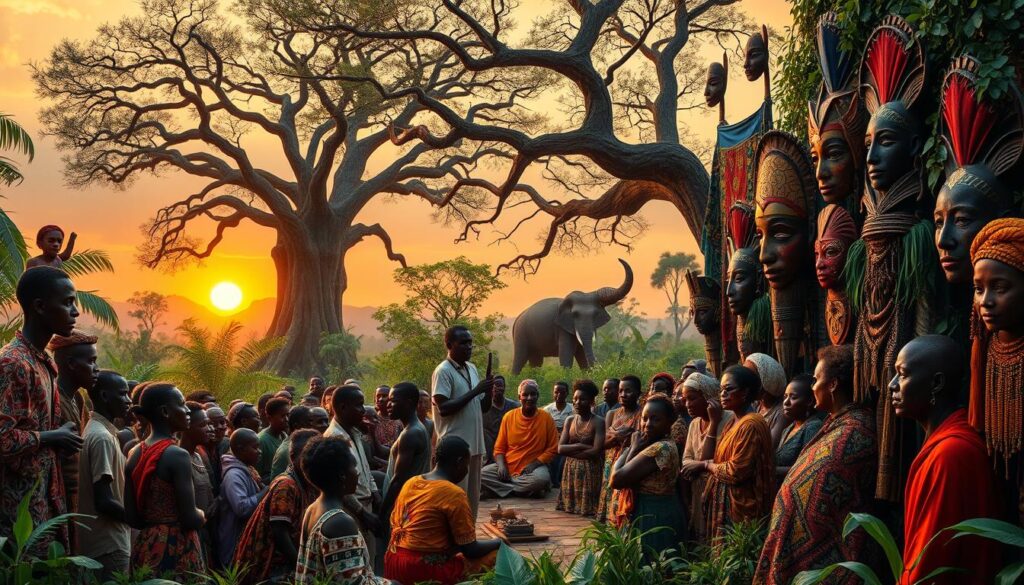
“The exhibition showcases objects with philosophical, social, political, and religious implications, challenging visitors to look beyond the surface and uncover the deeper meanings and cultural significance embedded within these remarkable works of art.”
Immerse yourself in the world of cultural workshops in art exhibitions and educational african art exhibitions. Get ready to be enlightened, inspired, and connected to the vibrant tapestry of African creativity.
Exhibition Curator Dr. Ralf Beil’s Vision
Dr. Ralf Beil, the curator of “The True Size of Africa” exhibition, aims to change how we see Africa. He wants to show Africa’s big role in world history and its big influence on people everywhere.
Beil says the exhibition will give a full and true view of Africa’s culture, history, and art. It will fight stereotypes and help us understand Africa’s deep heritage better.
“The True Size of Africa” exhibition is a powerful platform to showcase the diversity, resilience, and global impact of African cultures. Through this artistic exploration, we hope to shatter the narrow narratives that have long overshadowed the continent’s true stature and contributions.”
Beil has a lot of experience in curating art. He has worked on many solo exhibitions, including at the Glendale College Art Gallery in California. His work has been praised for exhibition challenging african stereotypes and art redefining africa’s image.
Dr. Ralf Beil loves to share different voices and views. His work keeps drawing people in and making them think differently. This exhibition invites us to see Africa’s true size and importance.
Conclusion
“The True Size of Africa” exhibition has shown us the true beauty of African art, culture, and history. It opened our eyes to the African continent’s scale and global influence. This groundbreaking show at the Völklingen Ironworks changed our views.
This exhibition took us on a journey through African identity and heritage. We saw tribal ceremonies and innovative collage works. It showed us how African culture is vibrant and changing, making it a key part of the world’s art scene.
As we say goodbye to this exhibition, we have a deeper respect for African people’s resilience and creativity. The catalog and educational programs will keep inspiring people. They will help break stereotypes and show the global impact of African culture.
We look forward to the upcoming African art exhibitions in 2024. They will continue to celebrate African culture in art and its powerful influence.
FAQ
What is the “The True Size of Africa” exhibition?
The True Size of Africa exhibition is at the Völklingen Ironworks, a UNESCO site near the German-French border. It runs from November 9, 2024, to August 17, 2025. The show features 26 works, including photos, paintings, and sculptures.
It explores Africa’s culture, history, and challenges stereotypes. Artists from Africa and the diaspora are showcased.
Why is the exhibition significant?
The exhibition corrects the mistake of underrepresenting Africa on world maps. It highlights Africa’s role as the cradle of humanity. It also marks the 140th anniversary of the 1884 Berlin Conference.
This conference divided Africa without African input. The show aims to challenge prejudices and offer new views on Africa.
What types of artworks are featured in the exhibition?
The exhibition includes various art forms. It features recent artworks and new installations. These works aim to deeply engage visitors with Africa’s size and history.
How does the Völklingen Ironworks play a role in the exhibition?
The Völklingen Ironworks is the exhibition’s backdrop. Its historic blower hall contrasts African sculptures with industrial machinery. This contrast is a key part of the show’s message.
What are some of the notable artworks in the exhibition?
Notable artists include Yinka Shonibare, William Kentridge, and Zanele Muholi. Roméo Mivekannin’s hanging portraits, featuring Barack Obama and Kamala Harris, are also showcased.
How does the exhibition address the issue of resource exploitation in Africa?
The exhibition highlights resource exploitation in Africa. For example, the Kongo Astronauts’ video installation focuses on coltan mining in the Democratic Republic of the Congo. Artist Pisko Crâne uses astronaut imagery to talk about global waste and extraction.
What educational and cultural programs are offered as part of the exhibition?
The exhibition includes cultural workshops and educational programs. Details are not provided. These programs aim to engage visitors and deepen their understanding of the exhibition.
What is the curator’s vision for the exhibition?
Dr. Ralf Beil, the curator, wants to change how people see Africa. The exhibition aims to show Africa’s underestimated role in history. It seeks to challenge stereotypes and highlight Africa’s cultural and historical significance.FAQ
What is the “The True Size of Africa” exhibition?
The True Size of Africa exhibition is at the Völklingen Ironworks, a UNESCO site near the German-French border. It runs from November 9, 2024, to August 17, 2025. The show features 26 works, including photos, paintings, and sculptures.
It explores Africa’s culture, history, and challenges stereotypes. Artists from Africa and the diaspora are showcased.
Why is the exhibition significant?
The exhibition corrects the mistake of underrepresenting Africa on world maps. It highlights Africa’s role as the cradle of humanity. It also marks the 140th anniversary of the 1884 Berlin Conference.
This conference divided Africa without African input. The show aims to challenge prejudices and offer new views on Africa.
What types of artworks are featured in the exhibition?
The exhibition includes various art forms. It features recent artworks and new installations. These works aim to deeply engage visitors with Africa’s size and history.
How does the Völklingen Ironworks play a role in the exhibition?
The Völklingen Ironworks is the exhibition’s backdrop. Its historic blower hall contrasts African sculptures with industrial machinery. This contrast is a key part of the show’s message.
What are some of the notable artworks in the exhibition?
Notable artists include Yinka Shonibare, William Kentridge, and Zanele Muholi. Roméo Mivekannin’s hanging portraits, featuring Barack Obama and Kamala Harris, are also showcased.
How does the exhibition address the issue of resource exploitation in Africa?
The exhibition highlights resource exploitation in Africa. For example, the Kongo Astronauts’ video installation focuses on coltan mining in the Democratic Republic of the Congo. Artist Pisko Crâne uses astronaut imagery to talk about global waste and extraction.
What educational and cultural programs are offered as part of the exhibition?
The exhibition includes cultural workshops and educational programs. Details are not provided. These programs aim to engage visitors and deepen their understanding of the exhibition.
What is the curator’s vision for the exhibition?
Dr. Ralf Beil, the curator, wants to change how people see Africa. The exhibition aims to show Africa’s underestimated role in history. It seeks to challenge stereotypes and highlight Africa’s cultural and historical significance.
Source Links
- Germany exhibition aims to broaden understanding of Africa through art | Africanews
- Exploring Africa’s Legacy and Modern Influence: ‘THE TRUE SIZE OF AFRICA’ at the Historic Blower Hall in Saarlouis, Germany – ART AFRICA Magazine
- Unlearn What You Have Learned”
- ART AFRICA Magazine – Contemporary Art from Africa And The Diaspora, Painting, Sculpture, Writing
- Medieval Africa as a cultural force is subject of major exhibition at Block Museum
- UNESCO World Heritage Centre – World Heritage List
- UNESCO World Heritage Centre – activities
- France-Atlanta Offers a New Look at Africa Through the Eyes of a New Generation of Artists – Global Atlanta
- An Exhibition ’Making Africa, A continent of contemporary design’
- African Museums Power: Promoting Cultural Heritage and Unity in Africa
- A World in Common | Tate
- 10 Must-Know Insights About Modern African Art
- These Artworks Reimagine the Legacy of the African Diaspora
- Art for our sake: creativity and humanity in the African diaspora
- Panafrica across Chicago | The Art Institute of Chicago
- Art exhibition reflects on identity and transformation – SADC Parliamentary Forum
- Africa-Asia, A New Axis of Knowledge 3, a Conference-Festival
- ACASA — Arts Council of the African Studies Association
- The Language of Beauty in African Art | The Art Institute of Chicago
- The Museum of African Contemporary Art Al Maaden (MACAAL), Marrakech, first monographic exhibition is dedicated to Joël Andrianomearisoa – ART AFRICA Magazine
- Long resume_2_2020
- Herbert Matter – Art Blart _ art and cultural memory archive
- SF Art Book Fair
- Africa
- African Ceremonies: PASSAGES – Google Arts & Culture
- Save Water: In Conversation with Olatunji Sanusi – ART AFRICA Magazine
