


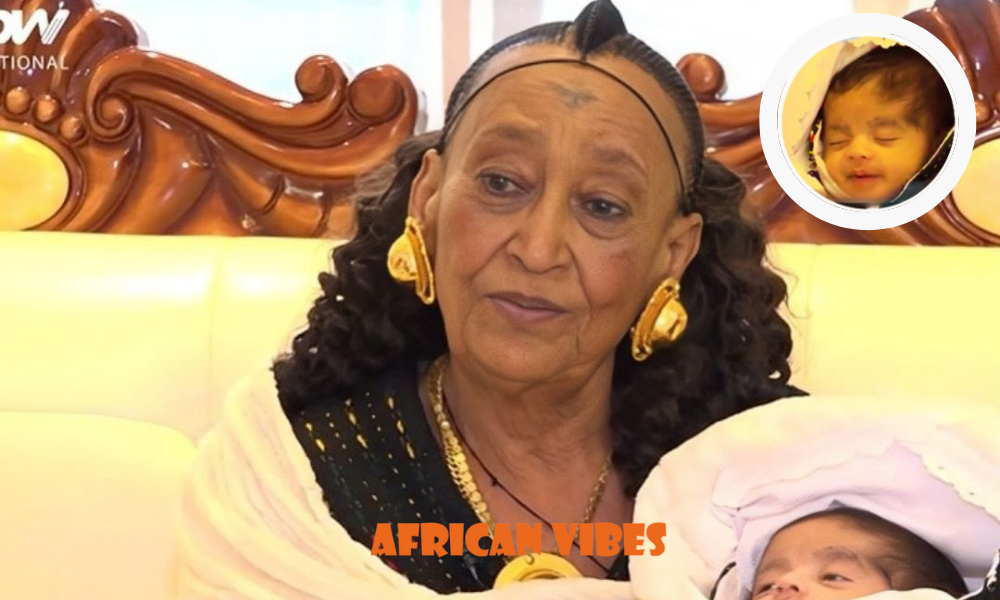
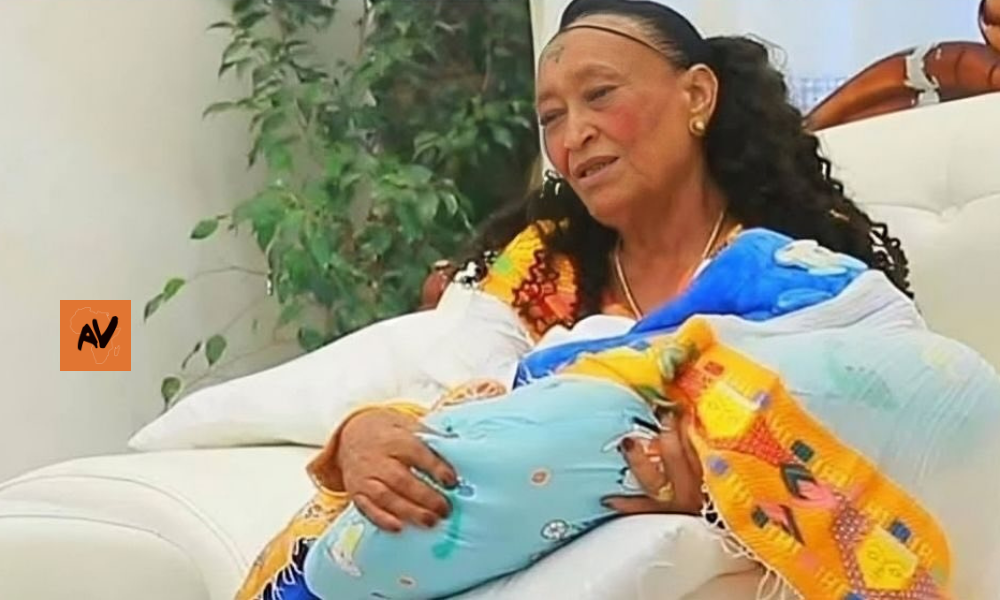
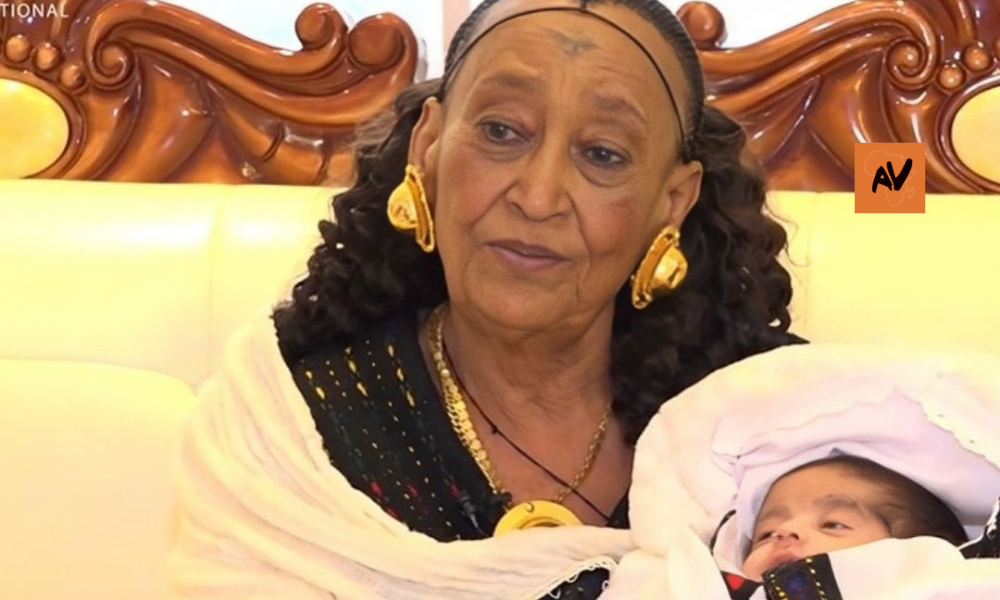
In a story that has captivated hearts across the globe, Embeyte Medhin Hagos, a 76-year-old Ethiopian Woman Gives Birth also known as Medhin Barka, has become a symbol of hope and resilience. Through IVF, she managed to conceive her son after struggling with childlessness for decades. Take a moment that not only made headlines but deeply moved communities far beyond her hometown of Mekelle in Ethiopia’s Tigray region.
A Journey Fueled by Faith and Perseverance
For decades, Embeyte Medhin dreamed of becoming a mother. Like many women in traditional societies, especially in Ethiopia, the role of motherhood carries immense cultural and emotional significance. It’s a milestone that many consider essential to womanhood, and those who cannot bear children often face social stigma or internal feelings of incompleteness.
Despite years of unsuccessful attempts to conceive, she never gave up. Her path eventually led her to India, where she underwent in vitro fertilization (IVF)—a medical breakthrough that made her lifelong dream possible. About a year after the procedure, she gave birth at a hospital in Mekelle, in the midst of a region still grappling with the aftermath of conflict and humanitarian challenges since 2020.
A Birth Celebrated as a Blessing
When Embeyte was first told she was pregnant, she couldn’t believe it. “I was not convinced at all,” she recalled. Her disbelief was shared by her family, highlighting just how extraordinary this moment was for all involved. But as her pregnancy progressed and the reality set in, what followed was a wave of joy, celebration, and spiritual reflection.
Local media documented a beautiful baptism ceremony, and the community came together to honor what many saw not just as a personal triumph, but a collective miracle—a rare and sacred gift during trying times.
ALSO READ: Afronista Of The Week: Selly Galley And Her Struggle With Motherhood
A Modern Miracle with Biblical Echoes
Embeyte’s story has drawn powerful comparisons to biblical narratives, especially that of Sarah, the wife of Abraham, who conceived in old age. These spiritual connections have added layers of meaning to an already profound story. Many in her community view her childbirth as a divine blessing, a symbol of unshakable faith and the wonders that can still happen against all odds.
Her pregnancy is not only being recognized as a personal milestone but as a potential world record, with speculation that her age could place her among the oldest mothers to give birth through IVF—possibly catching the attention of organizations like Guinness World Records.
The Intersection of Tradition, Technology, and Tenacity
Embeyte Medhin Hagos’s experience is a powerful reminder of how modern medical advances, such as IVF, are transforming lives in even the most traditional and remote communities. But what makes her story extraordinary is not just the science—it’s the spirit behind it. Her persistence, her faith, and the support of her community all played vital roles in bringing this miracle to life.
In a world that often defines time and age by limitations, Embeyte’s story reminds us that hope doesn’t expire—and that sometimes, the most incredible stories are the ones that unfold when we refuse to give up on our dreams.
ALSO READ: Miracle at 70: Safina Namukwaya Becomes Africa’s Oldest New Mother
Here are some of the questions that Women Ask
These are incredibly powerful and necessary questions, and they tap into centuries of gendered social structures, cultural expectations, and double standards. Let’s thoughtfully address each one with empathy and depth:
Why is a woman’s worth still tied to motherhood?
The association between a woman’s worth and motherhood is rooted in historical, cultural, and patriarchal constructs. In many societies, especially traditional ones, women have long been defined by their reproductive roles—as bearers and nurturers of children. This stems from agrarian and lineage-based value systems, where fertility was directly tied to family wealth, labor, inheritance, and legacy.
Religion has also played a role, reinforcing the idea that a woman’s “purpose” is linked to childbirth. While these narratives have evolved over time, they still echo in modern expectations, where childless women are sometimes pitied, stigmatized, or seen as “incomplete”—even when they’ve achieved success in other areas of life.
Yet, the tide is shifting. Across the world, women are increasingly reclaiming their autonomy, asserting that worth is not tied to wombs, but to character, contribution, and choice.
Why is older women’s sexuality taboo, while older men’s virility is celebrated?
This double standard reflects the gendered politics of aging and sexuality. Male aging is often associated with wisdom, power, and continued sexual prowess, while female aging has historically been linked to decline, invisibility, or loss of femininity. This discrepancy is magnified by media, cultural storytelling, and even medical discourse.
Older men who father children are admired for their virility. But older women who seek sexual or reproductive agency are seen as unnatural or selfish. These taboos come from ageist and sexist views that reduce women’s value to youth and fertility, while allowing men’s value to expand with age.
Women like Embeyte Medhin Hagos challenge this narrative by asserting late-life agency. Her pregnancy reclaims the right to desire, to hope, and to mother—on her own terms, even if those terms defy convention.
Who benefits from these norms?
These norms primarily benefit patriarchal systems that seek to control women’s bodies, choices, and societal roles. When motherhood is idealized as the pinnacle of womanhood, it limits women’s freedom and defines their value in narrow terms.
The institutions of marriage, religion, and family lineage often benefit, as these ideals reinforce traditional gender roles and keep women within expected domestic spheres.
On a deeper level, these norms protect social hierarchies that are invested in order, reproduction, and legacy. Breaking them can be threatening—but also liberating.
Is her joy not a fulfillment of the sociocultural norms tied to childbearing—and her triumph an experience shared by many childless mothers?
Yes—and this is where the story becomes both inspiring and complex.
Embeyte Medhin Hagos’s joy is, in many ways, a fulfillment of a deeply embedded cultural script. She has achieved what her community reveres: motherhood. But her triumph is also a mirror to the silent grief and longing of countless women who still navigate the shadows of infertility, stigma, and unmet desire.
Her story resonates because it represents both victory and validation—not just for herself, but for every woman who has cried in secret, prayed endlessly, or fought against time and biology for a child. It’s a shared emotional experience, even for those whose journeys remain unfulfilled.
Could this also reflect the pain of households destabilized or fractured by infertility, unable to reap the benefits of divine intervention or blessings?
Absolutely. Her miracle can be a beacon of hope, but also a reminder of loss.
In many cultures, infertility—especially in women—is wrongly seen as a failure. It can lead to divorce, isolation, economic hardship, or emotional distress. Entire households may suffer under the pressure of unmet reproductive expectations.
While Embeyte’s story brings light, it also casts a shadow on the systemic neglect of women’s emotional and medical needs around infertility. Not every woman will access IVF. Not every couple will see “divine intervention.” And until motherhood is viewed as a choice—not a requirement—many will continue to suffer in silence.
Conclusion…
Embeyte Medhin Hagos’s story is extraordinary. It is both a triumph over biology and society, and a reflection of deeply rooted cultural tensions. She redefines possibility, but she also invites us to confront the uncomfortable truths about how we value women, motherhood, aging, and choice.