


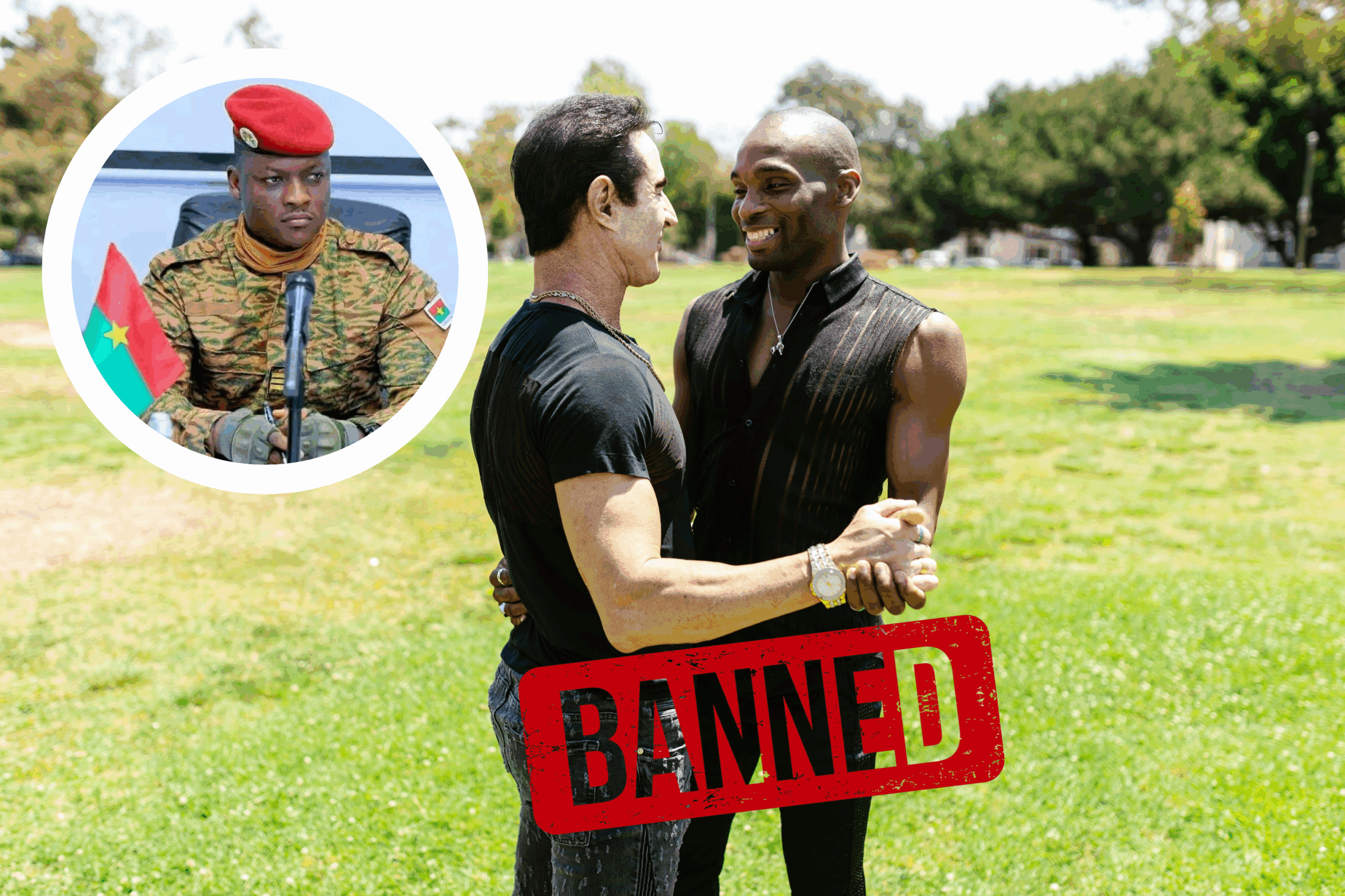
You’ve probably seen the headlines by now: Burkina Faso’s parliament unanimously voted to pass a new anti gay law that basically makes any public display of same-sex affection illegal. And when we say illegal, we mean it could land you in prison for up to five years. Oh, and if you’re not a citizen? You get deported after you serve your time. Yikes!
Justice Minister Edasso Rodrigue Bayala went on national TV to make the announcement official in no uncertain terms.
“If a person is a perpetrator of homosexual or similar practices, all the bizarre behavior, they will go before the judge,” he said, adding that foreign nationals would be deported under the law
The new law goes into effect immediately, so we’re talking zero grace period here.
This isn’t just a standalone law. It’s part of a bigger overhaul of family and citizenship rules, and they’re planning to run campaigns to make sure everyone gets the memo.
But there’s more to this story …
Naturally, the internet did what it does best: it split right down the middle. While Western media outlets and allied bodies are (predictably) calling it a “human rights disaster,” there are others smashing the ‘like’ button, calling it a major win for African traditional values.
It’s messy, it’s complicated, and everyone has an opinion. But what’s really going on behind the headlines? Let’s dig a little deeper.
ALSO READ: Opinion: Do You Think It Is OK To Have Gay Marriage In Movies And Teach It In Schools?
1. The Ultimate “It’s Not You, It’s Me” To Western Powers
Burkina Faso is having a very public breakup with the West, and this law is basically their relationship status update.
Since Captain Ibrahim Traoré took power, the country has been on an absolute tear: kicked out French troops ✓, ended Western security partnerships ✓, told international donors where they can stick their conditions ✓.
“We will no longer accept that our sovereignty be trampled underfoot,” Traoré recently declared, according to Reuters. Translation: We’re done taking orders.
This law is the cherry on top — a giant middle finger to the idea that Western approval matters. And judging by the social media reactions? A lot of people are here for it.
2. Russia Called, And Burkina Faso Said “New Phone, Who Dis?” To The West
Remember when your friend started dating someone new and suddenly their whole personality changed? That’s Burkina Faso with Russia right now.
Russian flags at government rallies? Check. Wagner mercenaries in the region? Check. Trade deals flowing eastward? Double check.
Here’s the thing: Russia’s been pushing anti-LGBTQ+ policies since 2013, and now their African allies are following suit. It’s not coincidence — it’s coordination. BBC reporting shows Russian media is literally applauding these moves across Africa.
Relationship status: It’s complicated (with Moscow).
ALSO READ: Ghana’s Parliament Passes Controversial Bill With Big Consequences For The LGBTQ+ Community
3. The Sahel’s New Group Chat Is Getting Coordinated
Mali passed similar anti-LGBTQ+ laws earlier this year. Niger’s making supportive noises. Now Burkina Faso joins in. Seeing a pattern?
The Alliance of Sahel States isn’t just sharing military resources anymore — they’re synchronizing social policies. It’s like they created a group chat called “No More Western Influence” and they’re all getting matching tattoos.
This is the first time Sahelian countries have coordinated domestic social policy, which is actually huge for regional politics. They’re not just rejecting ECOWAS (which they dramatically quit) — they’re building something entirely new.
4. Reading The Room: Domestic Politics 101
Hot take: This law is wildly popular domestically, and Traoré’s government knows it.
Afrobarometer polling consistently shows majority support across West Africa for traditional marriage definitions. We’re talking across ethnic lines, religious lines, education levels — the works.
The parliamentary vote was unanimous. Unanimous. That’s not accident — that’s politicians reading the room correctly.
Local news site comments are full of praise: “protecting our values,” “listening to the people, not outsiders.” Whether you agree or not, the domestic political calculation is pretty obvious.
5. The $10 Billion Question: What If We Just… Don’t?
Here’s where it gets really interesting: Western aid comes with strings attached. LOTS of strings. LGBTQ+ rights provisions, governance conditions, social policy requirements — the whole nine yards.
This law is essentially Burkina Faso saying, “What if we just… didn’t do that anymore?”
It’s a massive gamble. Pass this law, lose Western aid, but gain credibility with new partners (China, Russia) who don’t care about your domestic social policies as long as the resource deals flow smoothly.
Bold strategy, Cotton. Let’s see if it pays off.
The Plot Thickens: What This Really Means
Look, we get it. If you’re reading this from San Francisco or London, this law probably seems completely insane. But zoom out, and you’re witnessing something much bigger than LGBTQ+ policy.
This is about the fundamental question reshaping global politics: Who gets to decide what “human rights” means? Western donors? International organizations? Or the actual people living in these countries?
There’s no easy answer here, and that’s exactly why the debate is so intense.
The Western perspective: Universal human rights exist, and governments violating them deserve international consequences.
The sovereignty perspective: Countries should determine their own social policies without external pressure, especially from former colonial powers.
The pragmatic perspective: Maybe international relations are more complicated than simple moral frameworks.
All of these viewpoints have merit, which is precisely why this story is exploding across social media with people passionately arguing on all sides.
Your Turn: What Do You Actually Think?
Alright, we’ve laid out the facts. We’ve shown you the strategic angles most outlets are ignoring. Now we want to hear from YOU.
Drop a comment and tell us:
🔥 Are you team sovereignty? Think countries should resist external pressure on social policies?
🌍 Are you team universal rights? Believe some principles transcend borders?
🤔 Are you team “it’s complicated”? See valid points everywhere but struggle with the specifics?
Ground rules: We’re here for nuanced discussion, not Twitter-style dunking. People of good faith can disagree on fundamental values while still having productive conversations.
So… what’s your take? The comment section is officially yours.