


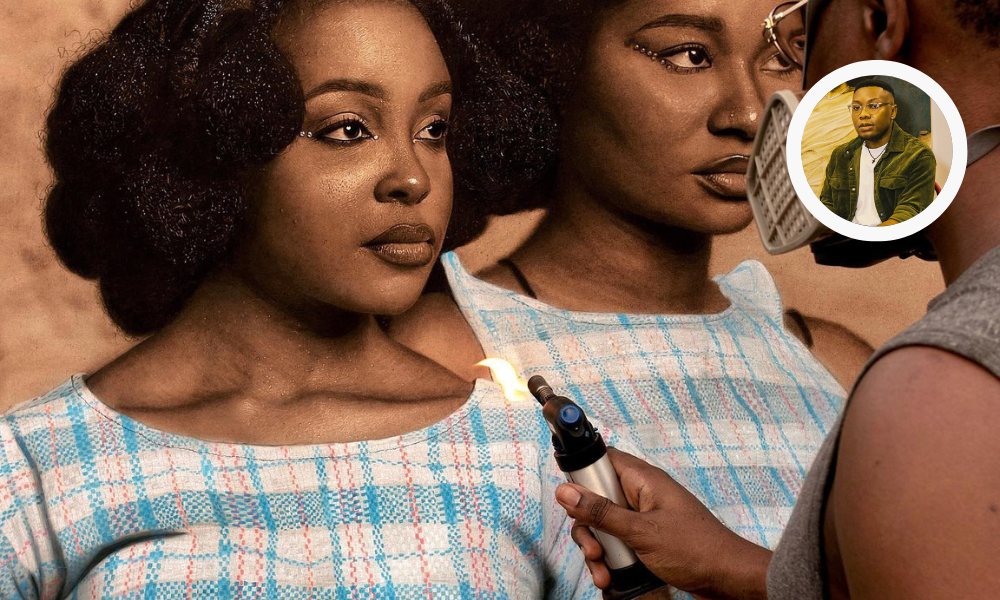
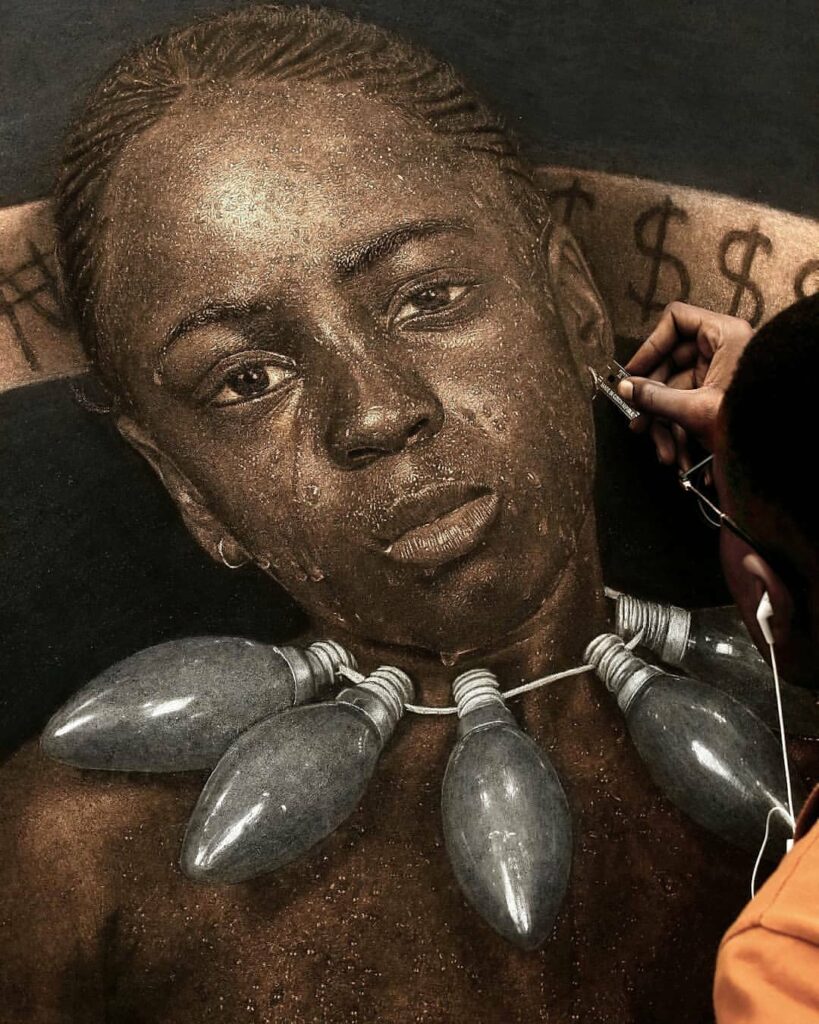
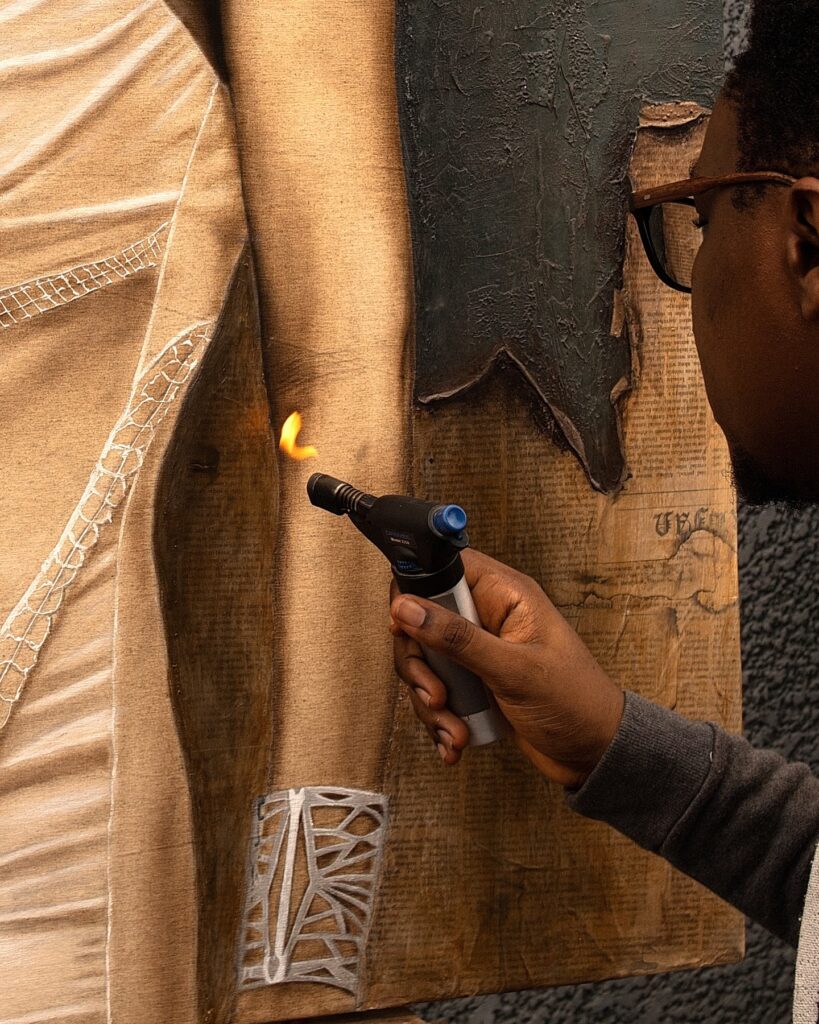
Ghana Must Go Bag Who would have thought that a humble woven bag—once a symbol of migration and struggle—could be reimagined into high art and fashion?. That woven, checkered plastic one we all grew up seeing—wasn’t just a bag? What if it held more than clothes and shoes? What if it carried stories, struggles, and style? Enter Alex Peter Idoko, the Nigerian pyrography genius who’s setting the art world on fire—literally—with his bold blend of fire, razor blades, pastel, and purpose.
???? Pyrography Meets Patterned Plastic
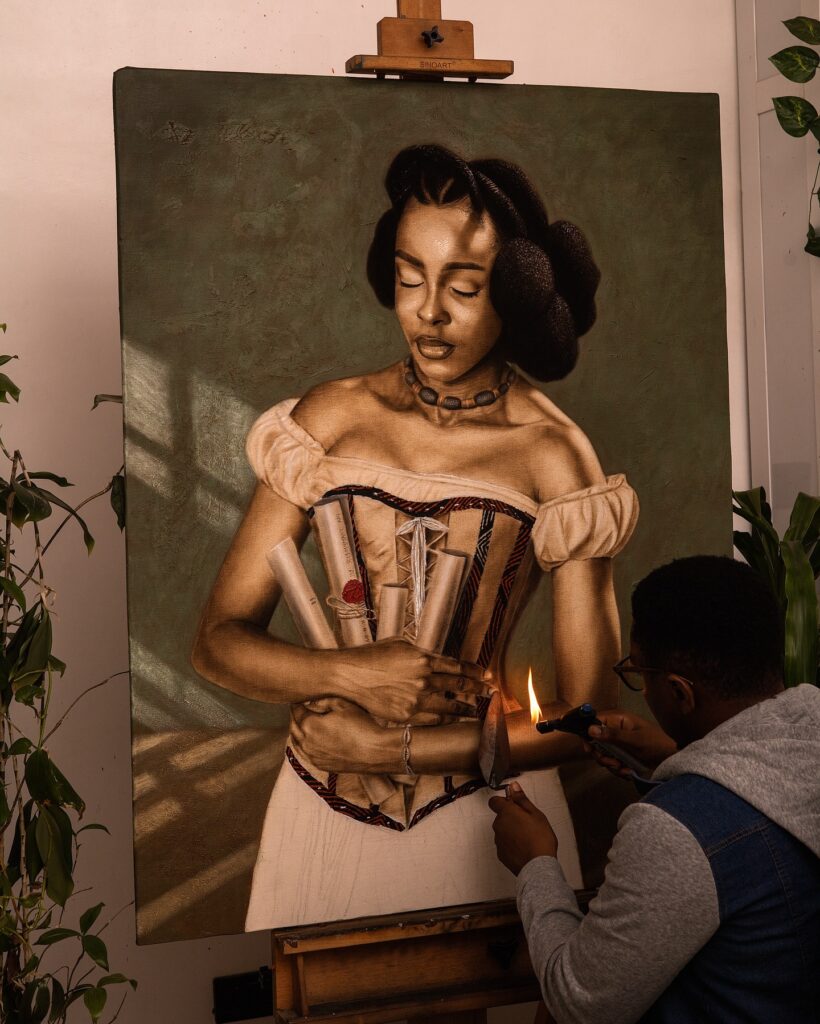
Born in Abuja in 1992 and raised in Lagos, Alex Peter Idoko didn’t follow the typical artist’s path. He started with accounting—yes, ledgers and balance sheets—before realizing that the only thing he really wanted to balance was fire, razors, and passion. Fast forward a few years, and today he’s a global name known for hyperrealist and surrealist wood-burned art that speaks to identity, migration, Black history, and cultural memory. One of his latest inspirations? The Ghana Must Go bag.
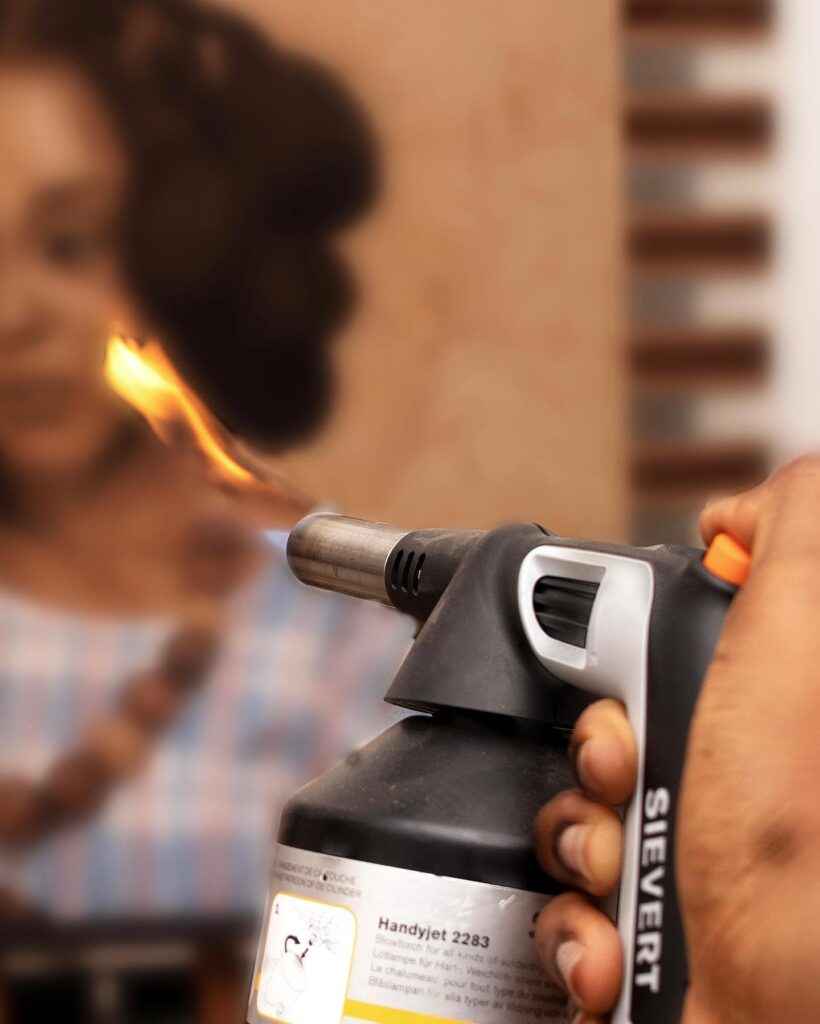

Yes, that bag. The red, blue, or green checkered woven bag that’s a staple across West Africa, often used to carry belongings during travel or migration. Known by many names across the continent, it’s been both a symbol of practicality—and a reminder of displacement.
“The bag is not just for the conveyance of our materials but of culture and heritage,” says Idoko. “It’s a path that burns the palm of the one who seeks a better place to live and work.”
???? From Luggage to Looks: Art Becomes Wearable
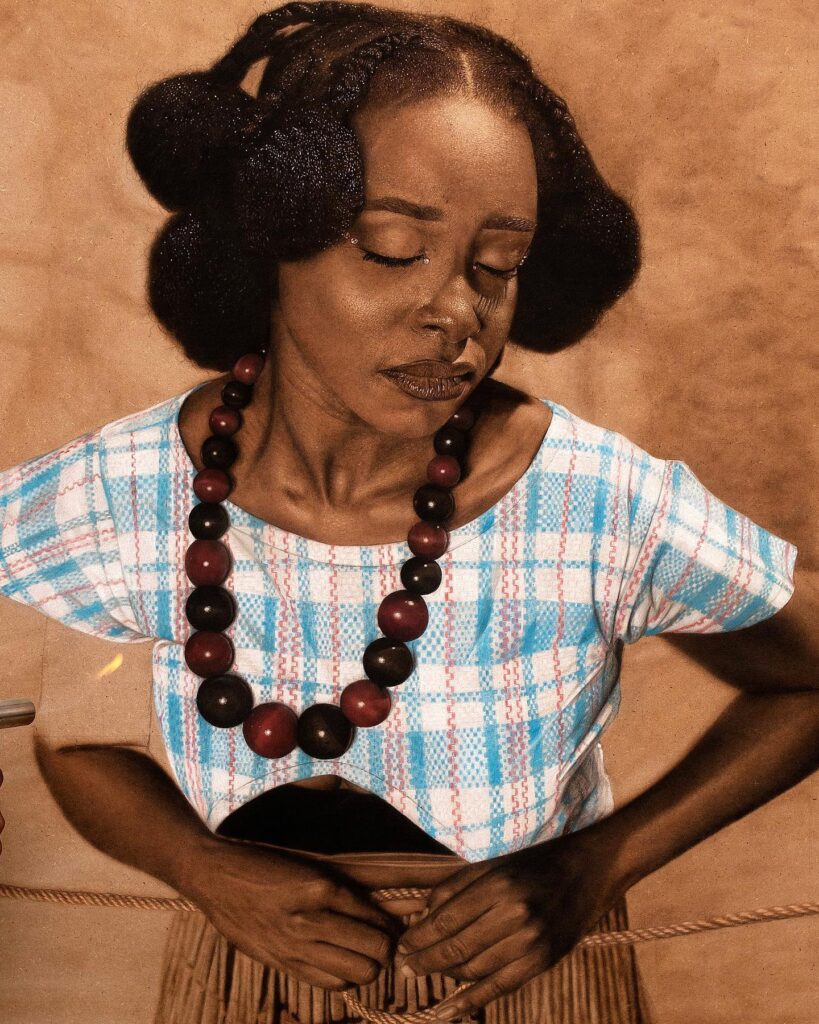
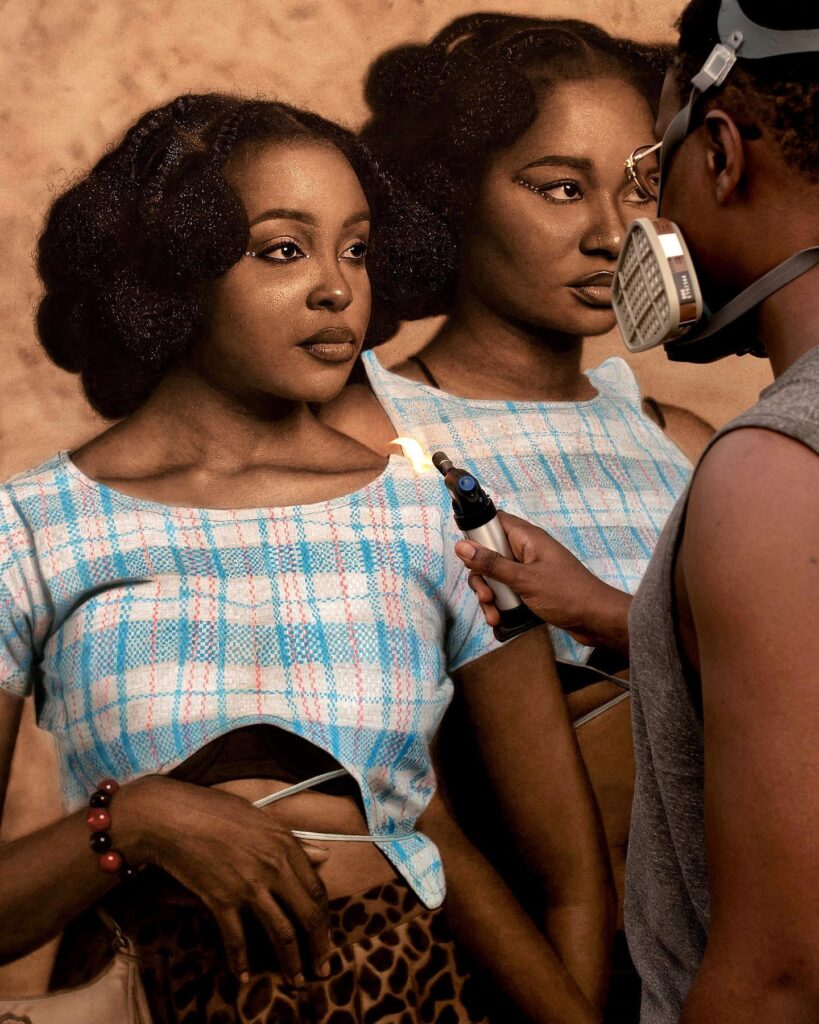
In Idoko’s work, we see this iconic bag go beyond its physical form. His piece titled “Isoken” captures a subject wearing a shirt made from the woven bag’s material—only this time, it’s immortalized on wood using fire and pastel. It’s an experience, not just an artwork.
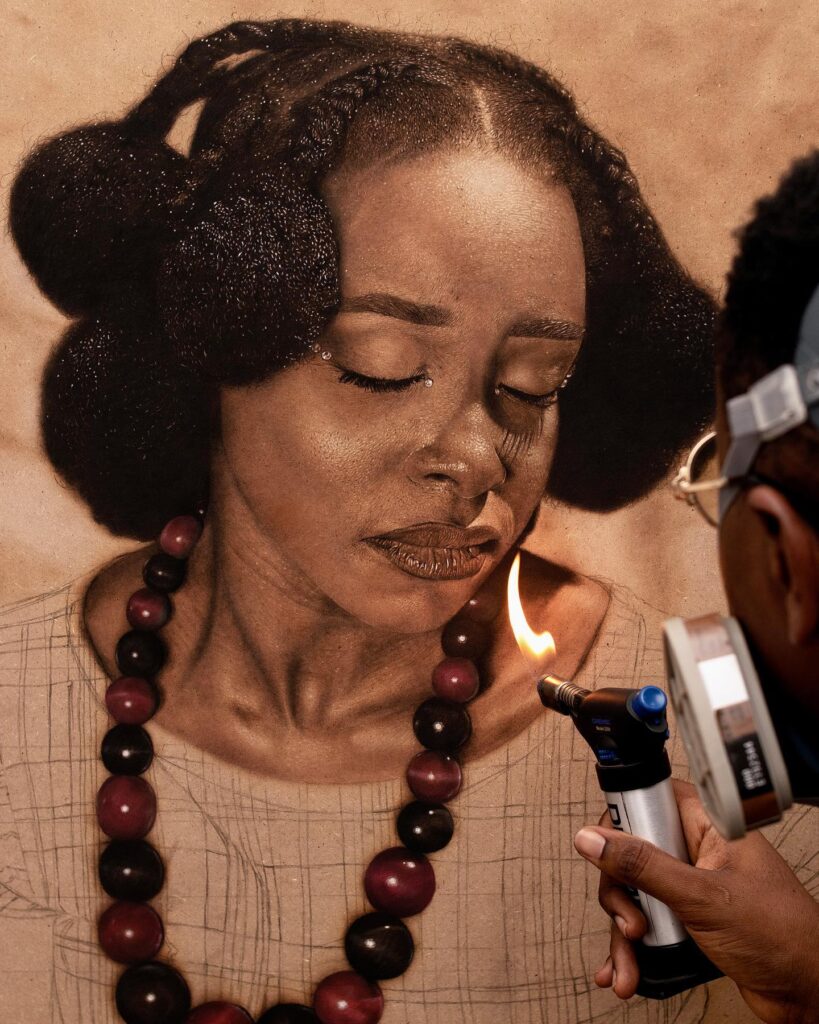
Through his technique, dubbed pyro-fusionism, he brings warmth and coolness together—literally burning the past into the present, while painting the future in surreal color. The texture of the bag becomes skin, fabric, story, and memory all at once.
His fire doesn’t destroy—it refines. Just like migration, which leaves behind scars but also strength.
ALSO READ: Kwabena Ofe: Reimagining African Identity Through Textile Art
???? What Do You Call the “Ghana Must Go” Bag?
In Nigeria, it’s known as the “Ghana Must Go” bag, a name rooted in the 1983 mass expulsion of Ghanaians from Nigeria—a painful political moment that turned a common bag into a symbol of forced movement. In Ghana, it’s often called a “Nigerian bag.” In Zimbabwe, it might be called a “China bag.” In South Africa, “Zimbabwe bag.” Funny how we all call it after someone else. It says a lot about how we view migration—something always happening to others.
- China bag (South Africa)
- Refugee bag (Germany)
- Türkenkoffer or “Turkish suitcase” (Germany)
- Bangladeshi bag (UK)
- Migrant bag (Global diaspora slang)
So what do you call it in your country? Drop it in the comments!
????️ Legacy in Fire and Ash
From exhibiting in Lagos to London, Houston to Miami, Alex Peter Idoko’s work has graced some of the most prestigious art spaces. His awards, including the Beautiful Bizarre Art Prize and Artnation People’s Choice Award, are a testament to how far he’s come—literally and metaphorically—from accounting textbooks to international acclaim.
But the real magic lies in how his art touches something raw in all of us: the desire to be seen, the struggle to move forward, and the stories we carry in our bags—woven, burned, or otherwise.
ALSO READ: Queen Ronke’s Bold Vision for Africa’s Creative Future
???? Art that Talks Back
Idoko’s work challenges us to reimagine everyday objects as vessels of history, identity, and transformation. What once carried clothes, now carries culture. What once signified struggle, now radiates style.
By including Afrocentric patterns, fire-based artistry, and powerful storytelling, Idoko proves that fashion is memory, and memory is art.
✨ Final Thoughts: The Journey Is the Art
Idoko’s journey reminds us that art isn’t always about beauty. Sometimes it’s about the burn, the scars, and the resilience we find in the journey. The “Ghana Must Go” bag may be stitched from plastic, but in Idoko’s world, it’s a symbol of history, heritage, and hope. His use of the “Ghana Must Go” bag is more than nostalgic—it’s revolutionary.
Next time you see that bag at the market or in a traveler’s hand, take a second look. Maybe, just maybe, it’s the next great canvas waiting to be lit.