


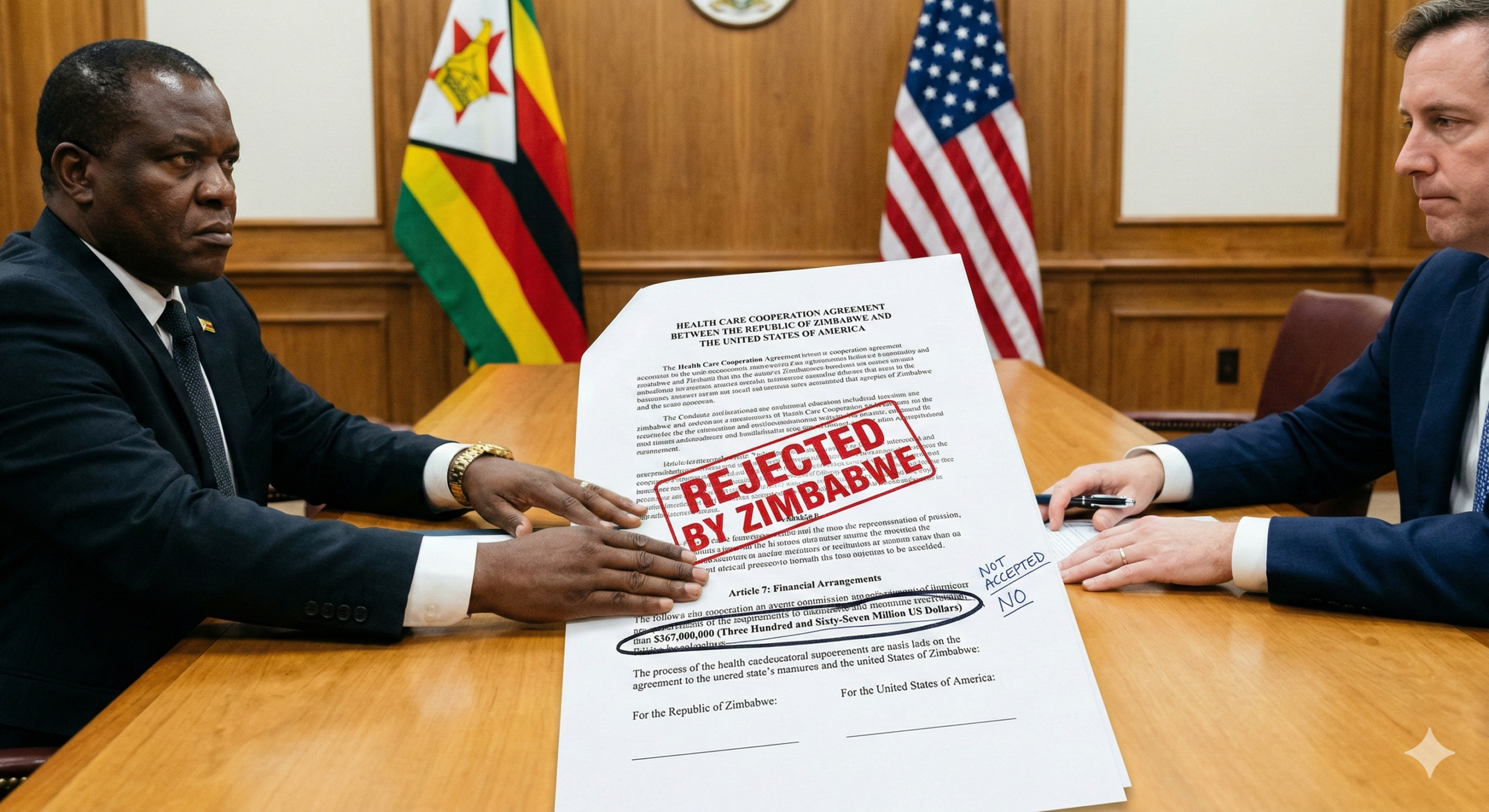
In late February 2026, Zimbabwe did something rare in global health diplomacy: it walked away from a US$367 million, five‑year health funding agreement with the United States.
For years, Washington has been one of Harare’s biggest health partners, pouring in close to US$2 billion since 2006 for HIV care, TB treatment, laboratory systems and epidemic response. Yet this time, instead of quietly renewing a familiar lifeline, President Emmerson Mnangagwa’s government said no.
Officials in Harare described the proposed pact as lopsided. They warned it could undermine Zimbabwe’s control over sensitive health data, entrench external decision‑making power over national programs and blur the lines between public health and other US strategic interests.
At almost the same moment, however, other African governments were going in the opposite direction.
From Kenya to Mozambique, Burkina Faso, Uganda, Rwanda and beyond, capitals are signing new multi‑year health MOUs and compacts under Washington’s emerging “America First” global health strategy—deals collectively worth billions of dollars.
Zimbabwe is the outlier “no” in a season of high‑stakes “yeses”. That contrast forces a sharper question: can an America‑First health deal ever be truly mutual—protecting Americans and equally advancing an African partner’s priorities and values, without trading away its sovereignty or future?
ALSO READ: Mnangagwa Defends Zimbabwe’s Land Reform and Sanctions
What Zimbabwe says it refused
According to reporting and official statements, the US–Zimbabwe proposal would have:
- Channeled about US$367 million over five years into HIV/AIDS, TB, malaria, maternal and child health and epidemic preparedness.
- Required sweeping access to Zimbabwe’s health data and disease surveillance systems, alongside sharing of biological samples.
- Given Washington significant influence over how programs are designed, implemented and audited, in line with US global health and security priorities.
On paper, that looks similar to many modern global health packages. But Harare zeroed in on three red lines:
- Data without guaranteed benefit‑sharing: Zimbabwean officials argued that the agreement opened a one‑way door: data, samples and real‑time surveillance would flow out, but there was no binding guarantee that any resulting innovations—new vaccines, diagnostics or treatments—would be affordable, accessible or even prioritized for Zimbabwean patients.
- Quiet shifts in who really governs health policy: Once surveillance systems, reporting schedules and performance indicators are written into an international agreement, technical oversight can quietly become political power. Harare framed the deal as a risk to its ability to define its own health priorities.
- Health money bundled with non‑health interests: Critics in Zimbabwe pointed to a wider pattern: health aid rarely comes alone. Whether it is leverage over critical minerals, diplomatic positions or migration policy, big packages often arrive with expectations that stretch far beyond clinics and labs.
Faced with that mix, Zimbabwe chose to step back—even if it meant short‑term financial pain.
The “yes” camp: Kenya, Burkina Faso, Mozambique, Uganda, Rwanda and others
While Zimbabwe pushed away a US$367 million offer, others have been signing up for bigger, longer and deeper partnerships.
Kenya: the first to sign on—now tied up in court
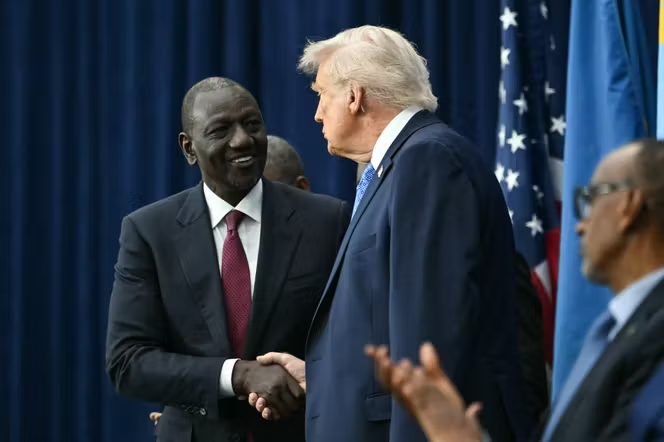
In December 2025, Kenya became the first country to sign a government‑to‑government health cooperation agreement with the United States under the “America‑First” global health strategy.
- The five‑year agreement, valued at around US$2.5 billion, shifts much of the funding directly into Kenyan government health institutions rather than NGOs.
- Washington has pledged up to US$1.6 billion for priorities like HIV, TB, malaria, hospital upgrades and disease surveillance, while Nairobi has committed roughly US$850 million in additional domestic health spending.
On the surface, the agreement is sold as a way to modernize Kenya’s health system and move the country toward universal coverage. But, like Zimbabwe, Kenyan critics have raised questions about data‑sharing, long‑term surveillance and how much leverage the US gains over the direction of Kenya’s health system once so much of it is wired into an America‑First framework.
Those concerns are now playing out in court.
Kenya’s High Court has temporarily suspended implementation of key parts of the deal after civil‑society groups and Senator Okiya Omtatah filed petitions arguing that the agreement violates the Data Protection Act and was signed without sufficient public participation or parliamentary oversight. The interim orders have halted any transfer or sharing of sensitive health data while the case is heard—underscoring how contested this flagship “yes” deal already is on questions of privacy, sovereignty and democratic process.
Burkina Faso: from defiance symbol to America‑First partner
On 25 February 2026, the US and Burkina Faso announced a five‑year memorandum of understanding on health cooperation, presented as part of Washington’s America‑First global health push.
- The US plans to provide roughly US$147 million over five years for HIV, malaria and wider infectious‑disease work, plus disease surveillance and outbreak response in the Sahel.
- Ouagadougou commits around US$107 million in additional domestic health spending, including plans to absorb US‑funded health workers into its national system over time.
For many Africans, Burkina Faso had become a modern symbol of refusing to be bullied into alignment with old powers. That’s precisely what makes this deal so politically charged: a government celebrated for saying “no” to outside pressure is now saying “yes” to a framework explicitly branded around US interests.
Is that savvy bargaining in a tough geopolitical moment—or the start of a more subtle dependency?
ALSO READ: Burkina Faso Halts Gates-Backed Genetically Modified Mosquito Project
Mozambique: US$1.8 billion and a reshaped health budget
In late 2025, Mozambique clinched a five‑year health cooperation MOU in Washington, with the US intending to provide up to US$1.8 billion.
- The focus: HIV and malaria, including newer long‑acting prevention drugs and scaling prevention for women and children.
- In return, Maputo commits to raising domestic health spending significantly—rebalancing its budgets to keep in step with the partnership’s ambitions.
For Mozambicans, this could mean more clinics, more drugs and more trained workers on the ground. But it also means committing future budgets around benchmarks negotiated in Washington, not just Maputo.
Uganda & Rwanda: health funding meets migration control
In Rwanda and Uganda, the health numbers are big—and the political linkages even bigger.
- Rwanda has agreed to a health pact worth around US$228 million, with the US contributing the bulk. In parallel, Kigali has struck deals to accept third‑country migrants deported from the US, with promises of reintegration support in housing, health care and training.
- Uganda has entered a health arrangement valued at nearly US$2.3 billion, with Washington expected to provide about US$1.7 billion for HIV, TB and maternal and child health. Around the same period, Kampala agreed—under a set of conditions—to accept some asylum‑seekers and migrants denied entry into the US.
Here, health money is clearly doing double duty: boosting national health systems while helping Washington outsource parts of its migration and asylum challenges. That blend of care and control is exactly what worries many African observers.
A growing club of signatories
Beyond these high‑profile examples, a widening list of African countries have signed or renewed bilateral health MOUs with Washington under the same America‑First banner—among them Kenya (currently tied up in court challenges), Liberia, Lesotho, Eswatini, Cameroon, Madagascar, Sierra Leone, Botswana, Ethiopia, Côte d’Ivoire, plus Nigeria, Malawi, Burundi and others.
Few of these governments can easily say no to large injections of health funding, especially after years of tight budgets, pandemics and debt pressure. The question is what they give up, and what they gain, in the fine print.
America‑First logic vs African public interest
From Washington’s point of view, these health agreements are framed as hard‑nosed investments, not charity: ways to stop outbreaks “at the source,” stabilize fragile regions and signal US presence in a continent where China, the EU, Russia and Gulf states are all competing for influence.
On paper, that can overlap with what Africans also want: fewer deadly epidemics, stronger clinics and laboratories, and predictable investment in health systems. Burkina Faso is right to want to upgrade its own health infrastructure and to sit at the table as a serious partner, not a supplicant.
But these are not neutral agreements. They are negotiated exchanges in which African countries bring real value to the table—data, geography, minerals, markets, diplomatic alignment—and sign on to specific obligations in return. Each agreement is different and nuanced; Burkina Faso’s terms will not be identical to Mozambique’s, Uganda’s or Rwanda’s. And because the full texts are not public, citizens in both Africa and the US are often relying on summaries and selective disclosures rather than line‑by‑line transparency.
What we do see more clearly is what Zimbabwe says it was being asked to accept. According to reporting on the proposed US–Zimbabwe agreement, Harare’s concerns centred on three areas:
- Extensive access to health data and disease surveillance systems, alongside sharing of biological samples.
- Significant external influence over program design, implementation and auditing, tied closely to US global health and security priorities.
- A sense that health cooperation risked being bundled with other US strategic interests, from minerals to migration, in ways that could narrow Zimbabwe’s room to manoeuvre later.
Those details are specific to Zimbabwe’s negotiations; we cannot assume every other America‑First agreement contains the same clauses or the same balance of obligations. But they do sharpen the questions African citizens and leaders have to ask about any such framework:
- How far will outside agencies be able to see into national health records, movements and vulnerabilities—and for how long?
- What safeguards exist against data or biological samples being repurposed for surveillance, security profiling or experimental programs communities never explicitly consented to?
- If a government later wants to push back on data‑sharing or say no to new “pilot projects,” can it realistically do so once its health system has been rewired around external funding and indicators?
History has already left many Africans wary of being treated as convenient test subjects or data mines—whether by states, corporations or global philanthropies. That legacy is exactly why these America‑First health agreements have to prove, in their design and enforcement, that they are truly mutual: advancing US public health while equally protecting African privacy, dignity, core values and long‑term freedom to chart an independent future.
Old wounds, new technologies: why exploitation fears won’t go away
The rumours you hear in African markets and WhatsApp groups—that Africans are being used as test subjects, that their data is being harvested for someone else’s gain—don’t appear in the official MOUs. But they live in the history behind these deals.
Across the continent and the diaspora, people carry long memories of:
- Colonial‑era “experiments” on African bodies without consent.
- Controversial pharmaceutical trials where communities say they were not fully informed or fairly compensated.
- Power imbalances in global health research where African scientists and institutions contribute data and samples, yet see little of the credit, patents or profits.
Add to that the very public debates around global philanthropies and figures like Bill Gates, who have faced accusations—of using Africans as a testing ground for vaccines and health interventions. Even when investigations find no wrongdoing, the trust gap remains.
In that context, a modern deal that gives external partners deep access to health data, disease surveillance systems and biological samples can easily feel like the next chapter of extraction, not solidarity—especially when the strategy is branded “America First”.
If governments don’t build strong protections and clear benefit‑sharing into these agreements, they risk reinforcing exactly the fear Zimbabwe is now using to justify its break.
Zimbabwe’s gamble and the consequence
Zimbabwe’s refusal is not playing out in a vacuum. Within days of Harare terminating talks, the U.S. Embassy in Zimbabwe announced it would begin winding down its health assistance portfolio, describing the shelved agreement as the “largest health investment by any international partner,” one that, in its words, would have offered “extraordinary benefits for Zimbabwean communities—especially the 1.2 million men, women and children currently receiving HIV treatment through U.S.-supported programs.”
U.S. Ambassador Pamela Tremont publicly expressed regret at the collapse of the talks and added, pointedly, “We wish them well,” signalling that Washington is prepared to step back if Zimbabwe insists on going it alone.
Harare, for its part, insists this is a necessary stand on sovereignty and future fairness. Government spokesperson Nick Mangwana has said the proposed deal demanded “comprehensive access to Zimbabwe’s sensitive health data, including virus samples and epidemiological information,” without a corresponding guarantee that any resulting vaccines, diagnostics or treatments would be affordable or even available to Zimbabweans. In his framing, the country was being asked to hand over the raw materials of discovery while trusting that, somewhere down the line, others would decide whether its own citizens could benefit.
Health professionals inside Zimbabwe are sounding a more anxious note. The Zimbabwe College of Public Health Physicians has warned that an abrupt end to U.S. support could jeopardise treatment for people living with HIV and other conditions, risk interruptions to life‑saving drug supplies, and strain an already fragile health system.
That makes Zimbabwe’s choice a real gamble: a bid to renegotiate the terms of engagement on data and dignity, while betting that it can protect—and eventually strengthen—its health system without the kind of external funding it has relied on for nearly two decades.
As more African governments quietly say yes, Zimbabwe’s “no” hangs in the air. Was Harare right to walk away—or is turning down that kind of money a luxury few African governments can afford?