


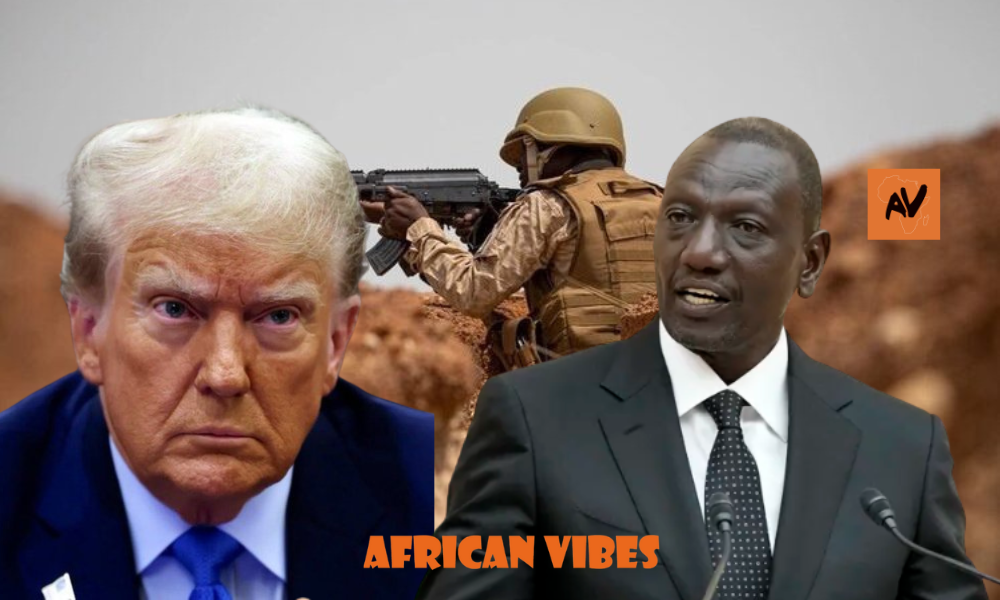
The symbolism is jarring. On one hand, ribbon-cutting ceremonies at Kenya’s Manda Bay Airfield—hard hats, flags, and speeches celebrating a newly expanded runway funded by the United States. On the other, the blood-stained memory of January 2020, when Al-Shabaab militants breached the same base, killing three Americans and exposing glaring security gaps in one of Washington’s most prized African outposts.
Now, as Kenya deepens military cooperation with the US—fresh off its designation as a major non-NATO ally and a $70 million American investment in Manda Bay—questions ripple far beyond Lamu County. Why the surge in foreign military infrastructure at a moment when Kenya is projecting itself as a continental security leader, spearheading the UN-backed Haiti mission? For many Pan-African observers, the expansion feels less like partnership—and more like a familiar scramble, rebranded for a post-Trump Africa strategy.
Historical Context: Manda Bay’s Long Shadow
Manda Bay has never been just another airstrip. Built during the Cold War and later integrated into US Africa Command (AFRICOM) operations, it became a strategic node for surveillance, logistics, and counterterrorism missions targeting Al-Shabaab across the Somalia border.
Yet the 2020 Al-Shabaab attack shattered the illusion of invulnerability. Militants exploited weak perimeter defenses, destroying aircraft and killing US and Kenyan personnel. The assault echoed an older trauma—the 1998 US embassy bombings in Nairobi and Dar es Salaam—which first placed East Africa at the center of Washington’s “war on terror.”
Rather than prompting a rethink of foreign basing, however, the breach appears to have accelerated deeper entrenchment.

US–Kenya Ties: Ally or Anchor?
In 2024, Washington formally designated Kenya a major non-NATO ally, elevating it into a select group of strategic partners with privileged access to US military financing, training, and intelligence. American officials now describe Kenya as an “indispensable anchor” for stability in the Horn of Africa and the Indian Ocean.
But critics draw uncomfortable parallels to Langley, Niger, where public backlash forced the US to abandon a $100 million drone base after years of opaque agreements and limited local benefit. Across Africa, governments that once welcomed US military footprints are reassessing their costs—sometimes abruptly.
ALSO READ: You Won’t Believe Which African Giant Is Copying Niger’s U.S. Visa Shutdown
A Pan-African Lens: Old Patterns, New Players
For Pan-Africanists, Kenya’s expanding role as a US basing hub revives memories of Cold War militarization, when African territory became chessboards for external powers. The timing is especially sensitive.
Across the Sahel, countries like Mali, Burkina Faso, and Niger have expelled US and French forces, pivoting instead toward Russia and forming the Alliance of Sahel States—a move framed domestically as reclaiming sovereignty, regardless of its risks.
Kenya’s path diverges sharply, raising fears of a continent once again split into security spheres of influence.
Strategic Breakdown
| Aspect | US / Kenya Claim | Pan-African Critique |
|---|---|---|
| Purpose | Counter Al-Shabaab near Somalia; expanded runway improves logistics and rapid response. | Dependency trap: Why not invest directly in AU forces or Somali state-building? Foreign bases can attract attacks, as seen in 2020. |
| Costs & Benefits | $70M investment; improved interoperability and training. | Diverts focus from domestic crises—flood recovery, debt, unemployment—with no binding tech-transfer guarantees. |
| Regional Impact | Secures Horn of Africa and Indian Ocean trade routes. | Risks escalating great-power rivalry with China and Russia, undermining Pan-African unity. |
Voices & Reactions
Kenya Defence Forces officials have welcomed the partnership, citing enhanced capabilities and intelligence sharing. US Deputy Secretary of State Kurt Landau has described the runway upgrade as a “tangible commitment” to Kenya’s security.
On the streets—and online—the reaction is less uniform. Youth activists and civil society groups warn that Kenya risks becoming a forward operating platform for foreign interests, echoing the backlash that forced Washington out of parts of West Africa.
“Is this tangible commitment—or territorial concession?” one Pan-African commentator asked, invoking Sahelian demands for reciprocity and sovereignty.
Pan-African Alternatives: Security Without Subordination
Critics are not arguing for isolation—but for African-led security.
- Revitalize the African Standby Force: Fund and operationalize AU rapid-response units instead of outsourcing security to AFRICOM.
- Tech & Skills Sovereignty: Prioritize training Kenyan pilots, engineers, and analysts, with enforceable technology-transfer clauses—not permanent bases.
- Collective Bargaining: Convene a continental summit—similar in assertiveness to Rwanda’s recent UK arbitration stance—to demand transparency and equity in all foreign military agreements.
ALSO READ: China Backs Nigeria Against US Military Threat — Ally or Calculated Interest?
Conclusion
Kenya stands at a crossroads. Expanded US facilities may deliver short-term tactical gains against Al-Shabaab, but they also risk entrenching a security model that history has shown to be volatile—and politically costly.
As Africa navigates a multipolar world, the question is no longer whether the continent needs security partnerships, but on whose terms.
Africa’s future will not be secured by more bunkers—but by shared sovereignty, accountability, and unity. 🇰🇪✊