


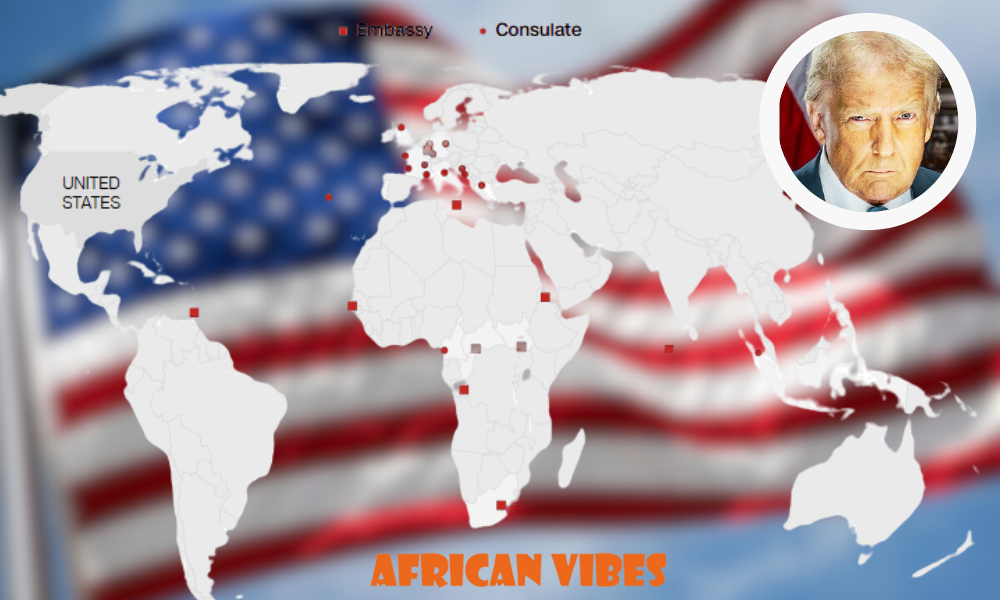
Are African nations being left behind in America’s new global strategy? 6 U.S. Embassies to shut in Africa—Here’s What That Means For You. In a sweeping move set to reshape America’s global diplomatic footprint, the Trump administration, backed by the Elon Musk-supported Department of Government Efficiency (DOGE)—is preparing to shut down 10 U.S. embassies and 17 consulates worldwide. At the heart of this strategy lies a stark goal: to cut the State Department’s budget by nearly 50% while promoting a “light footprint” diplomacy model aimed at cost efficiency and operational streamlining.
The information, part of the FY 2026 budget proposal, proposes sweeping changes that are apparently meant to reduce federal spending, a goal of the Department of Government Efficiency and senior adviser Elon Musk.
Africa at the Epicenter of Diplomatic Downsizing
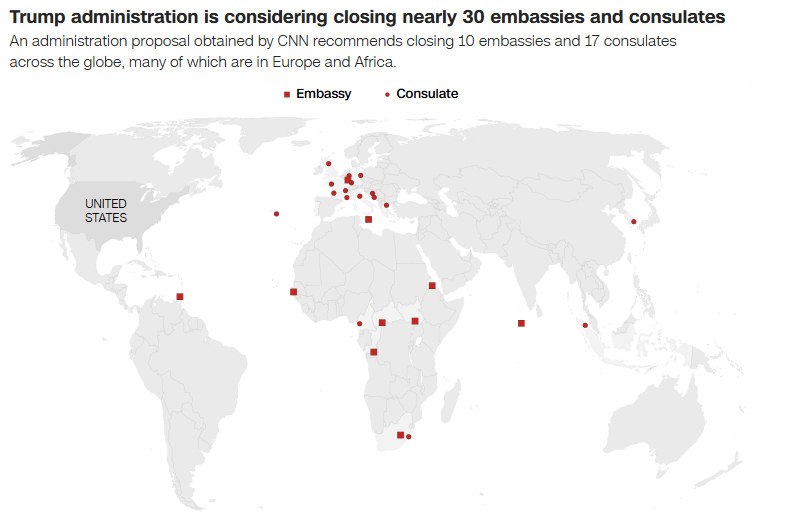
Among the 10 embassies slated for closure, six are in Africa: South Sudan, Central African Republic, Republic of Congo, Eritrea, Lesotho, and The Gambia. These embassies, often located in fragile or post-conflict states, have played critical roles in peacekeeping, humanitarian coordination, and U.S. foreign assistance efforts. Their closure raises serious concerns about diminished diplomatic engagement and the potential for increased instability in regions already vulnerable to conflict and power vacuums.
While DOGE cites factors such as consular workload, high operational costs, poor facility conditions, and security risks, experts argue that closing embassies in such sensitive regions undermines U.S. influence and weakens international development support. In South Sudan, for example, U.S. presence has been vital to post-civil war stabilization efforts. The loss of this direct diplomatic channel could hamper peacebuilding and further isolate already marginalized communities.
ALSO READ: Donald Trump to Snub G20 Summit in South Africa Over Controversial Claims
Regional Consolidation and the Rise of FLEX Diplomacy
As part of the restructuring, traditional embassies will be replaced by regional hubs or “FLEX-style” posts—light-footprint diplomatic outposts with minimal staffing. While this model promises cost savings and administrative efficiency, it also risks diluting the U.S.’s ability to engage on the ground, especially in regions with complex security or humanitarian challenges.
Responsibilities will be consolidated into larger missions in neighboring countries, but such arrangements may not capture the nuanced realities of each nation’s political and social landscape.
Visa Access and Consular Services: A Growing Burden
For ordinary citizens, especially those in Africa and parts of Asia, the embassy closures translate into longer visa processing times, increased travel expenses, and reduced access to consular services. With 17 consulates also on the chopping block—including locations in France, Germany, South Korea, and Indonesia—the global visa system is bracing for significant backlogs.
The State Department has already removed its dynamic visa wait time tool, replacing it with a static system reflecting widespread delays. Further complicating matters are new interview requirements and travel policy restrictions, creating significant hurdles for family reunification, educational exchange, and business travel.
The Bigger Picture: U.S. Foreign Policy and Strategic Influence
The cuts are not limited to Africa. European and Asian consulates are also affected, suggesting a broad rethinking of America’s diplomatic engagement worldwide. DOGE—helmed by Elon Musk and Vivek Ramaswamy—operates outside traditional structures, pushing for sweeping cuts to what it deems bureaucratic excesses. Their proposals extend beyond embassies to include defense and foreign aid, with some regions facing foreign aid reductions of up to 75%.
Such cuts risk ceding ground to rival powers like China, which has steadily expanded its influence in Africa through infrastructure investment and active diplomacy. The U.S.’s diplomatic retreat could leave a vacuum that others are all too ready to fill.
ALSO READ: Namibia Ends Visa-Free Travel for Non-Reciprocating Countries
A Symbolic Shift
Beyond logistics and policy, the closures send a powerful symbolic message: Africa is no longer a diplomatic priority for the U.S. This could strain long-standing bilateral relations and erode U.S. soft power at a time when global partnerships are more important than ever. Countries across Africa are already seeking new alliances and may increasingly turn to nations that demonstrate consistent diplomatic commitment.
Conclusion: A Risky Gamble in Uncertain Times
While framed as a cost-saving initiative, the proposed embassy closures under the Trump administration signal a radical departure from traditional American diplomacy. The retreat from fragile and strategically vital regions—especially in Africa—risks long-term damage to U.S. global influence, development partnerships, and security interests.
A State Department spokesperson said in a statement to The Independent: “No embassy or consulate closures have been announced, and operations continue as normal. The State Department continues to assess our global programs and posture to ensure we are best positioned to address modern challenges on behalf of the American people.”