


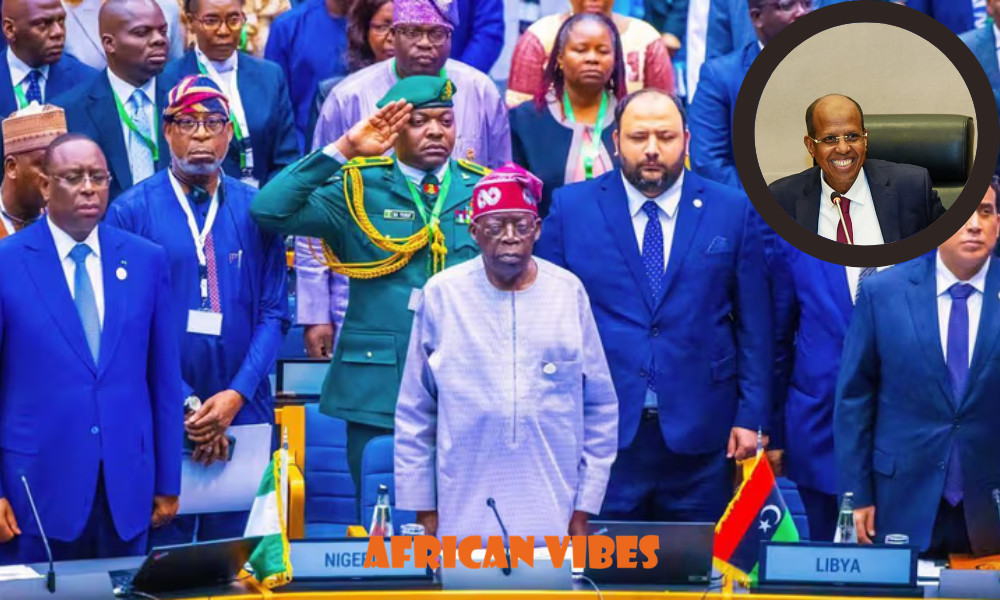
When the African Union (AU) formally endorsed Nigeria for a permanent seat on the African Central Bank (ACB), Foreign Affairs Minister Yusuf Tuggar described the development as recognition of Nigeria’s “technical expertise and commitment to Africa’s financial independence.”
The resolution was not just bureaucratic symbolism. It signals a structural shift in how Africa may manage its monetary future.
For decades, African economies have navigated volatile global markets under the shadow of dollar dominance, IMF conditionalities, and external credit ratings that shape domestic policy more than local realities. Now, with the African Central Bank—one of the flagship financial institutions envisioned under AU Agenda 2063—gradually taking form, Nigeria’s permanent seat positions the continent’s largest economy at the center of monetary integration efforts.
Pan-African thinkers from Kwame Nkrumah to Julius Nyerere warned that political independence without economic sovereignty was incomplete. The ACB is designed to correct that imbalance. Nigeria’s inclusion could accelerate the dream of continental monetary coordination—but it also raises critical questions.
Does this seat empower Africa collectively, or does it consolidate influence in the hands of one regional giant?
Will it weaken neo-colonial financial dependencies—or risk internal elite capture?
Nigeria’s ACB seat is both an opportunity and a test.
ALSO READ: Nigeria Lands $1.1B Loan for Operation Light Up Nigeria
The Road to the African Central Bank
The African Central Bank did not emerge overnight. Its roots trace back to the 1991 Abuja Treaty, which laid the foundation for the African Economic Community. The treaty envisioned a gradual pathway toward:
- Regional economic blocs
- Customs union
- Common market
- Monetary union
- Ultimately, a single African currency
Agenda 2063 later revived and expanded this ambition, placing financial institutions at the heart of continental transformation. Alongside the African Monetary Fund and African Investment Bank, the ACB was designed to harmonize monetary policy and reduce external financial vulnerability.
Nigeria has long played a stabilizing financial role in West Africa through:
- Heavy funding of ECOWAS institutions
- Contributions to regional stabilization funds
- Leadership during anti-apartheid struggles
- Support for peacekeeping missions across the continent
These commitments strengthened Nigeria’s claim to continental leadership.
However, the decision to grant Nigeria a permanent seat is not without controversy. Critics question whether Africa risks replicating global governance imbalances—where a few powerful states dominate decision-making.
Why permanent representation for Nigeria and not rotational leadership among Africa’s largest economies like Egypt or South Africa?
The AU must ensure that institutional reform does not reproduce hierarchy.
ALSO READ: Niger, Mali, and Burkina Faso Exit ECOWAS And Here’s Why
Strategic Gains for Africa
If managed transparently, Nigeria’s ACB seat could reshape Africa’s economic future.
1. Economic Stabilization & Currency Coordination
African economies suffer from fragmented monetary systems. Exchange rate volatility increases trade costs. IMF-linked reforms often constrain fiscal policy flexibility.
A harmonized ACB framework could:
- Reduce forex instability
- Coordinate inflation targets
- Strengthen regional reserve buffers
- Support long-term single currency development
This is especially crucial for AfCFTA, where currency conversion costs undermine intra-African trade competitiveness.
2. Reduced External Dependency
Africa remains heavily reliant on:
- Dollar-denominated trade
- Chinese infrastructure loans
- Eurobond markets
- Bretton Woods institutions
An empowered African Central Bank framework offers alternatives:
- African liquidity mechanisms
- Regional settlement systems
- African-designed fiscal stabilization tools
If Nigeria champions reforms prioritizing African capital markets and intra-continental finance, dependency on external lenders could decline.
3. AfCFTA Acceleration
Trade integration without monetary coordination creates friction. ACB leadership could help align:
- Payment systems
- Trade settlement platforms
- Cross-border banking standards
This supports the long-term goal of a continental currency or, at minimum, tightly coordinated regional monetary blocs.
Potential Impact Overview
| Aspect | Pre-Seat Challenge | Post-Seat Opportunity |
|---|---|---|
| Monetary Policy | Fragmented, IMF-influenced | Unified ACB standards |
| Trade Finance | High forex conversion costs | Currency coordination & digital settlement |
| Sovereignty | External debt exposure | African-led liquidity frameworks |
| AfCFTA | Payment inefficiencies | Harmonized financial systems |
ALSO READ: Namibia’s Ban on Exporting Unprocessed Minerals: A Catalyst for Economic Growth
Risks and Pan-African Critiques
1. Governance & Transparency Concerns
Nigeria’s own financial governance history raises caution. Past controversies involving the Central Bank of Nigeria (CBN) highlight the need for strict accountability mechanisms.
For the ACB to succeed:
- Appointment processes must remain transparent
- Oversight mechanisms must be independent
- Audit structures must be continental, not national
If elite capture occurs, trust in the institution could erode quickly.
2. Equity in Representation
A permanent seat for Nigeria risks creating imbalance.
Pan-African unity requires shared leadership. Some policy analysts argue for:
- Rotational executive seats
- Weighted but capped voting power
- Regional parity safeguards
Africa cannot replicate the UN Security Council model it often criticizes.
3. “Big Brother” Perception
Nigeria’s demographic and economic size already positions it as West Africa’s dominant actor. Critics worry that:
- Smaller states may feel marginalized
- Regional autonomy could weaken
- Financial policy may skew toward Nigeria’s domestic interests
The strength of the ACB will depend on decentralization—not dominance.
The Bigger Picture: A Continental Awakening?
Nigeria’s ACB seat arrives at a moment of global financial realignment. The BRICS expansion, rising calls for de-dollarization, and geopolitical fragmentation have opened space for alternative monetary systems.
Africa now faces a defining choice:
Will the ACB become a transformative instrument of monetary sovereignty?
Or another symbolic institution constrained by politics?
If Nigeria uses its position to build inclusive, rules-based governance and champion continental equity, this could mark the beginning of Africa dictating its financial destiny.
But if concentration of power outweighs transparency, the project risks undermining the very unity it seeks to build.
The seat is secured.
The real work begins now.