


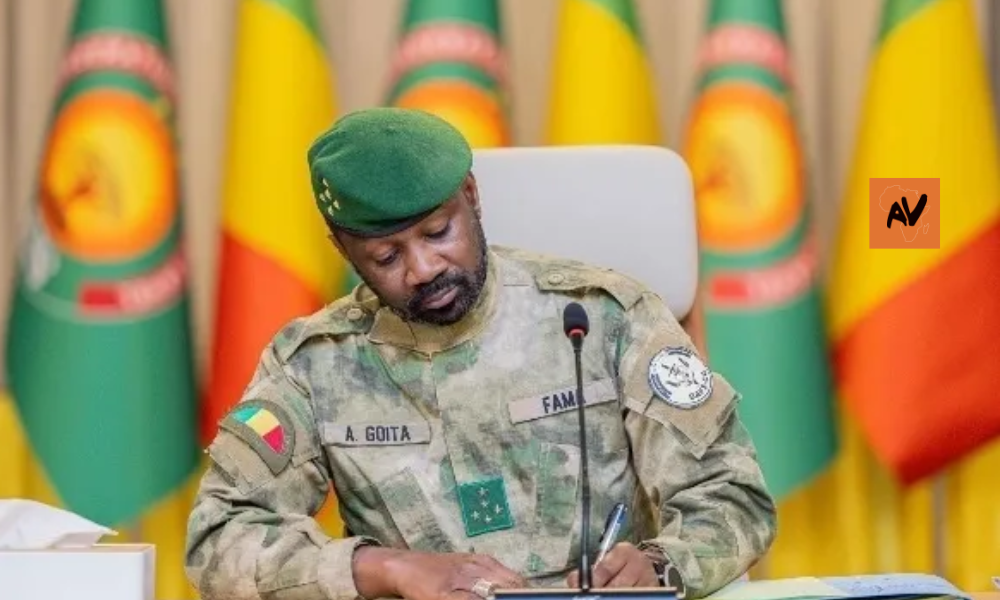
In a move that has sent tremors across the African continent, Mali’s military-led government has taken a dramatic step toward institutionalizing authoritarian rule. A newly approved bill by the National Transitional Council (NTC) grants interim President Colonel Assimi Goïta a renewable five-year presidential term—without an electoral mandate. This legislation could allow Goïta to remain in power until at least 2030, with no clear roadmap for returning to civilian rule.
This development represents a decisive break from earlier promises of democratic transition and raises serious concerns about the future of democracy in Mali—and across the Sahel.
From Coup Leader to Indefinite Ruler
Colonel Goïta emerged as a central figure in Malian politics following a 2020 military coup that ousted President Ibrahim Boubacar Keïta, who faced mass protests over corruption and insecurity. Though a transitional civilian government was initially installed, Goïta staged a second coup in 2021, taking full control and declaring himself interim president.
At every juncture, Goïta’s regime promised elections and a return to constitutional order. But with each passing year, those promises have been delayed or replaced by increasingly authoritarian decrees.
The latest—and perhaps most alarming—came in May 2025, when the military government dissolved all political parties and banned public gatherings. The United Nations swiftly condemned the move as a “draconian” violation of fundamental rights. Human rights groups report a rising wave of arrests, forced disappearances, and crackdowns on journalists, activists, and opposition figures.
Security Concerns or Political Cover?
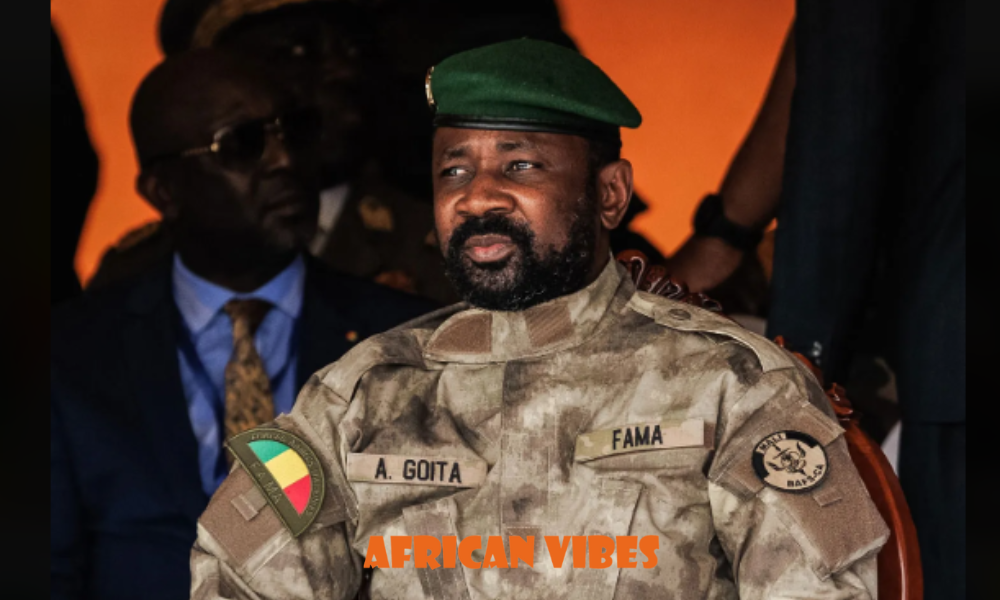
The government justifies the extended military rule by citing Mali’s worsening security situation. The country has long struggled with jihadist insurgencies linked to Al-Qaeda and ISIS, particularly in the northern and central regions. Officials argue that only a stable, military-led government can restore order and implement meaningful reforms.
However, observers note a troubling contradiction: despite the military’s grip on power, attacks have intensified and even spread to previously stable regions such as Kayes. Critics argue that the security rationale now serves as a convenient pretext for political repression and indefinite military control.
ALSO READ: Year Of Return: Ghana And Jamaica Waive Entry Visa Requirements
A Shift in Alliances: France Out, Russia In
Goïta’s rule has not only reshaped domestic politics but also radically altered Mali’s foreign relations. The government has severed ties with traditional Western partners—particularly France—and moved closer to Russia. Russian military advisers, widely believed to be associated with the Wagner Group (now operating under the name Africa Corps), are now deeply embedded in Mali’s counterterrorism strategy.
This pivot is presented by the Malian regime as a rejection of “neo-colonialism” and a bold assertion of African sovereignty. Yet, it has increased geopolitical tensions, raised fears of growing dependence on opaque foreign military actors, and drawn criticism from Western democracies.
Mali’s Break with ECOWAS and the Rise of the AES Bloc
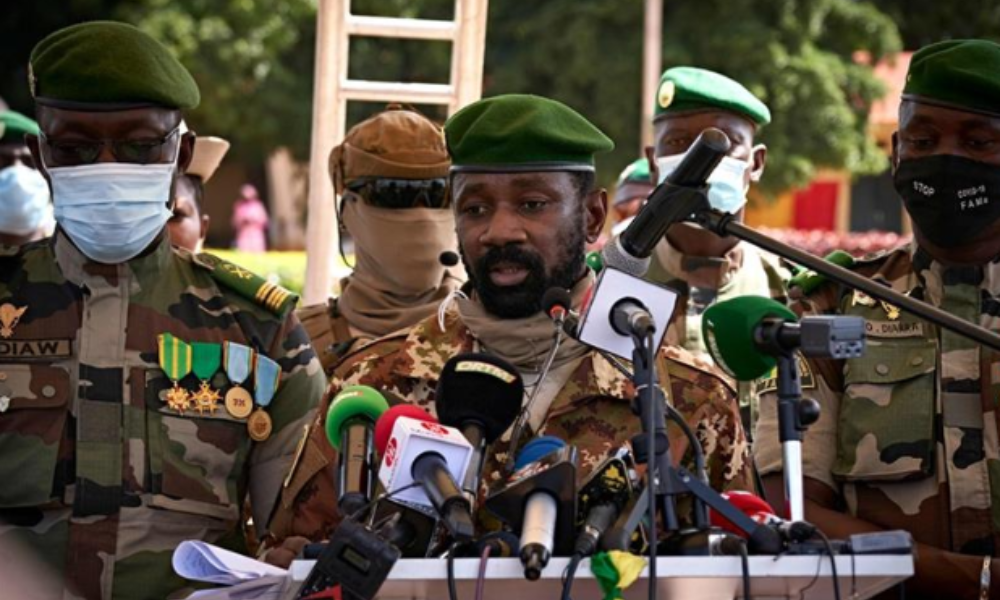
The broader regional impact of Mali’s democratic backsliding is profound. In January 2025, Mali—alongside fellow military-led neighbors Burkina Faso and Niger—withdrew from the Economic Community of West African States (ECOWAS). The trio has since formed the Alliance of Sahel States (AES), a bloc framed as a mutual defense and economic cooperation pact.
While ECOWAS and the African Union have consistently called for a return to democratic rule, their influence appears to be waning. Sanctions and diplomatic pressure have so far failed to alter the course of Mali’s transitional government. The AES, in contrast, signals a coordinated resistance to external demands for democratization and marks a dangerous precedent for military-led governance across the region.
The Cost of Authoritarianism: Mali’s Fragile Socio-Economic Future
Mali’s authoritarian turn comes at a time of severe economic fragility. While the African Development Bank reported modest economic growth in 2023—largely driven by cotton and gold—the broader outlook is grim. Climate shocks, reduced international aid, and a growing humanitarian crisis have strained the nation.
Massive budget allocations to defense have come at the expense of education, healthcare, and other public services. Food insecurity and internal displacement are rising. For many Malians, the promises of military leadership are ringing hollow.
Public Sentiment: From Hope to Disillusionment
Initially, segments of the Malian population—particularly the youth—welcomed Goïta’s rise, hopeful that the military could root out corruption and restore national pride. But today, enthusiasm has given way to disillusionment.
The systematic dismantling of political opposition, the postponement of elections, and the erosion of civic space contradict the ideals that inspired mass protests against previous civilian regimes. Malians now face a sobering question: has one form of dysfunction simply been replaced by another?
The Stakes for Africa’s Democratic Future
Mali’s descent into indefinite military rule reverberates far beyond its borders. With military coups on the rise across Africa in recent years, Goïta’s power grab risks normalizing authoritarian governance in fragile states. The region now teeters between competing visions—one of democratic consolidation, and another of entrenched military rule.
As Africa’s leaders and international stakeholders chart a response, the stakes could not be higher. Will the continent rally to uphold democratic norms, or will the promise of self-determination be sacrificed under the guise of security?
Conclusion: A Call for Principled Engagement
Colonel Assimi Goïta’s latest power consolidation marks a turning point for Mali. While calls for sovereignty and stability are valid, true sovereignty must include the right of citizens to choose their leaders through free and fair elections.
The international community and African institutions must remain engaged—advocating for constitutional order, protecting human rights, and supporting the voices of ordinary Malians who still believe in the possibility of a democratic future. Anything less risks abandoning a nation—and a region—in peril.