


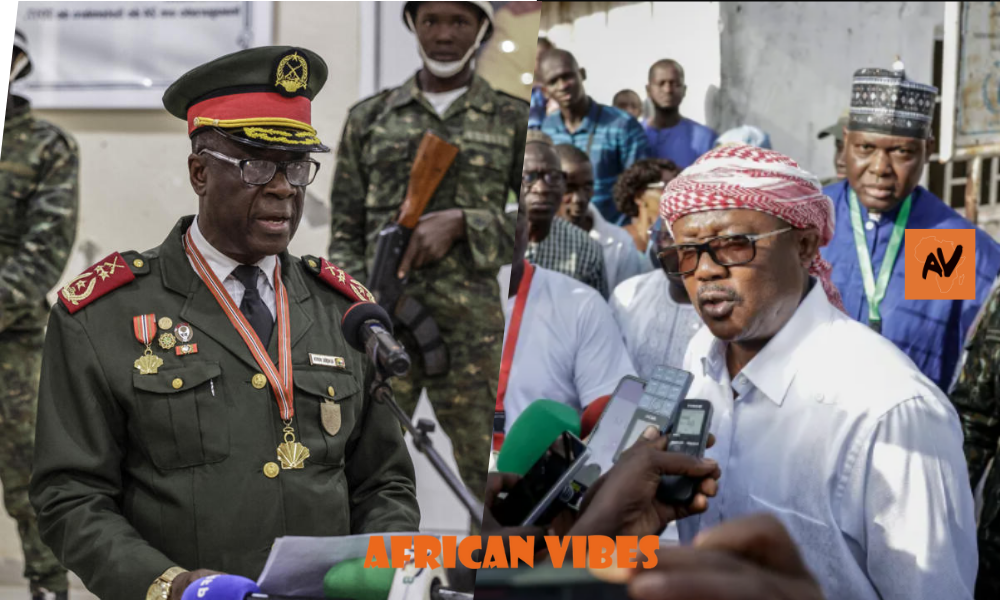
Guinea-Bissau’s fragile democracy faced its toughest test in years when, on November 26, 2025, a military group known as the High Military Command for the Restoration of National Security and Public Order (HMC) seized power just a day before official presidential results were to be announced. The coup ousted President Umaro Sissoco Embaló and suspended key state institutions—plunging the country back into crisis.
The takeover followed a disputed election in which both Embaló and opposition candidate Fernando Dias da Costa declared victory. The move has been widely condemned by ECOWAS, the African Union, and global observers.
For West Africa, this event is more than a political shockwave. It is a critical test for West African stability, a reminder of the fragility of African democracy, and a wake-up call that Guinea-Bissau cannot escape without long-overdue structural reform.
A Constitution Under Strain
To understand the events of November 2025, one must view them as the culmination of a long-running constitutional imbalance. Guinea-Bissau’s semi-presidential system—designed to distribute power between the presidency and parliament—has instead become a battleground for institutional supremacy.
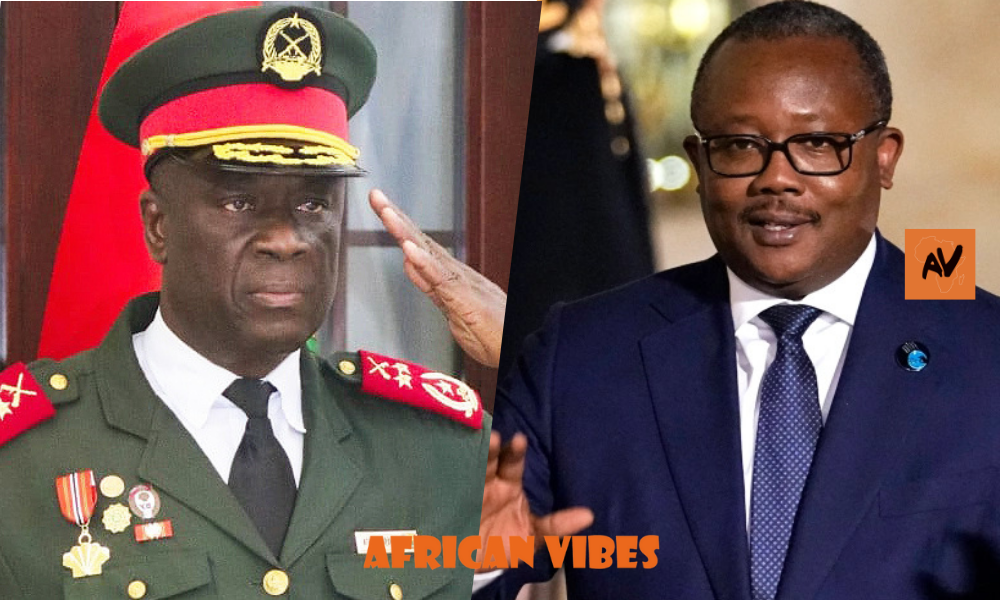
The seeds of the present crisis were sown during President Embaló’s contentious rise to power in 2020, when he declared himself president before the Supreme Court confirmed the election results. His years in office were characterized by growing executive overreach, but the breaking point came in late 2023, when he dissolved the opposition-controlled parliament without establishing a constitutional timetable for new elections.
That decision hollowed out the state’s system of checks and balances. It polarized the political landscape and created the legitimacy vacuum that the 2025 election was expected—perhaps unrealistically—to fix.
A Dakar-based expert on Lusophone Africa put it bluntly:
“Guinea-Bissau’s core political compromise is the one the elite refuses to make—sharing power through strong institutions rather than clinging to power through personality.”
The November 23rd election, already fraught by the exclusion of PAIGC, Guinea-Bissau’s historic ruling party, became a desperate contest for survival. With both major candidates claiming victory and institutions weakened, the military’s intervention became, tragically, the predictable conclusion of a system stretched far beyond its limits.
ALSO READ: Paul Biya ‘Wins’ Contested Cameroon Election Amid Unrest
The Shadow Economy That Shapes the State
No account of Guinea-Bissau’s instability is complete without acknowledging an open secret: the country’s governance structures have long been compromised by a shadow economy powered by cocaine trafficking.
For more than a decade, Guinea-Bissau has carried the troubling moniker of Africa’s first “narco-state.” Its strategic Atlantic coastline and weak institutions have made it an ideal transit hub for Latin American drug cartels moving shipments toward Europe. Over time, elements of the military, political class, and business elite have become entangled—willingly or otherwise—in networks that thrive on opacity.
This illicit economy has done more to undermine democracy than any constitutional defect. It:
- corrodes public trust,
- fuels elite patronage,
- weakens judicial independence,
- and redirects national resources away from development and toward enrichment of a few.
In such an environment, elections become contests not merely for political authority but for control of lucrative illicit networks.
True structural reform in Guinea-Bissau must therefore confront this nexus head-on. It requires strengthening anti-narcotics capabilities, protecting whistleblowers, building credible financial oversight systems, and—most critically— insulating state institutions from criminal capture. Without these steps, even the fairest elections will produce fragile governments.
The ECOWAS Challenge: Principles vs. Fatigue
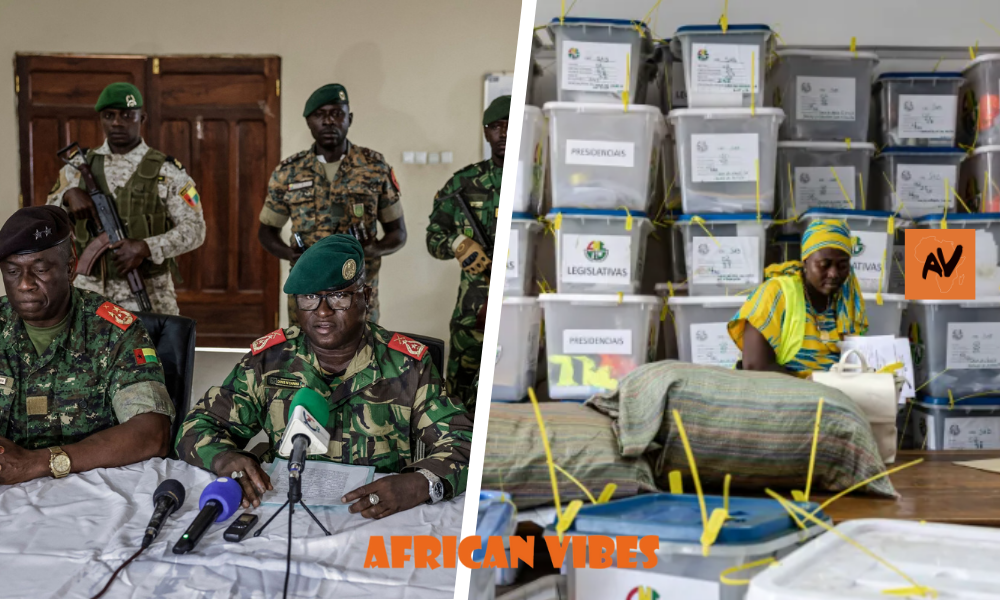
Guinea-Bissau’s coup thrust ECOWAS into yet another crisis at a moment when its authority is already contested. The bloc is reeling from coups in Mali, Burkina Faso, and Niger, and the subsequent exit of those nations to form the Alliance of Sahel States (AES). The question now is whether ECOWAS still has the capacity—and political will—to defend democratic norms.
To its credit, ECOWAS responded with rare speed and clarity. In an emergency meeting, the bloc:
- condemned the coup,
- suspended Guinea-Bissau from decision-making bodies,
- called for the immediate release of detained officials,
- and demanded the publication of the election results.
This stance signals a renewed attempt to enforce the region’s “zero tolerance” policy on unconstitutional changes of government.
But the stakes are high. If ECOWAS fails to facilitate a peaceful, legitimate transition back to civilian rule, it risks further eroding its influence and emboldening anti-democratic actors across the region. If it succeeds, Guinea-Bissau could become a rare example of a coup reversed through diplomatic pressure rather than military force.
For West Africa, and for the credibility of African multilateralism, the outcome matters profoundly.
The People at the Centre: Guinea-Bissau’s Unyielding Resilience
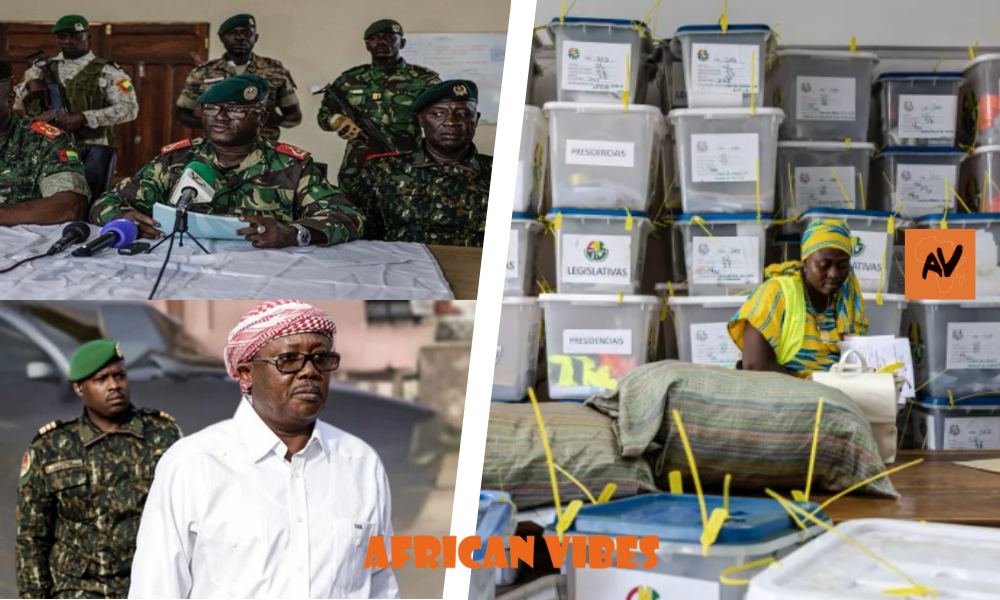
While the headlines focus on generals and politicians, the country’s true source of resilience lies in its citizens: farmers tending their crops despite decades of instability, market women who keep the economy afloat, teachers educating the next generation, and youth activists who continue to demand a cleaner politics.
Civil society organizations—operating under persistent threat—have been the steadiest champions of democracy. Their calls for:
- judicial independence,
- transparent resource management,
- and an end to impunity
represent the most sustainable vision for Guinea-Bissau’s future.
The current upheaval, while dangerous, offers a narrow but critical opening. A national dialogue—one that includes civil society, traditional leaders, political parties, and the security sector—could lay the groundwork for a new social contract.
For reform to succeed, the transitional authorities must commit to a process that ultimately limits their own power. Without that humility, Guinea-Bissau risks repeating its familiar cycle: disputed elections, fragile governments, and military interventions.
Conclusion: Toward a More Audacious African Democracy
Guinea-Bissau is not an outlier. It is emblematic of the structural vulnerabilities confronting many young African democracies: fragile institutions, powerful informal networks, unresolved constitutional tensions, and economic systems captured by narrow elites.
The events of November 2025 serve as a reminder that elections alone do not create democracy. Stability depends on the integrity of institutions, the rule of law, and the willingness of leaders to put national interest above personal ambition.
ECOWAS has taken a principled stand. Now, the harder work begins inside Guinea-Bissau.
If the country is to break with its painful past, it must:
- dismantle illicit power networks,
- strengthen its judiciary,
- professionalize its security sector,
- and rebuild institutions capable of protecting—not undermining—citizens’ rights.
The resilience of the Bissau-Guinean people has carried the nation through decades of turbulence. What remains is for its leaders, present and future, to match that resilience with courage, accountability, and a vision for a country that can finally fulfill its promise.
This is the democracy Guinea-Bissau deserves. And it is the stability West Africa urgently needs.