



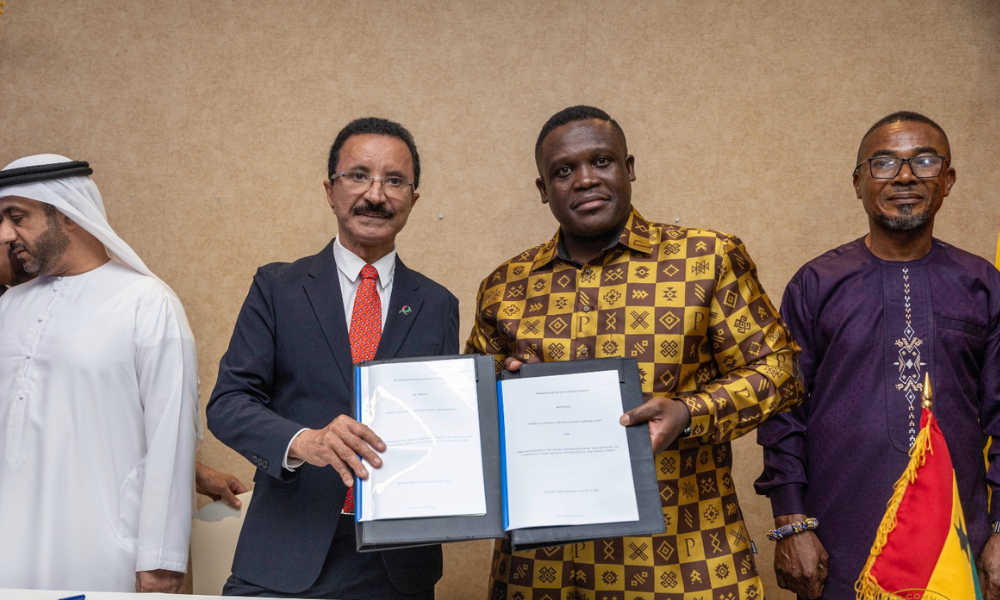
In a bold step toward digital transformation, Ghana has signed a landmark $1 billion agreement with the United Arab Emirates to build what is expected to be Africa’s largest technology and innovation hub. The Ghana-UAE Tech Hub will be located in Ningo-Prampram, a fast-growing district in the Greater Accra Region, and is slated to become a major center for artificial intelligence (AI), software development, and African data processing.
A Visionary Deal with Global Impact
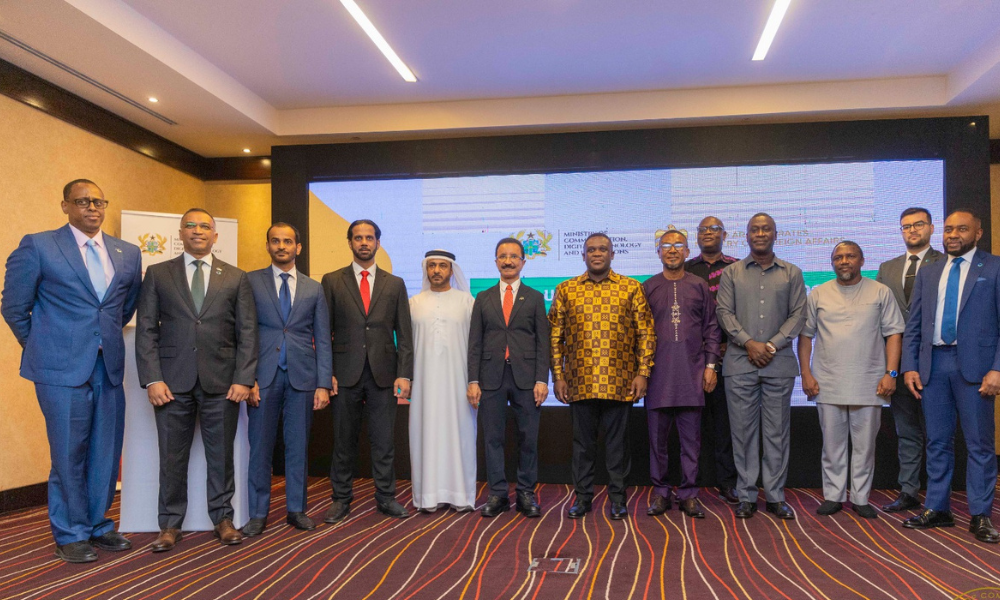
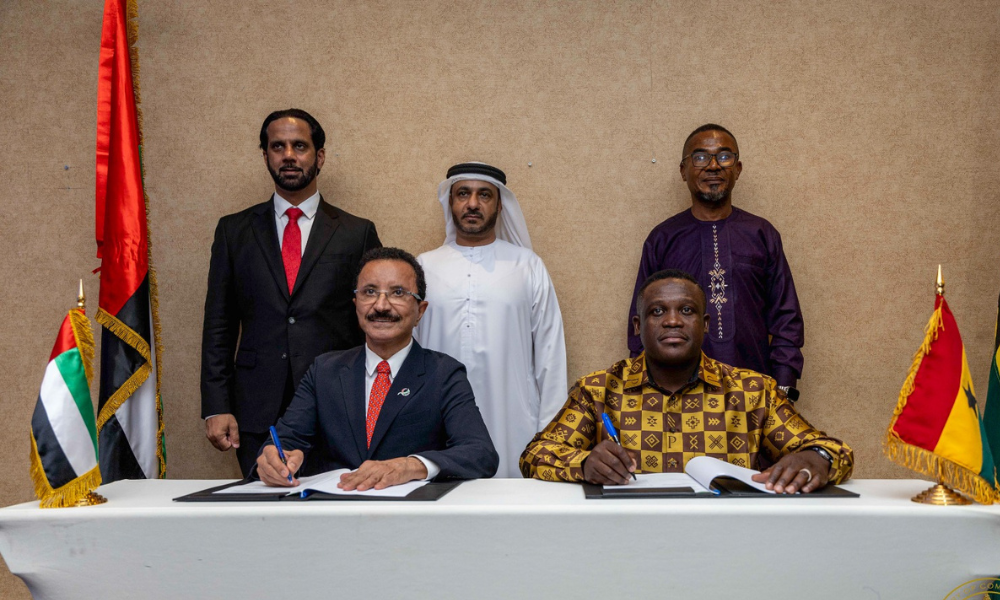
The deal, signed between Ghana’s Ministry of Digital Technology and Innovations and the UAE’s Ports, Customs and Free Zone Corporation (PCFC), marks one of the most ambitious public-private partnerships on the continent. The UAE will fully finance the project, while Ghana has already secured 25 square kilometers of land for development.
Construction of the hub is scheduled to begin in 2026 and will be completed by the end of 2027. Once operational, the facility is expected to host over 11,000 global tech companies, including Microsoft, Oracle, Meta, IBM, and Alphabet.
ALSO READ: Ethiopia Tops Africa’s Sovereign Wealth Fund 2025 Rankings with $45 Billion in Assets
Ghana’s Digital Leap
This tech city is designed to serve as a hub for business process outsourcing (BPO), knowledge process outsourcing (KPO), AI engineering, and cloud computing. It also aims to produce localized data for machine learning applications tailored to Africa’s needs—everything from language models in African languages to fintech and agri-tech platforms built with regional realities in mind.
Ghana’s strategic location in West Africa and its growing digital ecosystem make it an ideal base for such a continental tech renaissance.
Local Talent at the Core
At the heart of the project is a strong emphasis on human capital development. The hub will directly link with Ghana’s One Million Coders Programme, a government initiative to train one million young people in digital skills such as AI, cybersecurity, and data governance.
Unlike many outsourcing zones that export jobs abroad, this tech hub will prioritize local employment. According to Ghana’s Minister of Digital Technology and Innovations, Samuel Nartey George, “We are not building a hub to serve foreign markets with foreign workers. We are creating the conditions for a digital renaissance—led by Ghanaians, for Ghanaians.”
The project also aligns with broader efforts to bridge the gender gap in tech by including dedicated programs to train and mentor young women in digital fields.
ALSO READ: Namibia and Botswana Partner to Build Joint Oil Refinery, Target Fuel Independence
A Model for Africa’s Tech Future
The hub is not just for Ghana—it’s envisioned as a regional platform that serves startups, research institutions, and tech ecosystems across Africa. By generating African data and nurturing African developers, the project challenges the current digital imbalance where African innovation is often stifled by limited infrastructure and capital.
Sultan Ahmed Bin Sulayem, Chairman of PCFC and CEO of global logistics giant DP World, put it plainly: “Africa’s next wealth boom will not come from oil or minerals—it will come from ideas.”
What’s Next
With the land already secured and investor interest rising, Ghana is positioning itself as the Silicon Valley of Africa. As construction kicks off in 2026, the project will likely spur satellite developments in housing, transport, and fintech—potentially transforming the Ningo-Prampram district into one of the most important innovation corridors on the continent.
This deal sends a clear signal: Africa is no longer waiting to catch up—it’s stepping forward to lead.