


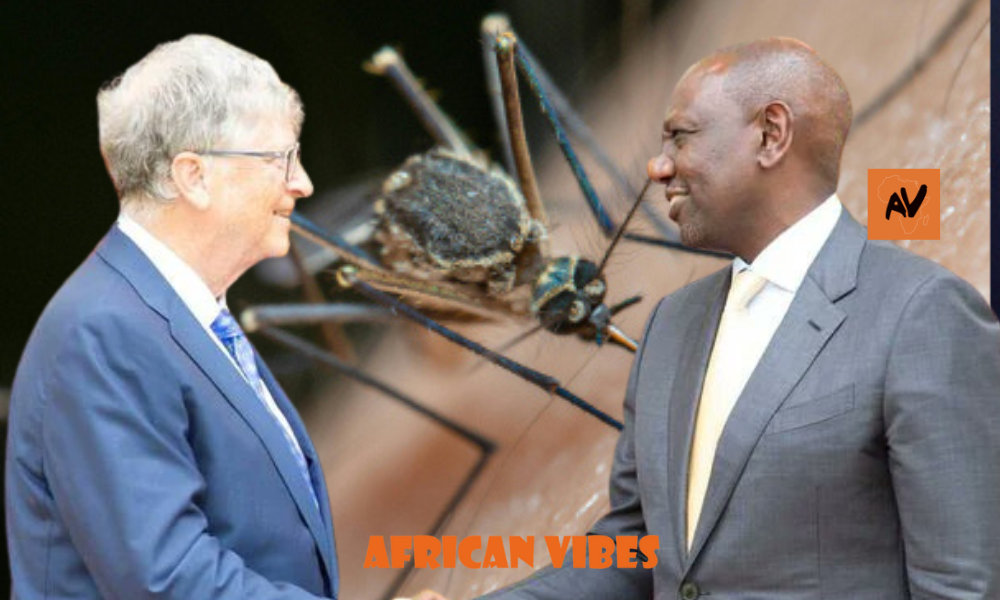
Social media in Kenya lit up in early February 2026 with alarming claims that the Bill & Melinda Gates Foundation had secretly released mosquitoes—some alleged to be genetically modified—into Nairobi. The accusations, amplified across X, Facebook, and WhatsApp groups, sparked fear among residents already grappling with a seasonal rise in mosquito populations and malaria concerns.
At the centre of the controversy was a viral post by senior Kenyan lawyer Paul Muite, which alleged that mosquito releases linked to Gates-funded laboratories were harming children and the elderly. Within days, the claims spread widely, triggering public anxiety and renewed distrust around global health initiatives.
However, multiple Kenyan media houses and the Gates Foundation itself have since categorically denied the allegations, stating there is no evidence to support claims of mosquito releases in Nairobi or elsewhere in Kenya.
What Sparked the Panic?
The controversy began with an X post by Paul Muite, in which he suggested that laboratories connected to the Gates Foundation had released mosquitoes into the environment, allegedly causing harm to vulnerable populations. The post did not provide evidence but quickly gained traction, with users speculating about “genetically modified insects,” secret experiments, and foreign interference.
Screenshots of the post circulated across platforms, often stripped of context and paired with dramatic captions warning of a public health threat. Some users linked the claims to Gates-funded malaria research, while others framed the issue as a deliberate population control experiment.
The viral nature of the posts coincided with increased mosquito activity following seasonal rains—an overlap that further fuelled suspicion and fear.
Gates Foundation Response: A Clear and Unequivocal Denial
In response to the growing backlash, the Bill & Melinda Gates Foundation issued a statement on February 8–9, 2026, firmly rejecting the accusations.
The foundation stated:
“We do not release mosquitoes, operate laboratories that do so, or run vector-control activities in Nairobi or anywhere else.”
It further clarified that while the foundation funds malaria research and public health initiatives globally, its role in Kenya is limited to financial and technical support for Kenyan-led institutions, including the Kenya Medical Research Institute (KEMRI) and the International Centre of Insect Physiology and Ecology (ICIPE).
According to the foundation, all mosquito control and research activities in Kenya are conducted under the authority of Kenyan scientists and government regulators—not foreign foundations.
What Kenyan Media and Experts Found
Independent reporting by Capital FM, Kenyans.co.ke, Citizen Digital, and other outlets found no evidence linking the Gates Foundation to mosquito releases in Nairobi.
Health officials and researchers interviewed by local media pointed out that mosquito surges during this period are seasonal, driven by increased rainfall, stagnant water, and warmer temperatures—conditions that naturally accelerate mosquito breeding.
Kenya’s malaria control efforts, including larval source management and public awareness campaigns, are overseen by national and county health authorities, not private foundations.
ALSO READ: African Union Agenda 2063: A Promising Trajectory For Africa
Mosquitoes, Malaria, and Seasonal Surges
Kenya regularly experiences spikes in mosquito populations during and after the rainy season. Urban areas like Nairobi are particularly vulnerable due to poor drainage, construction sites, and standing water in residential zones.
Public health experts caution that misinformation during such periods can be dangerous. False claims may discourage communities from cooperating with legitimate malaria prevention efforts, such as indoor residual spraying, bed-net use, and environmental clean-ups.
By conflating seasonal mosquito surges with conspiracy theories, experts warn that trust in science and public health institutions is undermined—potentially worsening disease outcomes.
Why Misinformation Spreads So Fast
Health-related misinformation thrives where fear, uncertainty, and historical distrust intersect. Global health actors like the Gates Foundation are frequent targets of conspiracy theories, often rooted in misunderstanding of how research funding and public health partnerships work.
In this case, the absence of verified evidence did little to slow the spread of the claims—highlighting how viral posts can outpace facts, especially when shared by prominent figures.
Conclusion
The claim that the Bill & Melinda Gates Foundation released mosquitoes in Nairobi is false. Multiple independent reports and an explicit statement from the foundation confirm that it does not conduct mosquito releases or run such laboratories in Kenya.
As mosquito-borne diseases remain a real threat, experts urge the public to rely on verified information from Kenyan health authorities and reputable news outlets. The Ministry of Health has also been encouraged to provide regular updates to counter misinformation and reassure the public.
In an era of viral claims, critical thinking and fact-checking remain essential—especially when public health is at stake.