


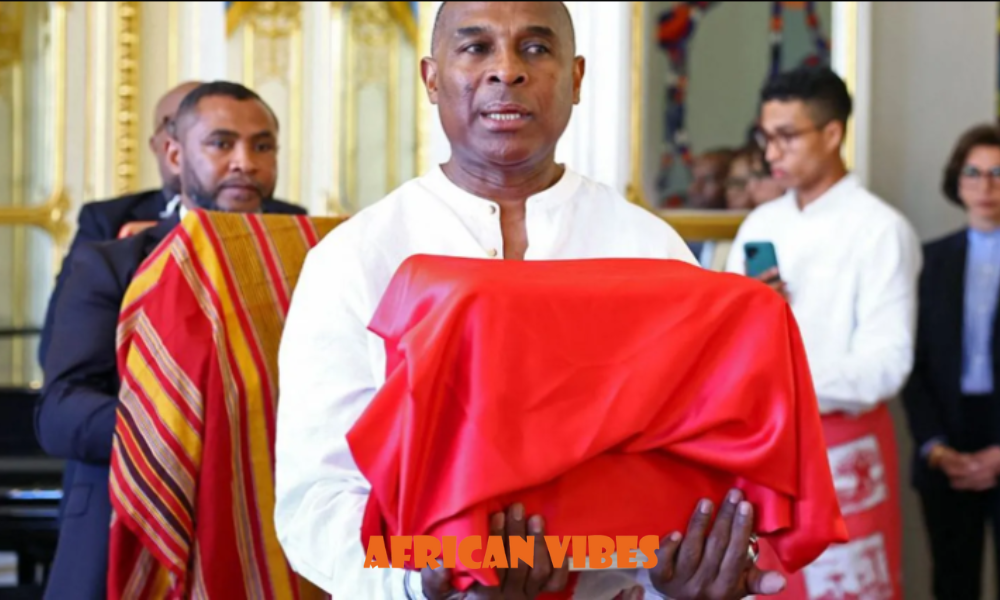
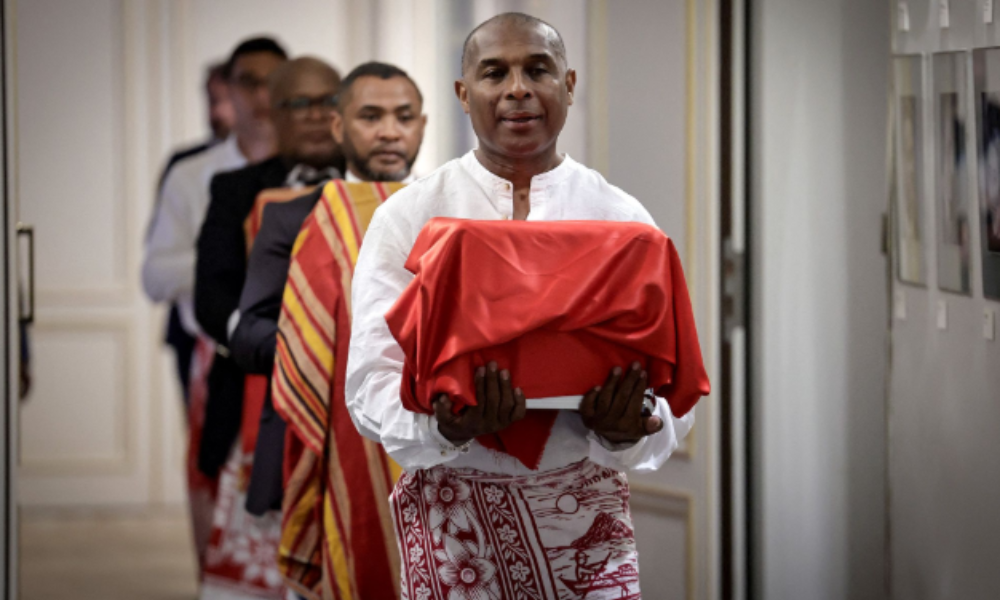
In a solemn ceremony in Paris, the air was heavy with silence as French and Malagasy officials stood shoulder to shoulder. Draped in dignity and marked by the weight of centuries, the moment carried more than protocol—it carried history.
After 128 years, France returned the skull of King Toera, along with the remains of two other Sakalava figures, to Madagascar. For the Malagasy people, this was not just a diplomatic gesture but a spiritual homecoming—a long-awaited act of cultural repatriation and healing.
Framed within President Emmanuel Macron’s acknowledgment of colonial wrongs, the return symbolizes a deeper reckoning with France’s colonial past.
The Weight of History – The Beheading of King Toera
In 1897, during the height of the Franco-Malagasy Wars, Madagascar’s sovereignty was violently crushed under colonial conquest. Among those who resisted was King Toera of the Menabe kingdom, a respected Sakalava leader who stood against French expansion.
His defiance was met with brutal retaliation. Captured by French forces, King Toera was executed and decapitated, his skull seized as a “trophy” of victory—a chilling example of colonial violence that stripped the Malagasy people not only of their king but of their dignity.
The Menabe kingdom, known for its fierce independence, saw its legacy violated as King Toera’s remains were shipped to France, far from the land and ancestors to which they belonged. For generations, this absence lingered as a wound—a symbol of humiliation, dispossession, and unfinished mourning.
ALSO READ: Mali’s Interim President Assimi Goïta’s extended term in office.
A New French Stance – Policy and Precedent
The return of King Toera’s skull marks a turning point in French cultural policy. For decades, France resisted repatriation demands, citing rigid museum laws that defined collections as inalienable state property.
That changed with a new law on restitution, designed to pave the way for the return of human remains and cultural treasures taken under colonial circumstances.
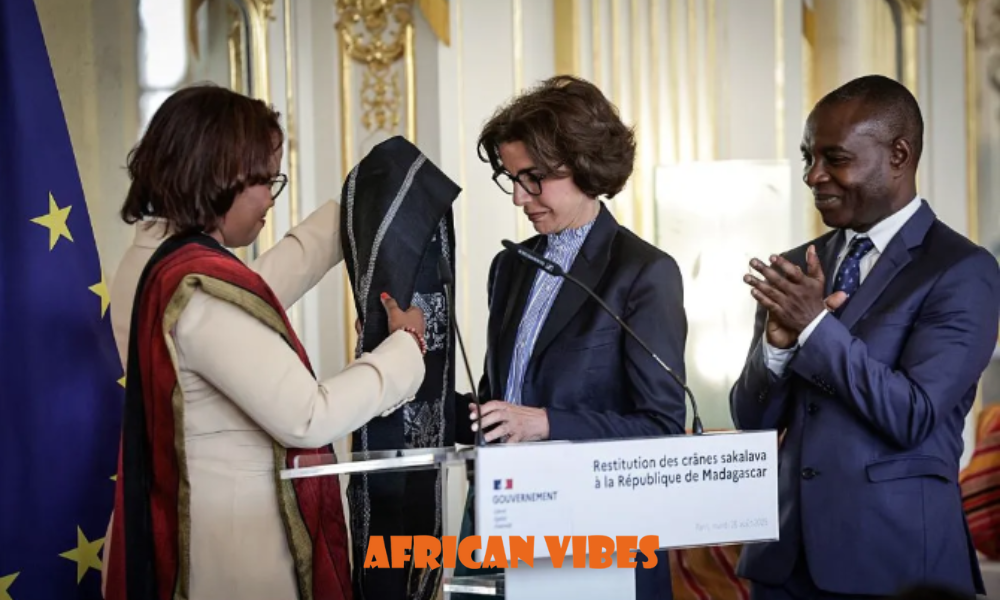
French Minister of Culture Rachida Dati, speaking at the ceremony, acknowledged the moral imperative: “These remains were acquired in circumstances that violated human dignity. Their place is not in a museum but with their people.”
Her Malagasy counterpart, Minister Volamiranty Donna Mara, responded with gratitude and resolve: “This is not just a return of bones. It is the return of our history, our pride, and our ancestors.”
The move underscores France’s evolving relationship with Africa, signaling a new willingness to confront its colonial past. In the broader context of African heritage and decolonization, it sets a precedent for further restitutions—an official recognition that colonial conquest cannot continue to define ownership of culture.
The Call of the Ancestors – A Journey Home
For Madagascar, the repatriation resonates far beyond politics. It is a sacred event, tied to the spiritual and cultural belief that ancestors are ever-present in guiding the living. The skull of King Toera is not a mere relic—it is an indelible link to the nation’s past.
Upon arrival in Madagascar, the remains will undergo traditional Sakalava ceremonies before being laid to rest. These rites are not symbolic gestures but acts of restoration—reuniting the king with his land, his people, and his ancestors.
For the Sakalava community and Madagascar at large, this return represents the reclaiming of dignity. It is an act of resistance against the narrative of conquest and a step towards rewriting history in the voices of the Malagasy themselves.
ALSO READ: Rwanda and DRC Ink Historic Peace Accord, Paving Way for Regional Prosperity
Conclusion – The Unfolding Story of Reparations
The return of King Toera’s skull is more than a singular event—it is part of a global tide of restitution. Across Africa, nations are demanding the return of looted artifacts and sacred remains. From the Benin Bronzes to sacred treasures housed in European museums, the calls for justice are growing louder.
This act of reconciliation between France and Madagascar does not erase the pain of colonial violence, but it offers a pathway forward. It signals the beginning of a new era—one defined not by silence and dispossession but by dialogue, recognition, and the pursuit of justice.
Yet, the journey is far from over. True reconciliation requires more than symbolic gestures; it demands structural change, ongoing restitution, and genuine respect for African cultures. The homecoming of King Toera is a powerful first step—a reminder that healing begins when history is faced, not buried.