


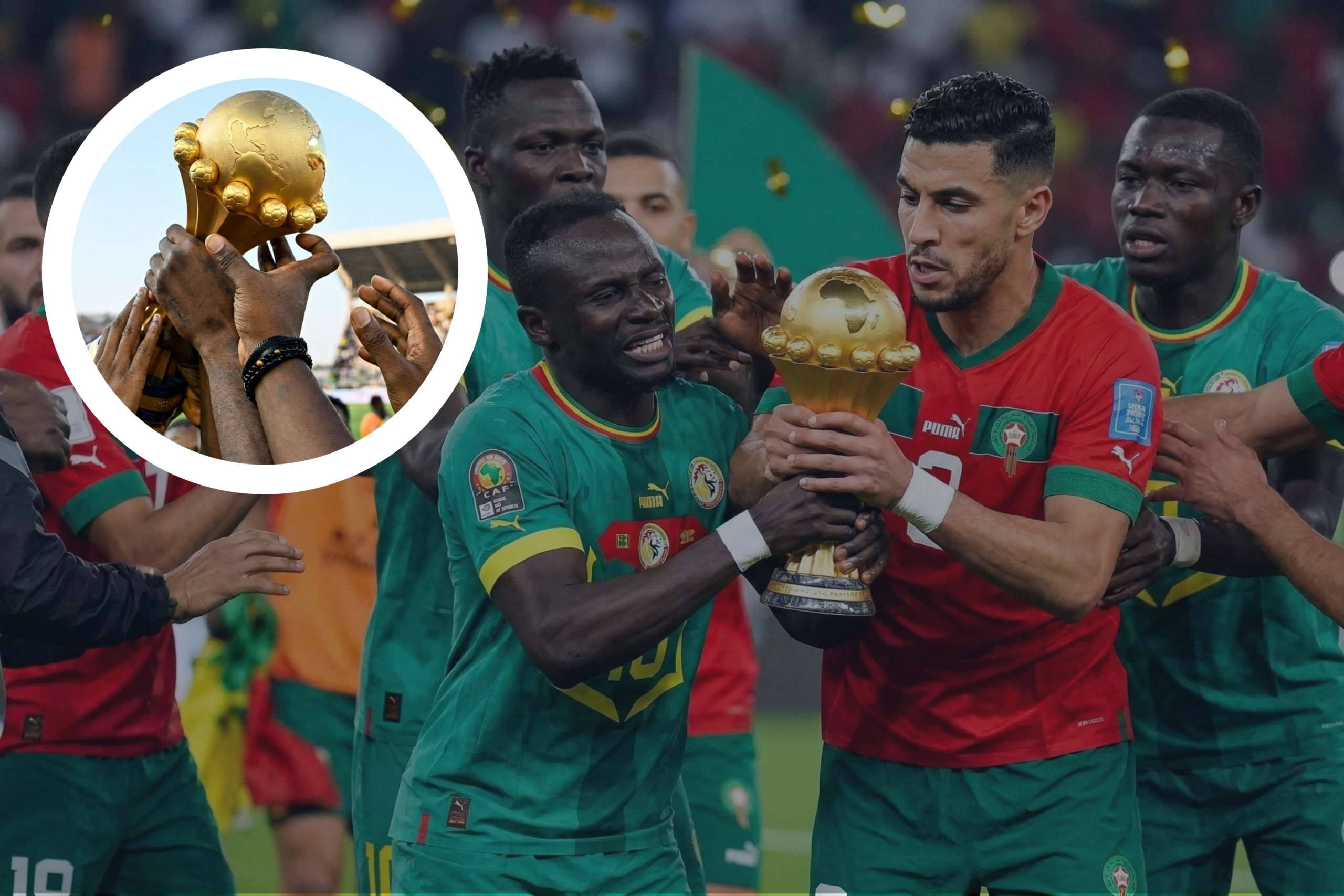
On the night of 18 January 2026, Dakar and Dakarites across the diaspora exploded with joy. Senegal had just beaten hosts Morocco 1–0 after extra time in Rabat, clinching what looked like a second Africa Cup of Nations (AFCON) title in four years. Pape Gueye’s 94th-minute strike, Edouard Mendy’s penalty heroics, and the team’s resilience seemed to seal the story: Senegal, again, on top of Africa.
Fast forward to 17 March 2026, and a very different headline emerged from Cairo. The CAF Appeal Board ruled that Senegal had effectively forfeited the final after a controversial walk-off protest, overturning the result and awarding a 3–0 victory—and the AFCON 2025 trophy—to Morocco.
On the streets and in group chats from Casablanca to Johannesburg, from Paris to New York, a new debate erupted: if Senegal won the match and Morocco won the appeal, who really deserves to be called AFCON champions?
ALSO READ: Senegal Celebrates AFCON Heroes with Historic Rewards and National Honors
How We Got Here: A Final Full of Drama
The AFCON 2025 final in Rabat had all the ingredients of a classic:
- Host nation vs defending powerhouse: Morocco, playing at home and chasing a first AFCON crown since 1976, against a battle-tested Senegal side that lifted the trophy in 2022.
- Star quality on both sides: Morocco’s Brahim Díaz, one of the form players of the tournament, up against the spine of Senegal’s title-winning generation, including Edouard Mendy and Kalidou Koulibaly.
- Tense, tactical football: The game remained tight and goalless in regular time, with chances at both ends but no breakthrough.
The drama peaked deep into stoppage time. Morocco were awarded a penalty after a lengthy VAR review—a decision Senegal’s bench and players fiercely contested. In protest, Senegal briefly left the pitch, leading to a long delay.
When play finally resumed, Díaz stepped up and attempted a Panenka-style penalty. Mendy read it, stayed central, and made the save. Minutes later in extra time, Pape Gueye punished Morocco with a low, decisive strike. On the night, fans, pundits, and broadcasters called it Senegal’s victory.
The Appeal That Changed Everything
What looked settled on the pitch soon moved into the boardroom. Morocco, backed by their federation, lodged a formal complaint over Senegal’s walk-off and delay in returning to the pitch during the penalty incident.
On 17 March 2026, CAF’s Appeal Board delivered its verdict:
- Senegal were found to have breached competition regulations by leaving the field in protest.
- The match was ruled a forfeit by Senegal.
- The result was overturned to a 3–0 win in favour of Morocco, who were formally declared AFCON 2025 champions.
Senegal’s federation has signalled its intention to take the matter to the Court of Arbitration for Sport (CAS), extending the saga beyond CAF and into international sports law.
This created an unusual reality: one team with the emotional victory on the grass, another with the legal victory in the books.
The Case for Senegal: Champions of the Pitch
Those who believe Senegal “really” deserve the trophy point to what football, at its core, is supposed to be about—what happens between the white lines.
- They won the match as played.
- Over 120 minutes, Senegal scored the only legitimate goal from open play. They executed under pressure, adapted to the crowd and context, and found a way to win in extra time.
- They survived the psychological storm.
- The VAR penalty, the walk-off, and the long delay created enormous tension. Yet when Díaz finally struck his penalty, Mendy saved it. Senegal then reset, regrouped, and delivered the knockout blow. For many fans, that resilience under fire is exactly what champions are made of.
- They showed continuity at the top.
- Coming off their 2022 title, Senegal’s deep run and eventual win on the night reinforced their status as one of Africa’s most consistent teams. For supporters across the continent, that continuity of excellence strengthens their claim.
To those in this camp, stripping Senegal of the trophy after the fact feels like erasing what millions witnessed live. They argue that administrative punishment—if necessary—should not rewrite the result of a final so dramatically.
The Case for Morocco: Champions by the Rules
On the other side of the debate, many argue that Morocco’s title is not just a technicality—it is the logical consequence of rules that exist to protect the integrity of the game.
- Regulations matter, even under pressure.
- CAF’s competitions have clear rules against abandoning the field. Senegal’s walk-off, however emotionally understandable, crossed that line. If such actions go unpunished, it could set a precedent where teams leave the pitch whenever a decision goes against them.
- Morocco’s overall tournament was outstanding.
- As hosts, Morocco carried the weight of expectation and still delivered, reaching the final with strong performances and with Díaz emerging as the tournament’s top scorer. Supporters argue that a team cannot be dismissed as “paper champions” when they navigated the same path to the final as everyone else.
- CAF followed its own processes.
- The Appeal Board’s ruling, whether popular or not, came after formal complaints and hearings. From this perspective, Morocco didn’t “steal” a trophy; they won a legal dispute within the system that governs African football.
For those who back Morocco’s claim, respecting that system—even when emotional narratives pull in the opposite direction—is part of building stronger, more predictable African competitions.
Beyond Senegal vs Morocco: What This Means for African Football
The AFCON 2025 saga is bigger than two teams. It raises deeper questions for African football and its global fan base:
- How should football balance feelings and rules?
- Fans remember goals, saves, and celebrations—not legal documents. Yet without enforceable rules, competitions risk sliding into chaos. AFCON 2025 forces CAF, players, and supporters to wrestle with that balance.
- Can CAF communicate better in moments of crisis?
- Delays, confusion, and inconsistent communication fuel mistrust. Clearer, faster explanations—both during the match and in the days after—could have helped fans understand how and why decisions were made.
- What does fairness look like across a rising continent?
- As African football earns more global attention and investment, the stakes get higher. Ensuring that smaller federations feel as protected as bigger, better-resourced ones is essential for long-term credibility.
Yet there is also a more hopeful reading. The intensity of this debate shows how much AFCON now matters to Africans at home and in the diaspora. From watch parties in Lagos to cafés in Brussels, people are engaged, informed, and demanding better governance. That pressure—if listened to—can push CAF and national federations toward more transparent, professional standards.
So, Who Really Deserves the Trophy?
In the record books, as of March 2026, Morocco are AFCON 2025 champions. On highlight reels and in the memories of many fans, Senegal are the team that conquered Rabat on a dramatic January night.
Perhaps the more honest answer is that both countries have a claim—one rooted in law, the other in lived experience. Morocco carried a continent’s expectations as hosts and navigated the tournament with flair. Senegal showed grit, courage, and quality to win on the field. Each narrative is real, depending on where you stand.
For African Vibes readers across the continent and the diaspora, one thing is clear: African football has entered a new era—one where what happens in boardrooms can be just as decisive as what happens on the pitch. The challenge now is to ensure that this new era still honours the magic that draws us to the game in the first place: the goals, the saves, the drama, and the sense that, in 90 minutes (or 120), the best team on the day decides the story.
Until CAF’s processes are fully reviewed—and until Senegal’s expected appeal to the Court of Arbitration for Sport is resolved—the debate will rage on. But whether your heart beats for the Teranga Lions or the Atlas Lions, one truth unites the continent:
African football deserves decisions that match the passion, talent, and ambition we see on the pitch.