


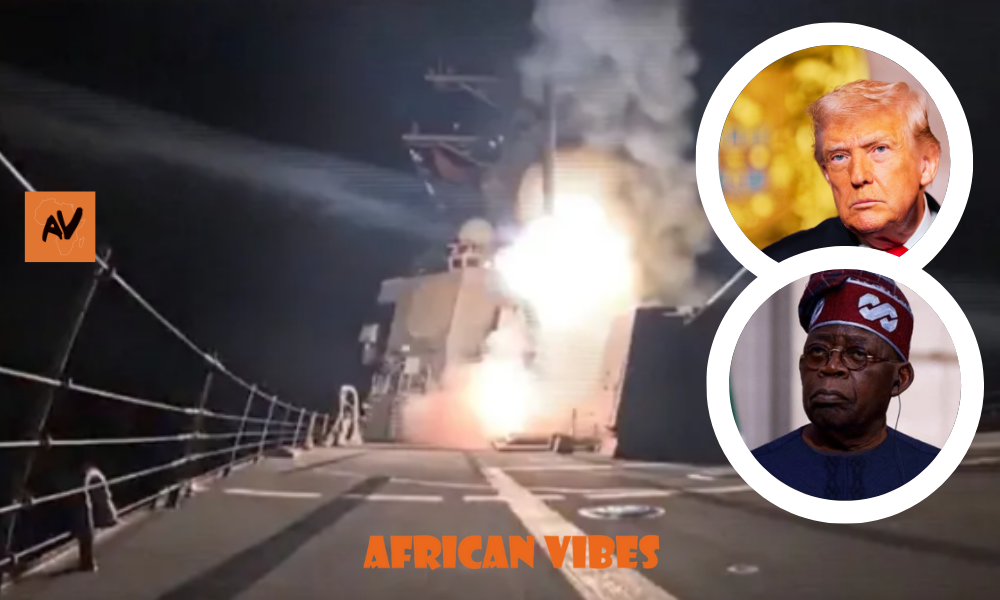
Recent United States military strikes targeting ISIS-linked groups in parts of Africa have renewed a long-running debate across the continent: whether foreign-led counterterrorism operations strengthen African security or quietly erode African sovereignty.
While officials frame the United States’ strikes as necessary interventions to disrupt transnational extremist threats, critics argue that repeated foreign military action risks reinforcing dependency, reviving neocolonial dynamics, and sidelining African-led security solutions. The reality, analysts say, lies somewhere in between.
Why the U.S. Conducts Military Strikes in Nigeria
Targeting ISIS and Transnational Extremist Networks
The United States has justified its military operations in Africa as part of a broader global effort to counter ISIS and affiliated militant groups that have expanded their presence across the Sahel, the Horn of Africa, and parts of Central Africa.
These groups exploit weak state institutions, porous borders, and local grievances, posing security threats not only to African states but also to international interests. According to U.S. defense officials, targeted airstrikes aim to disrupt leadership structures, degrade operational capacity, and prevent attacks on civilians and allied forces.
ALSO READ: You Won’t Believe Which African Giant Is Copying Niger’s U.S. Visa Shutdown
Short-Term Security Outcomes
In the immediate term, such strikes have sometimes succeeded in eliminating high-profile militant leaders and disrupting planned attacks. African governments facing overstretched militaries have, in some cases, welcomed external assistance as a means of stabilising volatile regions.
Security analysts note that foreign intelligence capabilities, surveillance technology, and air power can offer advantages that many African militaries currently lack.
Security Assistance or Sovereignty Erosion?
The Limits of External Military Solutions
Despite tactical successes, experts caution that airstrikes alone cannot address the underlying drivers of extremism, including poor governance, economic marginalisation, communal tensions, and weak service delivery.
Reliance on external military force, they argue, risks postponing investment in domestic security institutions and reducing pressure on governments to pursue long-term political and social reforms.
African Agency and Decision-Making Power
Another point of concern is the degree of African oversight involved in foreign military operations. Questions often arise over who authorises strikes, how intelligence is gathered, and how accountability is maintained when civilian harm occurs.
For local communities affected by violence, limited transparency can deepen mistrust—both toward foreign forces and their own governments.
The Neocolonial Question in Modern Counterterrorism
Historical Sensitivities Around Foreign Military Presence
Africa’s history of colonial rule and Cold War–era interventions continues to shape public perceptions of foreign troops operating on the continent. Even when framed as partnerships, military interventions led by global powers can evoke fears of external control over African security priorities.
Political analysts note that such sensitivities are particularly strong in regions where foreign involvement has previously coincided with resource extraction or political manipulation.
Partnerships or Power Asymmetry?
While the U.S. emphasizes cooperation with African governments, critics argue that stark disparities in military capacity create imbalanced relationships. Strategic decisions are often driven by foreign security agendas, leaving African states with limited influence over long-term outcomes.
This imbalance has fuelled accusations that counterterrorism efforts risk becoming instruments of influence rather than purely security-driven partnerships.
Questioning Religious Framing of Violence
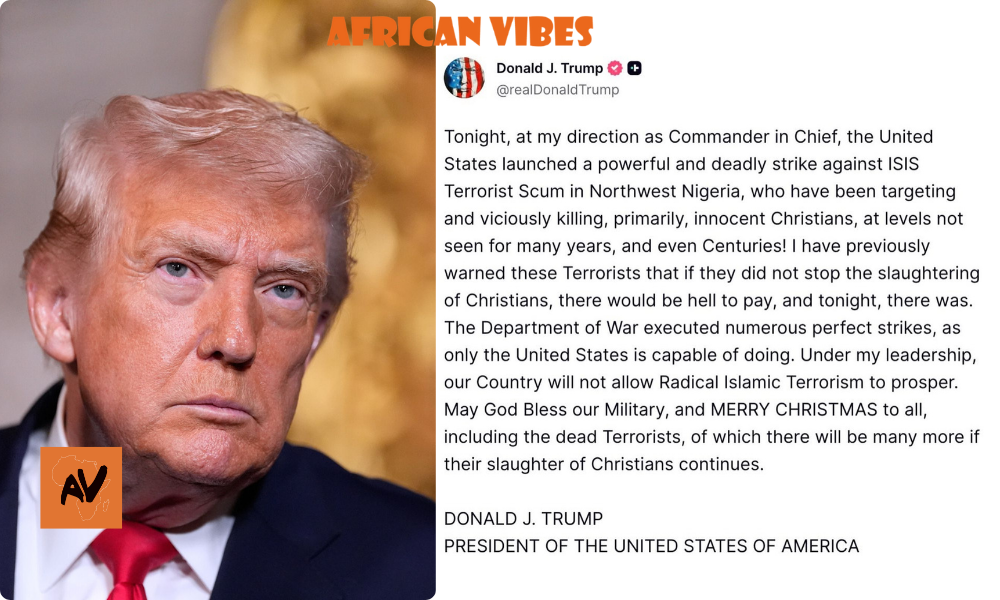
Recent rhetoric from United States political figures has, at times, framed violence in Africa through a religious lens, particularly highlighting Christian communities targeted by extremist groups. While religious identity is a factor in some conflicts, researchers warn that such framing oversimplifies Africa’s complex security landscape.
Many conflicts involve overlapping ethnic, political, economic, and local power dynamics that cannot be reduced to religious binaries.
Why Simplistic Narratives Can Be Harmful
Experts caution that narrow religious narratives risk inflaming communal tensions, obscuring non-religious victims, and shaping policy responses that fail to address root causes. Effective security strategies, they argue, require a nuanced understanding of local realities rather than broad ideological frames.
Can Africa Balance Global Support With Self-Reliant Security?
The Case for Pan-African Security Capacity
The debate has renewed calls for stronger African-led security mechanisms, including improved coordination within the African Union, regional blocs, and joint task forces. Investment in intelligence-sharing, early warning systems, and professionalised armed forces is widely seen as essential for long-term stability.
Analysts stress that reducing dependence on external intervention does not mean rejecting international cooperation, but redefining it.
Redefining Foreign Partnerships
There is growing advocacy for partnerships that prioritise capacity-building, civilian protection, and accountability over direct military action. Such an approach, observers say, would allow African states to retain strategic control while benefiting from technical and logistical support.
A Double-Edged Sword for African Security
United States strikes against ISIS-linked groups in Africa underscore a difficult reality: foreign intervention can disrupt immediate threats, but it also raises enduring questions about sovereignty, legitimacy, and long-term security.
For Africa, the challenge is not choosing between external assistance and autonomy, but ensuring that counterterrorism efforts strengthen—rather than substitute—African-led solutions. As insecurity persists across multiple regions, how this balance is struck may shape the continent’s security future for years to come.