


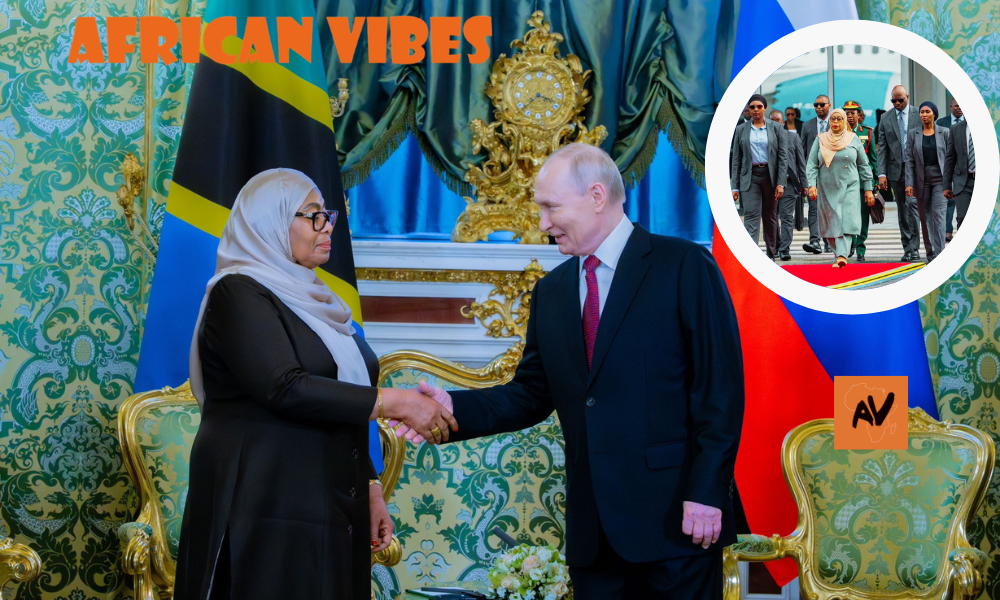
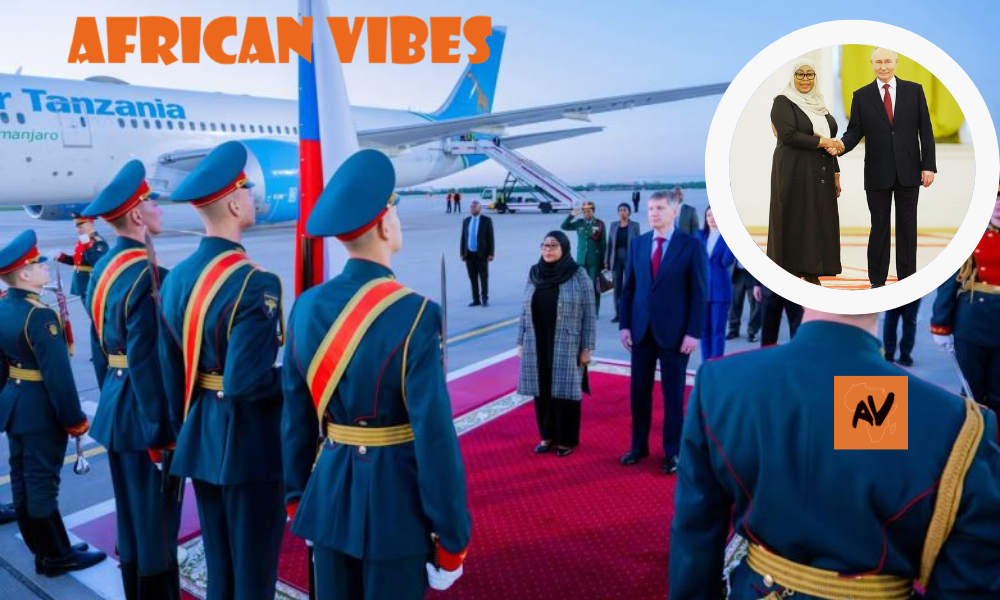
President Samia Suluhu Hassan has embarked on a landmark visit to Russia, becoming the first Tanzanian leader in more than five decades to undertake an official visit to the country. The historic trip marks a significant moment in Tanzania’s foreign policy and reflects the country’s growing ambition to diversify international partnerships, attract investment, and strengthen economic cooperation with major global powers.
The visit comes at a time when African nations are increasingly pursuing multi-aligned diplomatic strategies, seeking partnerships that support economic development, industrialization, infrastructure expansion, technology transfer, and energy security.
For Tanzania, the visit is more than a diplomatic engagement. It represents an opportunity to redefine bilateral relations with Russia while advancing the country’s broader development agenda under President Samia Suluhu Hassan’s leadership.
ALSO READ: Tanzania’s $112 Million Stadium That Could Redefine East African Football Forever
Why President Samia Suluhu’s Russia Visit Matters
The significance of President Samia Suluhu’s visit cannot be overstated.
Official visits between heads of state often signal a strategic shift in international relations, and this visit demonstrates Tanzania’s intention to deepen engagement beyond its traditional partners.
More than 50 years have passed since a Tanzanian president last conducted an official visit to Russia. During that period, both nations have undergone dramatic transformations.
Russia has emerged as a major geopolitical player with interests across Africa, while Tanzania has become one of East Africa’s fastest-growing economies and a key destination for foreign investment.
The visit reflects growing recognition that economic growth in the modern world requires broad international cooperation across multiple regions and sectors.
A New Era in Tanzania-Russia Relations
Relations between Tanzania and Russia date back to the Cold War era when the Soviet Union supported various African liberation movements and development initiatives across the continent.
Tanzania, under the leadership of founding president Julius Nyerere, maintained diplomatic relations with the Soviet Union and engaged in educational and technical cooperation.
Following the dissolution of the Soviet Union, relations continued but remained relatively limited compared to Tanzania’s engagements with Western countries, China, and regional partners.
President Samia’s visit signals an effort to revitalize these ties and build a modern partnership based on mutual economic interests and shared development goals.
Observers view the trip as an opportunity to establish stronger institutional frameworks that can facilitate trade, investment, educational exchanges, and technological cooperation for years to come.
Strengthening Economic Cooperation
One of the central objectives of the visit is expected to be expanding economic cooperation between Tanzania and Russia.
Tanzania’s economy has shown resilience and steady growth in recent years, supported by investments in infrastructure, tourism, mining, agriculture, and energy.
Russia possesses significant expertise in areas that align closely with Tanzania’s development priorities, including:
- Energy development
- Mining technology
- Industrial manufacturing
- Agricultural modernization
- Transport infrastructure
- Science and technology
- Higher education
By strengthening economic ties, both countries stand to benefit from increased trade flows, business partnerships, and investment opportunities.
For Tanzania, attracting foreign direct investment remains a crucial component of achieving long-term economic transformation.
ALSO READ: Senegal President Faye Dismisses Prime Minister Sonko in Dramatic Power Split
Trade Opportunities Between Tanzania and Russia
Trade remains one of the most promising areas for expanded cooperation.
Tanzania’s strategic location on the Indian Ocean provides access to regional markets across East and Central Africa, making it an attractive gateway for international businesses.
Key Tanzanian exports that could potentially find larger markets include:
- Agricultural products
- Coffee
- Tea
- Cashew nuts
- Cotton
- Minerals
- Fisheries products
At the same time, Tanzania may seek increased imports of machinery, industrial equipment, fertilizers, technology, and specialized services from Russia.
Expanding bilateral trade can help diversify Tanzania’s export destinations while reducing dependence on a limited number of markets.
This diversification is increasingly important in a rapidly changing global economy where resilience and flexibility are critical for long-term growth.
Investment and Industrial Development
Investment promotion is expected to be a major focus of discussions during the visit.
Tanzania has positioned itself as one of Africa’s most attractive investment destinations through reforms aimed at improving the business environment and encouraging private-sector growth.
Russian investors may find opportunities in several sectors, including:
Energy
Tanzania possesses significant natural gas reserves and continues to invest in expanding electricity generation and distribution.
Russian expertise in energy infrastructure, engineering, and resource development could contribute to Tanzania’s long-term energy goals.
Mining
The country is rich in gold, diamonds, graphite, nickel, rare earth minerals, and other strategic resources.
Partnerships that support value addition and local processing could help Tanzania maximize the benefits of its mineral wealth.
Agriculture
Agriculture remains the backbone of Tanzania’s economy, employing millions of citizens.
Cooperation in agricultural technology, irrigation systems, mechanization, and food processing could improve productivity and strengthen food security.
Manufacturing
Industrialization is a central pillar of Tanzania’s development strategy.
Foreign investment in manufacturing can create jobs, boost exports, and support the growth of local industries.
Education and Human Capital Development
Education is another key area where Tanzania and Russia have a history of cooperation.
During the Soviet era, many African students received scholarships to study in Soviet universities, creating lasting educational and professional connections.
President Samia’s visit may open new opportunities for:
- Scholarships
- Research collaborations
- Student exchange programs
- Technical training initiatives
- Scientific cooperation
Human capital development remains essential for Tanzania’s ambitions to become a more competitive and knowledge-driven economy.
Strengthening educational partnerships can help equip young Tanzanians with skills needed in emerging sectors such as technology, engineering, renewable energy, and advanced manufacturing.
Technology and Innovation Partnerships
Technology is increasingly shaping economic competitiveness around the world.
As Tanzania accelerates digital transformation efforts, partnerships that support technological innovation are becoming more valuable.
Potential areas of cooperation include:
- Information technology
- Digital infrastructure
- Artificial intelligence research
- Telecommunications
- Cybersecurity
- Scientific innovation
Technology transfer agreements can help local industries become more productive while supporting entrepreneurship and job creation.
For Tanzania, access to modern technology is critical to achieving its broader development objectives and improving public service delivery.
Energy Cooperation and Strategic Importance
Energy security remains a major priority for many countries, including Tanzania.
Reliable and affordable energy supplies are essential for industrialization, economic growth, and improved living standards.
Russia is recognized globally for its expertise in energy development, including:
- Oil and gas
- Hydropower
- Power generation technologies
- Energy infrastructure
Discussions during the visit could explore opportunities for technical cooperation and investment that support Tanzania’s growing energy needs.
Enhanced energy partnerships could help accelerate industrial development while improving access to electricity in underserved communities.
Tanzania’s Expanding Global Diplomacy
President Samia Suluhu Hassan has pursued an active foreign policy aimed at strengthening Tanzania’s relationships with partners across the globe.
Since taking office, she has emphasized economic diplomacy, investment attraction, and international engagement as key tools for national development.
Her administration has sought stronger ties with countries in:
- Africa
- Europe
- Asia
- The Middle East
- North America
The Russia visit aligns with this broader strategy of expanding Tanzania’s international partnerships and ensuring the country remains connected to diverse sources of investment, expertise, and economic opportunity.
Rather than choosing between competing global powers, Tanzania appears focused on pursuing relationships that deliver tangible benefits for its citizens.
Russia’s Growing Interest in Africa
President Samia’s visit also takes place against the backdrop of Russia’s growing engagement with African nations.
In recent years, Russia has increased diplomatic outreach across the continent through:
- Trade initiatives
- Investment forums
- Educational partnerships
- Energy projects
- Security cooperation
- Technology agreements
Africa’s rapidly growing population, expanding consumer markets, and abundant natural resources make the continent increasingly important in global economic calculations.
For Russia, strengthening ties with countries such as Tanzania represents an opportunity to expand economic cooperation and build long-term partnerships.
What This Means for Tanzania’s Future
The long-term impact of President Samia’s visit will ultimately depend on the agreements reached and how effectively they are implemented.
However, the visit already represents an important diplomatic milestone.
Potential benefits include:
- Increased foreign investment
- Expanded trade opportunities
- Technology transfer
- Educational exchanges
- Infrastructure development
- Enhanced energy cooperation
- Greater international visibility
If successfully translated into concrete projects, these outcomes could support Tanzania’s ambitions for economic transformation and sustainable development.
A Defining Moment in Tanzania-Russia Relations
President Samia Suluhu Hassan’s historic visit to Russia marks the beginning of what could become a significant new chapter in bilateral relations.
As the first Tanzanian leader to undertake an official visit to Russia in more than half a century, her trip symbolizes both continuity and change—honoring longstanding diplomatic ties while exploring new opportunities for cooperation in a rapidly evolving global landscape.
With discussions focused on trade, investment, education, energy, and technology, the visit underscores Tanzania’s determination to build diverse international partnerships that support national development.
Whether through increased investment, expanded educational opportunities, or deeper economic cooperation, the outcomes of this visit may shape Tanzania-Russia relations for decades to come.
As global dynamics continue to shift, Tanzania’s strategy of engaging multiple partners and pursuing pragmatic economic diplomacy could prove instrumental in achieving its long-term development goals. President Samia’s visit to Russia may therefore be remembered not only as a historic diplomatic event but also as a strategic step toward Tanzania’s future growth and global influence.