


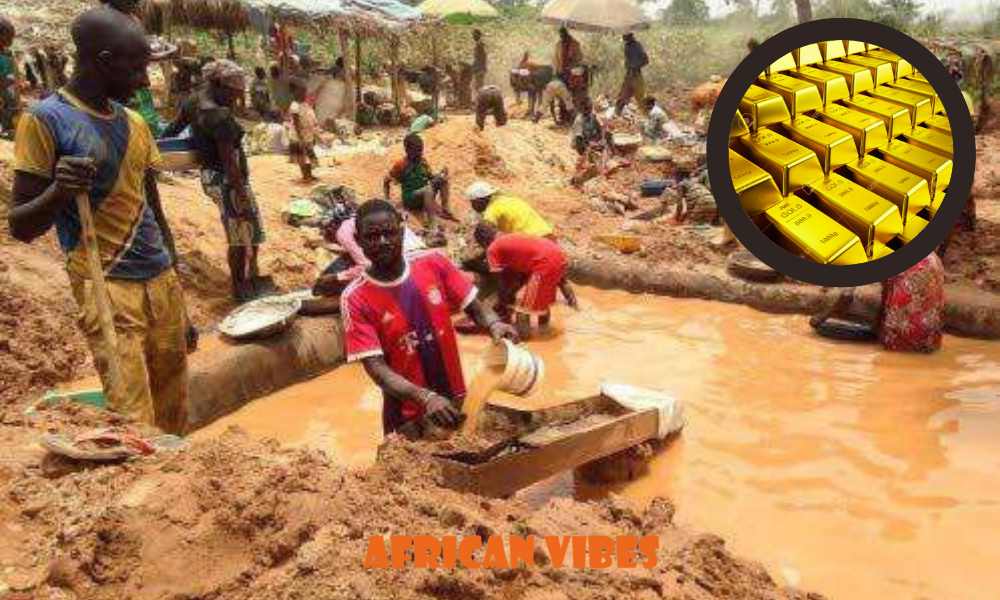
On a humid morning in Ghana’s Ashanti region, trucks rumble down red-dust roads carrying ore from the Ahafo and Akyem mines—symbols of a quiet revolution in African mining.
For the third consecutive year, Ghana has claimed the title of Africa’s largest gold producer, outpacing its long-dominant southern rival and redefining the geography of global gold.
Across the continent, gold production has become more than a measure of wealth; it is a barometer of political stability, technological progress, and the reach of foreign investment in one of the world’s most resource-rich regions.
The Continent’s Shifting Hierarchy
According to industry data compiled for 2025, Ghana produced roughly 4.5 million ounces of gold, edging ahead of South Africa’s 3.8 million ounces.
| Rank | Country | Estimated 2025 Production (Million Ounces) | Major Mines |
| 1 | Ghana | ~4.5 | Ahafo, Akyem |
| 2 | South Africa | ~3.8 | Mponeng, Driefontein, Kloof |
| 3 | Mali | ~1.6 | Loulo-Gounkoto, Sadiola |
| 4 | Burkina Faso | ~1.4 | Essakane, Boungou |
| 5 | Sudan | ~1.1 | Hassai, Ariab |
| 6 | Tanzania | ~0.9 | Geita, North Mara |
| 7 | Ivory Coast | ~0.7 | Tongon, Ity |
| 8 | Guinea | ~0.5 | Siguiri, Lero |
| 9 | Senegal | ~0.3 | Sabodala-Massawa |
ALSO READ: Botswana and Angola’s Race to Own De Beers, the World’s Iconic Diamond Giant
How the Numbers Are Measured
Production is typically expressed in tonnage or troy ounces, but analysts also weigh market value and export quality—factors that determine how much of each country’s gold windfall is converted into national income.
With prices hovering near $2,100 an ounce, Africa’s share of the global gold market represents tens of billions of dollars in export revenue.
Forces Behind the Boom
Several dynamics underpin this renaissance:
- Natural endowment. West Africa’s ancient greenstone belts remain among the world’s richest deposits.
- Technological modernization. Surface and deep-pit mining now rely on digital mapping, automation, and satellite surveying.
- Political reform. Countries like Ghana and Ivory Coast have tightened regulation and boosted transparency, restoring investor confidence.
- Foreign capital. Canadian, Australian, and Chinese firms dominate joint ventures, bringing both expertise and geopolitical complexity.
The Double-Edged Sword of Growth
Gold mining has become a cornerstone of economic expansion, generating jobs and infrastructure in otherwise underdeveloped regions.
In Burkina Faso, the Essakane and Boungou mines employ thousands and fund new roads. In Mali, revenue from Loulo-Gounkoto helps finance education and healthcare.
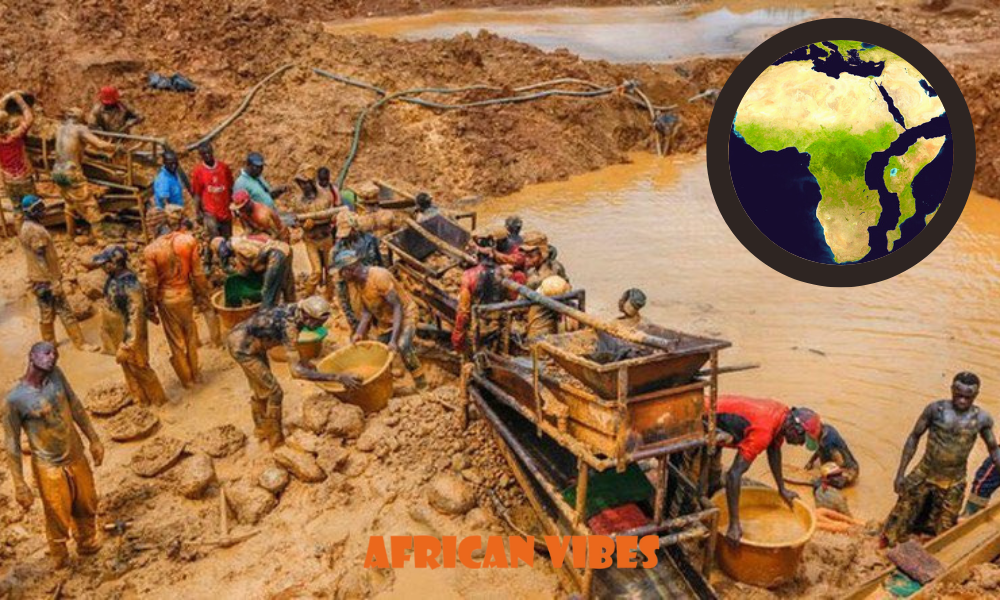
Yet the benefits are shadowed by persistent challenges: illegal mining, environmental degradation, and volatile market prices.
Across the Sahel, unregulated artisanal mining fuels conflict and undermines formal revenue collection.
Environmental advocates warn that without stricter safeguards, deforestation and mercury contamination could erase decades of economic gain.
Sustainability and the Future
As climate concerns mount, African producers are turning to eco-friendly mining practices and renewable-energy-powered operations.
Ivory Coast’s Ity mine, for instance, now uses hybrid solar systems, while Tanzanian firms experiment with tailings reprocessing to reduce waste.
Emerging players such as Senegal—home to the high-tech Sabodala-Massawa complex—demonstrate that smaller nations can leverage sustainability as a competitive advantage.
Analysts say these innovations will determine which countries remain dominant when the current commodity cycle wanes.
ALSO READ: Botswana Unveils $75,000 Investment Program to Lead Africa’s Economic Transformation
Beyond the Glitter
For many African economies, gold is both a blessing and a test.
Handled wisely, it can fund diversification, strengthen currencies, and underwrite long-term growth.
Mismanaged, it risks entrenching inequality and ecological harm.
Ghana’s ascent to the top of Africa’s gold hierarchy in 2025 is thus more than a triumph of output—it is a case study in how policy, technology, and stability can turn natural resources into national power.
The real challenge, experts say, lies not in finding the gold—but in ensuring it shines for all.