


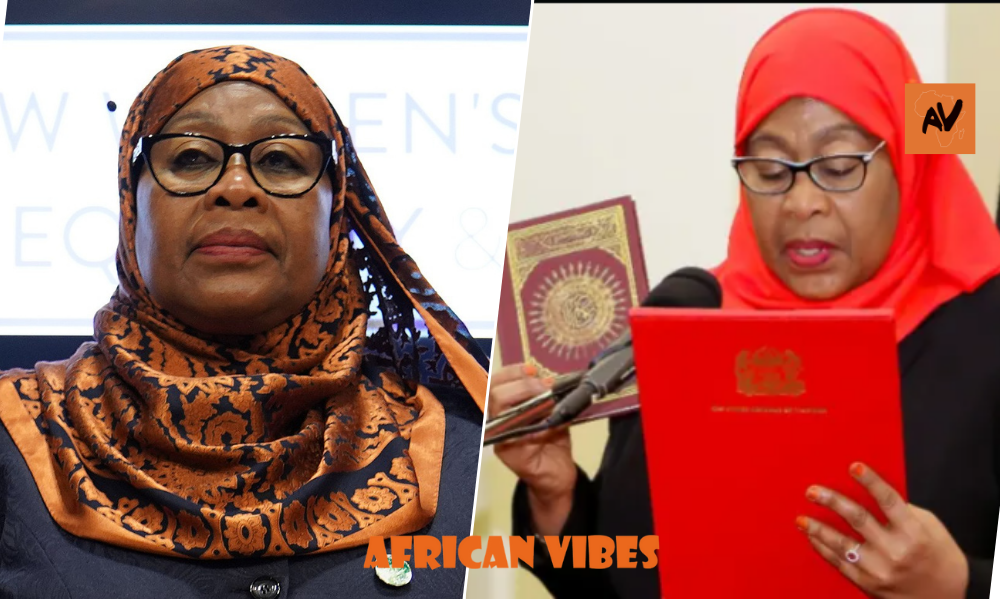
The United Republic of Tanzania, often celebrated as one of East Africa’s most stable nations, has entered a defining moment. On November 1, 2025, the National Electoral Commission declared President Samia Suluhu Hassan the overwhelming winner of the presidential election, claiming 97.66% of the vote. The result secures a fresh five-year mandate for the Chama Cha Mapinduzi (CCM) party, extending its uninterrupted rule since independence in 1961.
But behind the triumph lies a test that reaches far beyond Tanzania’s borders. For many observers across the continent, this election is more than a political event — it is a reckoning for African democracy, exposing the enduring tension between stability and genuine political competition.
A Landslide Victory in a Climate of Uncertainty
While the scale of President Samia Suluhu Hassan’s victory was historic, it was also divisive. Opposition leaders and human rights organizations described the electoral process as fundamentally uncompetitive.
Key opposition figures — Tundu Lissu of the Chadema party and Luhaga Mpina of ACT-Wazalendo — were disqualified before election day. Lissu, a leading reformist voice and former presidential contender, faced treason charges and was imprisoned months before the vote. His party, Chadema, was barred from participation entirely, while Mpina was struck from the ballot on technical grounds.
With only minor parties contesting, analysts characterized the race as a coronation rather than a contest.
The lead-up to the October 29 polls was marred by arrests, intimidation, and a sweeping internet blackout. Protests erupted in Dar es Salaam, Morogoro, and Shinyanga, where demonstrators clashed with heavily armed security forces. The United Nations Human Rights Office confirmed at least ten deaths, while opposition groups reported far higher figures.
The result has left the country grappling with a paradox: a government claiming near-universal support amid widespread allegations of repression and fear.
ALSO READ: Egypt and Rwanda Sign Historic Visa Waiver to Strengthen African Unity and Trade
From Reformer to Power Consolidator: The CCM Paradox
When Samia Suluhu Hassan took power in March 2021 after the death of President John Magufuli, she was hailed as a reformer. As Africa’s first female head of state, she projected a new image of Tanzanian leadership — measured, diplomatic, and inclusive.
Her early decisions reflected this promise she lifted media bans, restored political rallies, and encouraged dialogue with civil society. International observers applauded her pragmatic approach, which seemed to open a new democratic chapter.
Yet the 2025 election tells a more complicated story. The sweeping victory — and the suppression surrounding it — suggest that the CCM’s instinct for total control remains intact.
For decades, CCM has blended state and party structures, ensuring political continuity but limiting pluralism. This fusion of power, while credited with preserving peace, has also slowed the evolution of a truly multiparty democracy in Africa.
Analysts argue that President Samia Suluhu Hassan’s mandate reflects the enduring logic of the Tanzanian state: control first, reform later.
Economic Vision: Building Tanzania as East Africa’s Next Powerhouse
Beyond politics, Tanzania’s economic ambitions remain immense — and may prove decisive in how history judges President Samia Suluhu Hassan’s second term.
Her administration’s investment-driven vision aims to transform Tanzania into East Africa’s economic hub, capitalizing on its strategic location, mineral wealth, and young population.
1. Infrastructure and Industrial Growth
The Standard Gauge Railway (SGR) — one of the largest infrastructure projects in East Africa — connects Dar es Salaam to landlocked neighbors such as Rwanda, Burundi, and the DRC, cementing Tanzania’s position as a regional trade corridor.
The Julius Nyerere Hydropower Station, a $3.6 billion mega-project on the Rufiji River, promises to stabilize the energy grid and catalyze industrialization.
2. The Blue Economy
Hassan’s Blue Economy policy seeks to unlock the value of Tanzania’s extensive coastline and lakes by promoting fisheries, marine logistics, and eco-tourism. This sector is poised to diversify national income beyond agriculture and mining.
3. Regional Connectivity
Tanzania’s geography makes it the gateway to Central and Southern Africa. Despite post-election unrest, its relative stability remains vital to the East African Community (EAC). For investors and neighboring states, Dar es Salaam’s continuity — however achieved — offers predictability in a volatile region.
If President Hassan leverages her political dominance to deliver economic progress, she could redefine her controversial victory as a mandate for prosperity rather than a symbol of repression.
ALSO READ: Free Education Set to Transform Malawi’s Future
Reconciliation, Reform, and the Road Ahead
The central question now is whether Tanzania’s government will use its power to rebuild trust or entrench control.
In her victory speech, President Samia Suluhu Hassan called for unity, invoking the founding principles of Ujamaa — Tanzania’s version of African socialism — and urging citizens to “protect what we have built together.”
But national healing requires more than rhetoric. Genuine reconciliation will depend on restoring civil liberties, strengthening electoral institutions, and reopening dialogue with opposition parties and independent media.
A government that claims the support of nearly all its people, critics argue, should not fear dissent. Instead, it should embrace it as proof of a maturing democracy.
Why Tanzania Matters for African Democracy
Tanzania’s political future will reverberate far beyond its borders. As one of Africa’s most populous and peaceful nations, its trajectory will influence perceptions of democratic governance across the continent.
If President Samia Suluhu Hassan can balance authoritarian control with economic inclusivity, Tanzania may continue to stand as a model of stability. But if political space continues to narrow, the country risks becoming a case study in democratic backsliding — a cautionary tale for nations walking the same tightrope between reform and control.
For now, the world watches closely. Tanzania stands at a crossroads, with the potential to emerge as both a regional economic powerhouse and a beacon of redefined African democracy — if only its leaders can reconcile power with the promise of freedom.