


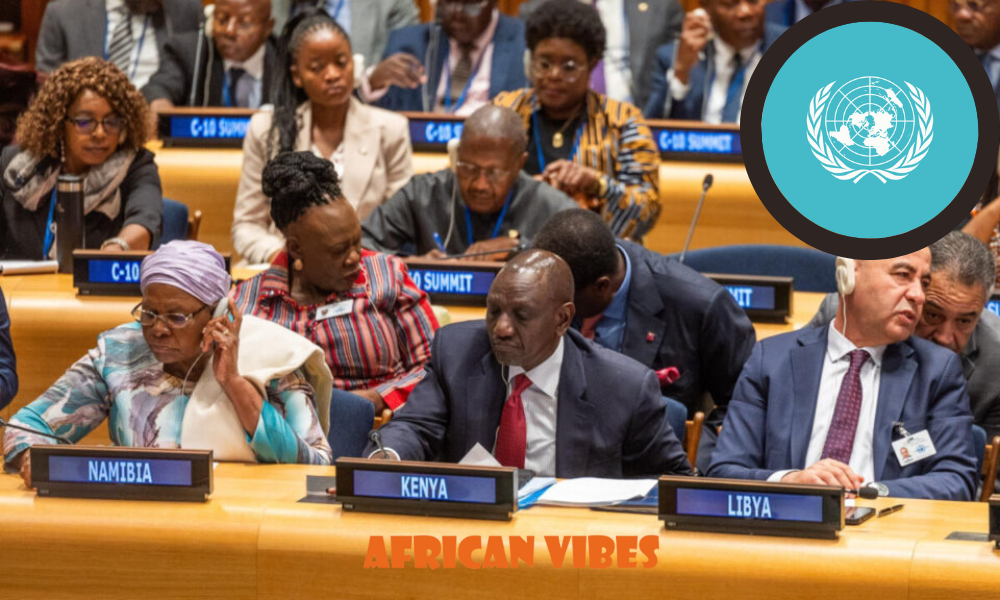
The halls of the United Nations General Assembly (UNGA) in 2025 didn’t merely host a discussion on global issues; they served as the stage for a powerful, unified assertion of African agency and a demand for global justice.
African heads of state arrived with a resolute and non-negotiable mandate: to fundamentally reshape the international system, starting with the UN Security Council (UNSC) and addressing the existential threat of Climate Justice.
This year’s UNGA, rather than being a forum for requesting aid, became a platform where the collective voice of 54 nations articulated a vision for a truly inclusive global governance structure—one that reflects the continent’s geopolitical importance and is firmly rooted in the aspirations of Agenda 2063. The message was clear: the world body must evolve to survive, and that evolution must place Africa at the decision-making table, permanently.
The Unjust Exclusion: Africa’s Right to a Permanent Seat
At the heart of the unified African agenda is the imperative to correct a decades-long “historic injustice”—the continent’s systematic exclusion from the UN Security Council’s permanent decision-making table.
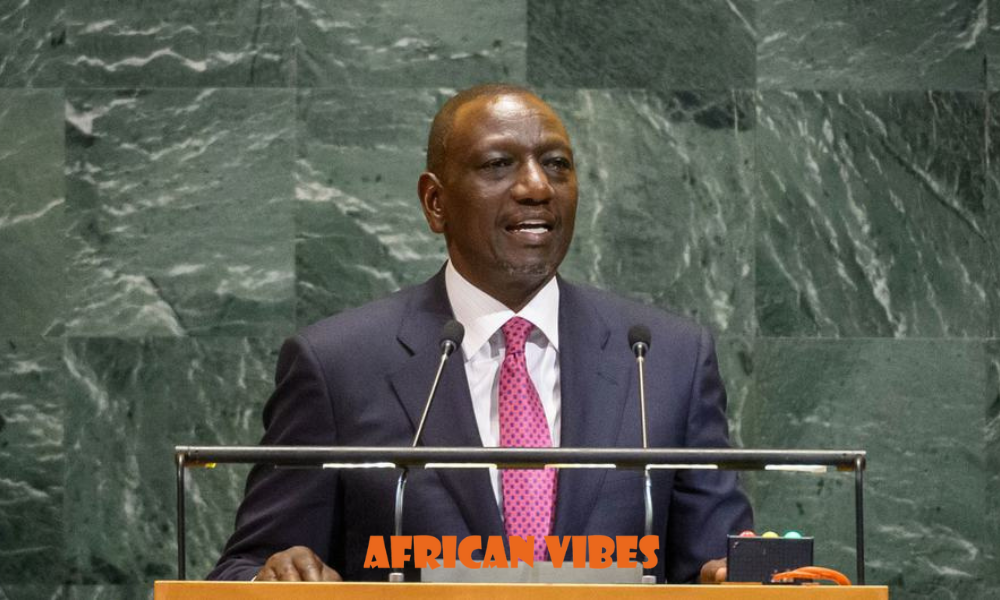
African leaders, including President William Ruto of Kenya and Sierra Leone’s President Maada Bio, speaking as the Chair of the AU Committee of Ten on Security Council reform, did not mince words. They declared Africa’s current marginalization as “unacceptable, unfair, and grossly unjust.”
The numbers underscore the absurdity of the current setup: Africa’s 54 nations represent over a quarter of the UN’s membership. More critically, over half of the Security Council’s deliberations—from peacekeeping operations to humanitarian crises—concern conflicts and situations on the African continent. Yet, Africa remains the only continent without a permanent seat among the P5 (Permanent Five) powers who wield the crucial veto.
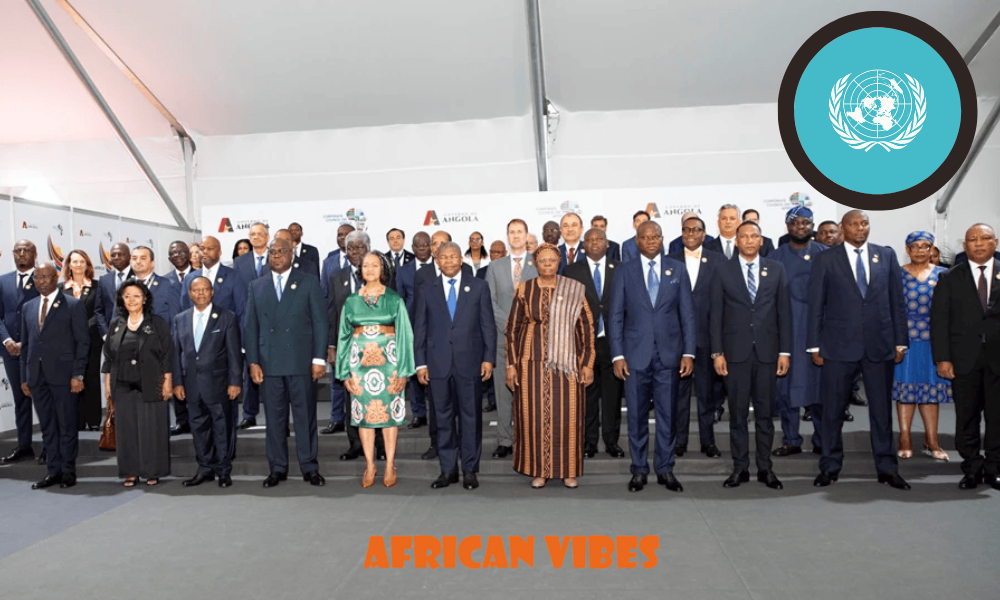
ALSO READ: 10 Times African Leaders Shook the UN General Assembly
The Unwavering Ezulwini Consensus
The diplomatic core of this demand remains the Ezulwini Consensus (established in 2005) and the Sirte Declaration. This unwavering position demands at least two permanent seats for African nations, complete with the right of veto, and two additional non-permanent seats. This unified stance is an expression of continental solidarity that transcends linguistic and regional differences.
This year’s uncontested endorsement of the Democratic Republic of Congo (DRC) and Liberia for the 2026-2027 non-permanent African seats, alongside the ongoing tenure of Somalia, is a testament to the continent’s commitment to internal unity on this issue.
However, leaders stressed that non-permanent membership, while welcome, is merely a rotating chair; the demand is for permanent power—the ability to shape global security policies rather than simply implement them. As one leader put it, “You cannot claim to be the United Nations while disregarding the voice of 54 nations.”
The Climate Justice Imperative: Securing Africa’s Future
Beyond the political battle for representation, African leaders forcefully redirected global attention to the most pressing existential threat facing the continent: the climate crisis, framed not just as an environmental issue but as a core security and justice concern.
African nations, which contribute minimally to global carbon emissions, are facing the brunt of climate impacts—from crippling droughts in the Sahel to devastating floods in East and Southern Africa. This is not just environmental degradation; it is an existential threat that reverses hard-won development gains, exacerbates poverty, and fuels conflict.
Reforming Finance: A Demand for Non-Debt-Creating Capital
The call for Climate Justice centred on reforming the global financial architecture to ensure adequate, fair, and simplified financing. Leaders highlighted a glaring disparity: Africa needs approximately $53 billion annually for climate adaptation, yet it received only about $13 billion in 2021-2022. The continent cannot bear this enormous adaptation gap alone, especially when current finance often comes as debt, trapping nations in a vicious cycle of borrowing.
The clear demand articulated at UNGA, echoing the recent Africa Climate Summit’s Addis Ababa Declaration, is that climate finance must be grant-based or highly concessional and must not create debt.
This financial reform is seen as non-negotiable for Africa to successfully implement its green industrialisation strategies and meet the sustainable development goals outlined in Agenda 2063. African leaders are asserting that their vast renewable energy potential, if unlocked by fair investment, positions the continent as a crucial Global South solution provider, not merely a victim.
Strengthening the AU-UN Partnership: African-Led Solutions
A crucial theme underpinning both security and climate demands was the need to enhance the operational partnership between the United Nations and the African Union (AU). This isn’t just about sharing information; it’s about shifting power to support African-led solutions and reinforce Agenda 2063 as the continent’s blueprint for prosperity.
Aligning for Agenda 2063
African leaders urged the entire UN system to align its support fully with the goals of Agenda 2063—The Africa We Want—which envisions an “integrated, prosperous and peaceful Africa, driven by its own citizens.” This includes boosting support for the African Continental Free Trade Area (AfCFTA), enhancing capacity for digital transformation, and strengthening governance.
On the security front, there was a forceful call for predictable, sustained, and flexible funding for African-led peace support operations. While UN Peacekeeping Missions often operate on the continent, African member states contribute a massive proportion of the boots on the ground.
However, their security architectures, such as the African Standby Force, remain under-resourced. The call is to empower the AU to effectively handle the increasing number and complexity of conflicts in hotspots like the Sahel, DRC, and Sudan, moving away from ad-hoc responses to a truly co-managed security strategy.
ALSO READ: Ghana’s Deportee Deal Sparks Rights Lawsuit and Pan-African Backlash
Asserting a Global South Voice
Further demonstrating the continent’s maturity and African agency, leaders did not confine their speeches to African issues. They voiced deep concern over ongoing global crises, including the devastating conflict in Gaza and instability in Ukraine.
By engaging with these global issues, African leaders positioned the continent not as a spectator, but as a critical, balancing voice for the Global South—a voice calling for a multi-polar, reformed international system that prioritizes peace, dialogue, and equitable representation for all.
A New Era of African Agency
The United Nations General Assembly of 2025 will be remembered as a decisive turning point. It marked the moment where Africa transitioned from patiently requesting reform to unitedly demanding a seat at the table—a seat with the power to shape world affairs.
The unified and forceful calls for UN Security Council reform based on the Ezulwini Consensus, coupled with the urgent demands for Climate Justice through equitable finance, signal a new era of African agency. The continent is not waiting to be acted upon; it is leveraging its collective strength, its demographic growth, and the visionary roadmap of Agenda 2063 to claim its rightful place.
Africa’s growing relevance—economic, demographic, and diplomatic—makes the demand for global justice not a favour, but a necessity for the UN’s own survival and future legitimacy. As the continent continues its path toward an integrated and prosperous future, the world must reckon with this unified mandate and usher in a truly equitable global order. The countdown to meaningful reform has begun.