


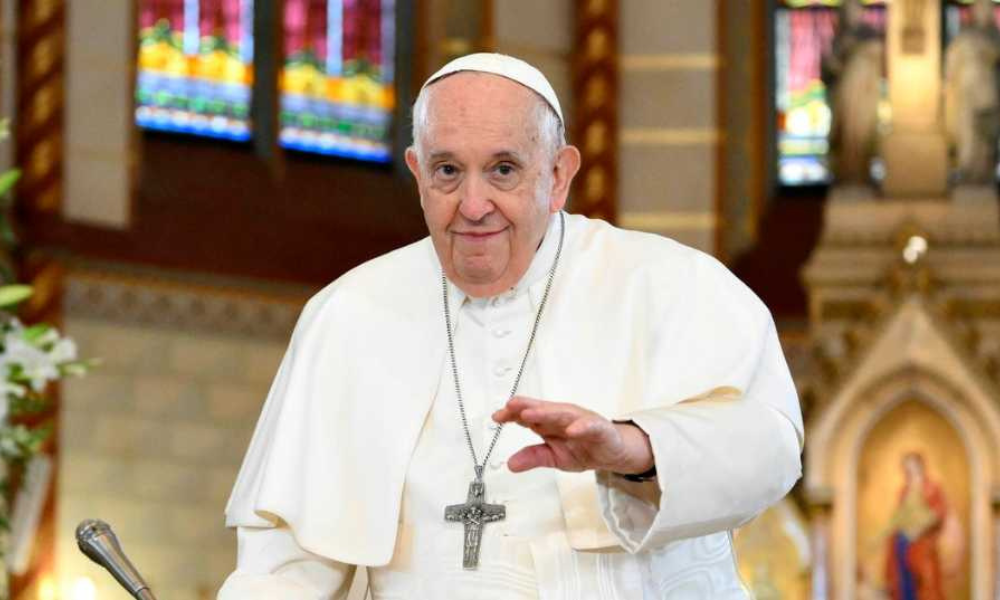
His death marks the end of a papacy that forged deep bonds with Africa’s faithful, where Catholicism is growing faster than anywhere else.
I. A Death That Shakes the Global Church
Pope Francis, the first Latin American leader of the Catholic Church and one of its most globally conscious pontiffs, died on April 21, 2025, at the age of 88. He passed away in the Vatican’s Casa Santa Marta residence following complications from chronic lung disease and pneumonia, ending a historic 12-year papacy marked by humility, reform, and a deep commitment to the world’s most marginalized.
As news of his death swept across the globe, flags at Vatican City were lowered to half-mast. Bells tolled from Buenos Aires to Nairobi, as tributes poured in from world leaders, religious figures, and millions of lay Catholics. But nowhere outside Latin America was the sense of loss more personal—or more complex—than in Africa, a continent Pope Francis saw not as the Church’s mission field, but as its future.
II. A Global Pope with an African Heart
From the earliest days of his papacy in 2013, Pope Francis made clear that his vision for the Church extended far beyond Rome. As the first Jesuit and the first pope from the Global South, he carried a perspective shaped by poverty, political struggle, and cultural diversity. That perspective found fertile ground in Africa.
“Francis spoke our language,” said Sister Angela Nkem of Lagos, Nigeria. “Not just our spoken languages, but the language of suffering and hope. That’s what Africans understood.”
He referenced Africa frequently in encyclicals and homilies, highlighting the continent’s challenges and resilience. He elevated African bishops to cardinalship and created space for their voices in synods. Where previous popes viewed Africa largely as a periphery, Pope Francis treated it as central to the Church’s vitality.
ALSO READ: Donald Trump to Snub G20 Summit in South Africa Over Controversial Claims
III. Moments That Defined His African Engagement
Pope Francis’s trips to the continent were more than symbolic—they were pastoral, political, and deeply human.
In 2015, during his first African tour, he visited Kenya, Uganda, and the war-torn Central African Republic. In Bangui, he opened the Holy Door of Mercy in the cathedral—a gesture typically reserved for Rome—signaling Africa’s spiritual centrality. In Nairobi’s Kangemi slum, he condemned “the unjust distribution of goods,” calling urban poverty a “wound inflicted by the elite.”
In 2019, he traveled to Mozambique, Madagascar, and Mauritius, focusing on climate justice and sustainable development. And in one of his final major international acts, he returned to the continent in 2023, visiting the Democratic Republic of Congo and South Sudan—two nations plagued by violence. In Kinshasa, he decried the “economic colonialism” draining Africa’s resources. In Juba, he knelt and kissed the feet of political leaders, begging them to maintain peace.
IV. Complex Affection: The Conservative-Progressive Divide
Despite this outreach, Pope Francis’s relationship with parts of the African Church was not without tension. His openness to LGBTQ+ inclusion, his cautious reconsideration of clerical celibacy, and his reformist tone sometimes clashed with the more conservative theological positions of African bishops.
“Many of us admired his love for the poor,” said Bishop Jean-Marie Makanda of Cameroon. “But on doctrine, there were times we felt adrift.”
Nonetheless, Francis worked to decentralize the Church’s decision-making, giving regional conferences more autonomy. He consistently invited African bishops into the Vatican’s inner circles, including Cardinals Dieudonné Nzapalainga (Central African Republic) and Fridolin Ambongo (DRC), whom many believe could play a leading role in the coming papal conclave.
V. Africa Ascendant in a Changing Church
The numbers speak for themselves: Africa is the fastest-growing region in the Catholic world. In 1980, the continent accounted for 8% of global Catholics; today, it represents over 20%. Nigeria alone now boasts more seminarians than Italy. The Democratic Republic of Congo is among the top five Catholic nations by population.
Francis championed this demographic shift, though he also warned of “ideological colonization”—urging Africans not to import Western Church battles but to root faith in local realities.
He also appointed 21 African cardinals, setting the stage for a more geographically representative College of Cardinals. The next pope may still emerge from Europe or Latin America, but for the first time, the election of an African pope—perhaps Ghana’s Cardinal Peter Turkson or Guinea’s Cardinal Robert Sarah—feels like a real possibility.
ALSO READ: Namibia Bold Nuclear Vision: Powering the Future with Uranium and International Partnerships
VI. Mourning Across the Continent
In the hours following the Vatican’s announcement, African capitals lit up with vigils and Masses. In Nairobi, crowds gathered outside the Holy Family Basilica, singing Swahili hymns. In Johannesburg, Catholic schoolchildren planted olive trees in memory. In Kinshasa, bells rang for 88 minutes—one for each year of the pope’s life.
President Cyril Ramaphosa of South Africa called him “a spiritual leader who believed in the African dream.” Archbishop Ignatius Kaigama of Nigeria described him as “the pope of the slums, the refugee camps, and the peace marches.”
On social media, hashtags like #AfricanCatholics and #FrancisOurPope trended across African Twitter and Instagram spaces, with thousands posting images of their meetings, memories, and favorite quotes from his teachings.
VII. A Legacy That Lives On
Pope Francis’s African legacy is multifaceted. His commitment to social justice, anti-corruption, and interreligious dialogue resonated across borders and belief systems. He regularly invoked Africa when addressing the global refugee crisis, criticized the arms trade fueling regional wars, and elevated African theologians in discussions of ecology and morality.
His 2015 encyclical Laudato Si’, which linked climate change with global inequality, found special relevance in regions like the Sahel and Horn of Africa, where droughts and displacement are reshaping life.
“He was not perfect,” said Professor Mpho Lesedi, a Catholic sociologist at the University of Pretoria. “But for millions of African Catholics, Francis was the first pope who truly saw us—not as charity, not as conversion targets, but as partners in faith.”
VIII. The Road Ahead for the Church and the Continent
The Vatican has announced that the papal conclave to elect Pope Francis’s successor will be held between May 6 and May 11. Already, speculation is mounting over who might take up the mantle.
Whoever is chosen will inherit a Church transformed—not just by technology or theology, but by geography. The spiritual center of Catholicism has been steadily drifting southward. From Lagos to Luanda, Kisangani to Kigali, Africa is no longer just the future of the Church. It is its present.
For many African Catholics, the next pope will not only be a successor to Francis but a steward of the relationship he nurtured. A relationship defined not by hierarchy but by humility, not by colonial legacies but by shared humanity.
IX. A Final Farewell
At Holy Trinity Cathedral in Accra, Ghana, a young seminarian lit a candle after evening prayers.
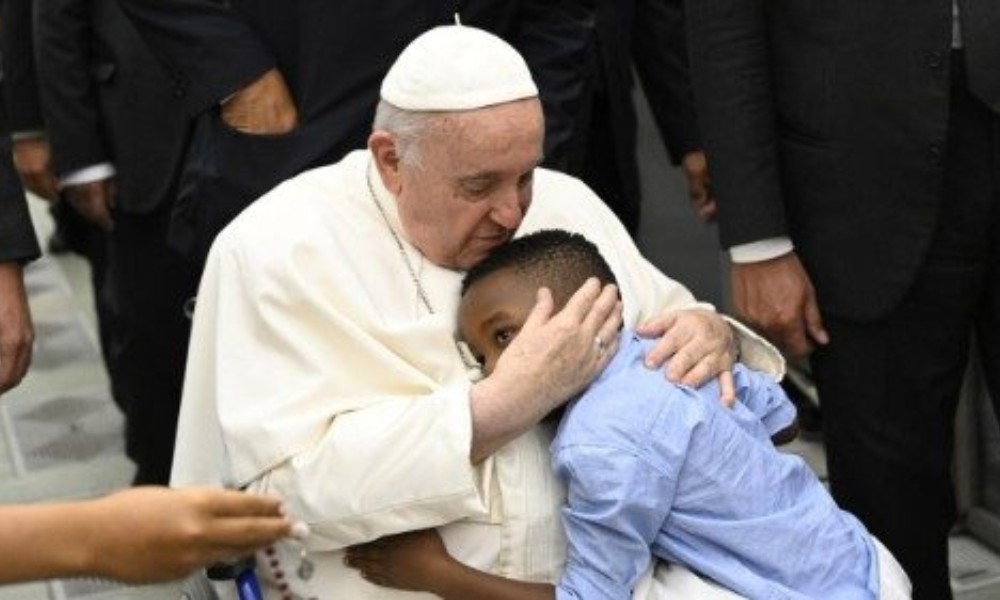
“He showed us that the pope could kneel,” he said, his voice barely above a whisper. “That he could cry, laugh, and walk with us. He didn’t stay on the throne. He came to the mud.”
As Africa mourns, many remember not just the theologian or the reformer—but the pilgrim. The man in white who, in the red dust of Central Africa, opened a door of mercy that may never close.
Join Our Social For Amazing Content