


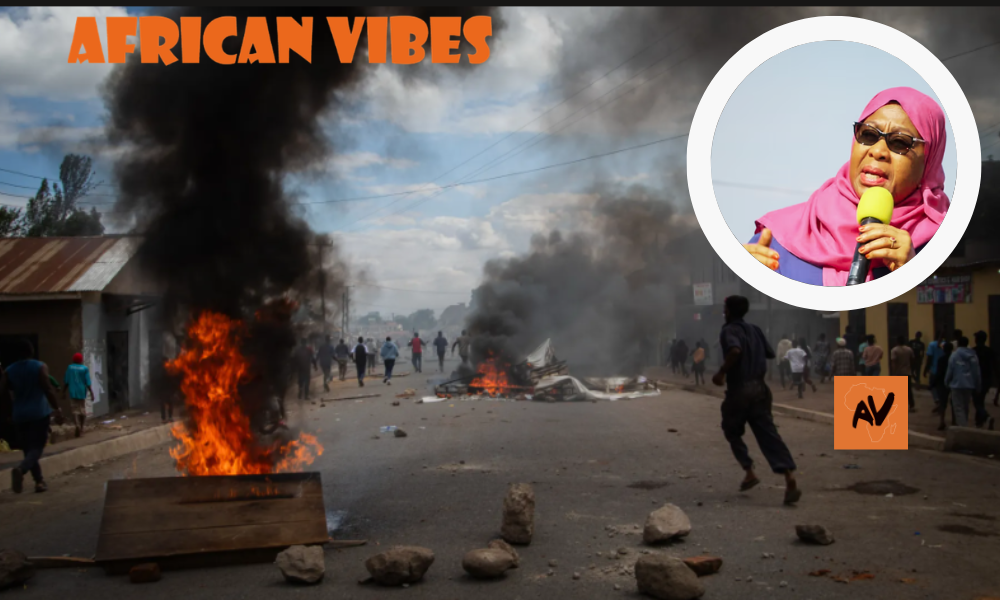
DODOMA, Tanzania — For six months, the Tanzanian government offered a consistent, if frustrating, refrain to the international community: Wait for the inquiry. But now, weeks after the Mohamed Chande Othman commission delivered its grim findings on the 2025 post-election violence, the “wait” has turned into a wall.
By denying entry to a high-level European Parliament delegation this week, President Samia Suluhu Hassan’s administration has pivoted from a policy of “sovereign patience” to one of active obstruction. The move has sparked a diplomatic crisis that threatens to freeze hundreds of millions of euros in development aid and raises a chilling question: If the government’s own inquiry is finished, what is it still trying to hide?
ALSO READ: South African Lawmakers Move to Curb Rising Xenophobic Violence
The Transparency Paradox: A Tale of Two Reports
The core of the current standoff lies in the findings of the National Commission of Inquiry, led by retired Chief Justice Mohamed Chande Othman. Released on April 24, 2026, the report was a rare, state-sanctioned admission of tragedy. It confirmed that 518 Tanzanians were killed in the chaos surrounding the October 29, 2025, general elections.
The government used the existence of this commission as a diplomatic shield throughout early 2026, repeatedly postponing a visit by the EU’s Subcommittee on Human Rights (DROI) until the “domestic legal process” was complete. Yet, when the EU attempted to finalize its May 2026 itinerary, the Tanzanian Ministry of Foreign Affairs declined to issue the necessary diplomatic clearances.
“The paradox is staggering,” says Dr. Eliaichi Mushi, a Nairobi-based political analyst specializing in East African governance. “By publishing the Chande Othman report, the government admitted to a massive loss of life. By blocking the EU, they are admitting they cannot handle an independent audit of how those lives were lost. You cannot claim the case is closed while locking the courtroom doors.”
Flashback to 2025: A ‘Wave of Terror’
To understand the EU’s persistence, one must look at the “horror” (as described by Tanzanian Affairs) of late 2025. The general election, which saw President Samia Suluhu Hassan return to power with a staggering 97.6% of the vote, was preceded by what Amnesty International called a “Wave of Terror.”
On polling day and in the weeks that followed, Tanzania experienced a near-total digital blackout. From October 29 to November 3, 2025, the internet was severed, creating an information vacuum where violence could—and did—flourish. UN experts later estimated that the death toll was likely closer to 700, with some opposition figures claiming thousands of “disappeared” youth were buried in mass graves in the Mabwepande and Pwani regions.
The EU delegation’s primary mission was to verify these “chilling reports” of extrajudicial killings and the alleged use of “shoot to kill” orders by security forces during post-election curfews.
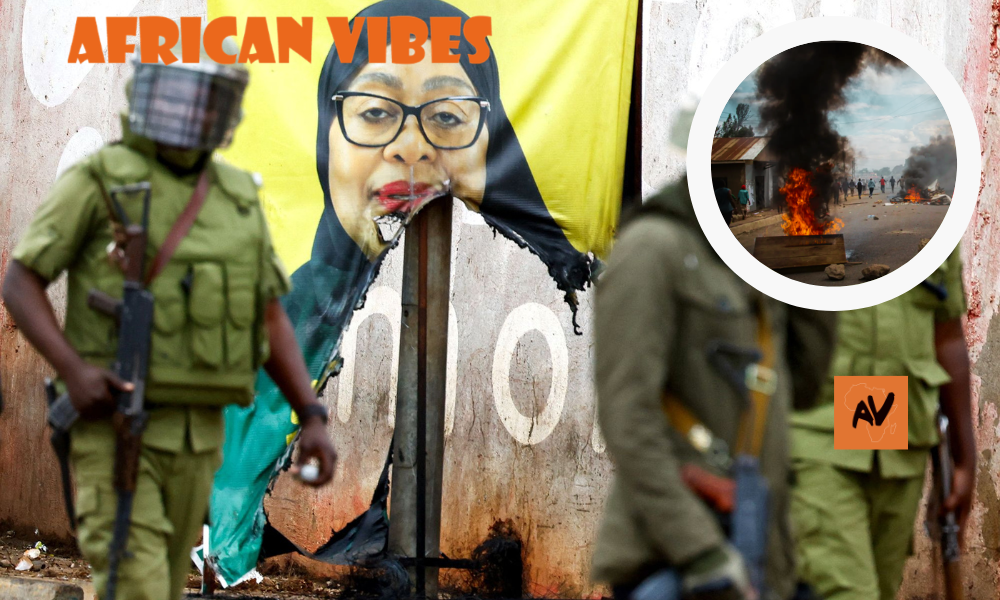
The Financial Audit: Following the Euro
The standoff isn’t just about human rights; it’s about a massive financial ledger. The EU remains one of Tanzania’s largest development partners, but that relationship is now under fire from within the European Parliament in Brussels.
The blocked mission was tasked with auditing the 2025 Annual Action Plan (AAP), a multi-million euro package that includes funding for:
- Infrastructure: The Standard Gauge Railway (SGR) connecting Dar es Salaam to Dodoma.
- Digital Governance: The “Digital4Tanzania” initiative, ironically aimed at improving connectivity.
- Critical Minerals: EU Global Gateway projects focused on lithium and nickel mining.
“European taxpayers have a right to know if their money is building railways that transport political prisoners or funding police forces that fire on protesters,” says Mounir Satouri, Chair of the EU Subcommittee on Human Rights. “A government that accepts European money but rejects European oversight is sending a message that it wants our euros, but not our values.”
The Arusha Connection: Challenging the Constitution
A secondary, but equally vital, goal of the EU mission was a visit to the African Court on Human and Peoples’ Rights in Arusha. On March 6, 2026, just weeks before the Tanzanian inquiry was released, the African Court issued a landmark ruling in the case of Ado Shaibu vs. United Republic of Tanzania.
The court ordered Tanzania to amend its constitution to allow citizens to challenge presidential election results—a right currently barred by Article 41(7) of the 1977 Constitution. The EU mission intended to meet with legal bodies to discuss how this ruling could be implemented before the 2029 civic elections. By blocking the delegation, Dodoma has effectively silenced a key international advocate for this judicial reform.
The Opposition’s Warning: ‘A National Reconciliation Sham’
In the vacuum left by the blocked international probe, President Samia has moved to establish a National Reconciliation Commission. While the government claims this body will include religious leaders and civil society, the main opposition party, CHADEMA, has called it a “sham.”
“They have given us a number: 518 dead. But where are the names? Where are the bodies?” asks Tundu Lissu, the opposition leader who was himself detained during the 2025 cycle. “The government inquiry was conducted by the very people—former police chiefs and defense ministers—who oversaw the violence. We need the EU and the UN because Tanzania cannot be both the criminal and the judge.”
Conclusion: The Looming Aid Freeze
The diplomatic consequences of this blockade are likely to be swift. In late 2025, the European Parliament already adopted a resolution calling for a freeze on direct support to the Tanzanian government. This latest snub will almost certainly provide the leverage needed for the EU Commission to pull the trigger on those sanctions.
As Tanzania prepares for its 2029 civic elections, the shadow of 2025 looms large. The Chande Othman report was supposed to be a bridge to a more stable future. Instead, by refusing to let the world verify its findings, the Tanzanian government has turned that report into a monument of its own isolation.