


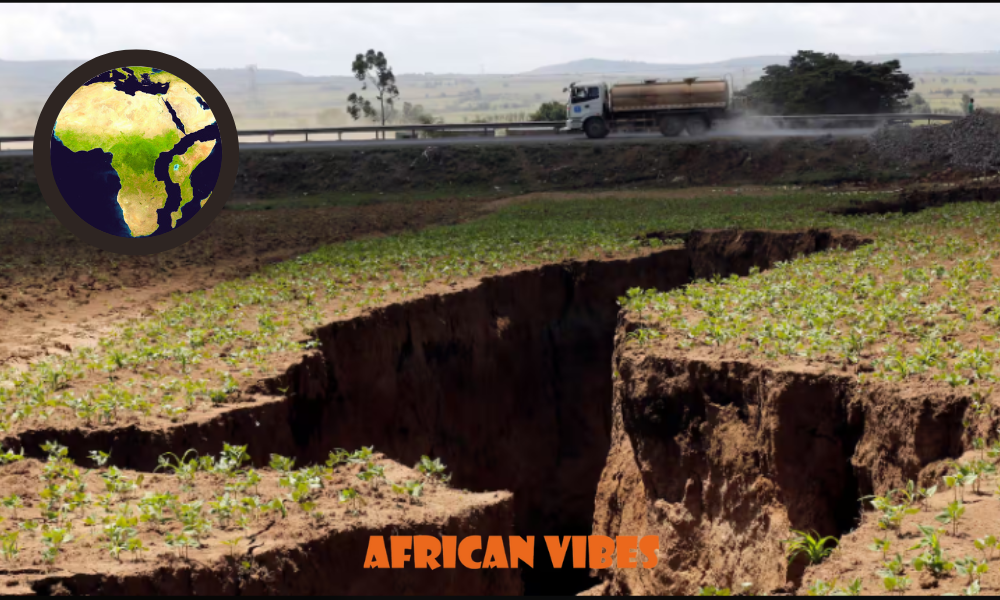
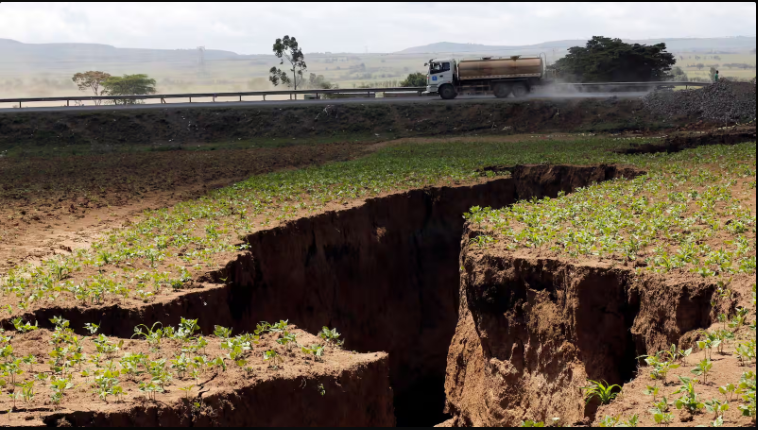
In March 2018, residents near Mai Mahiu in Kenya awoke to a startling sight — a deep fissure slicing through roads and farmland, stretching for several kilometers. This gaping wound in the earth wasn’t just a freak event; it was a visible sign of an ancient process still unfolding beneath our feet. The East African Rift System is slowly tearing the continent apart, a geological drama that has been playing out for millions of years. While the process is gradual on a human timescale, its effects are being felt today, shaping landscapes, livelihoods, and the future of an entire region.
A Continent Under Stress
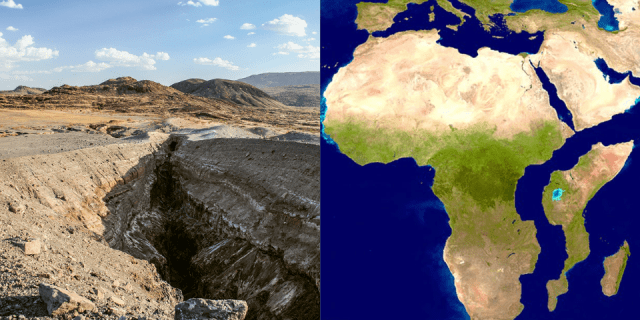
The East African Rift System is one of the most significant tectonic features on Earth — a 6,000-kilometer-long scar running from the Red Sea in the north to Mozambique in the south. This “continental wound” is the result of powerful geological forces at work deep beneath the Earth’s surface.
At the heart of the rift’s story are two massive tectonic plates: the Somali Plate and the Nubian Plate. Driven by heat from the planet’s interior, these plates are slowly pulling away from each other, stretching and cracking the crust. The rift is not a single tear but a network of fractures, valleys, and faults, divided into two main branches:
- The Eastern Branch — running through Ethiopia, Kenya, and Tanzania, home to dramatic escarpments and iconic volcanoes like Mount Kilimanjaro and Mount Kenya.
- The Western Branch — tracing the edges of the African Great Lakes, including Lake Tanganyika and Lake Malawi, some of the deepest freshwater bodies on Earth.
This slow continental drift has been shaping East Africa’s topography for millions of years, creating both breathtaking beauty and geologic hazards.
ALSO READ: The Impact of U.S. Deportation Policies on African Migrants
The Cracks Are Showing
The 2018 Mai Mahiu fissure is just one example of the rift’s restless activity. Heavy rains may have exposed and widened the crack, but its origins lie in the ongoing separation of the plates. Similar fractures have been documented across the rift valley, and scientists are paying close attention.
Modern technology is making it easier than ever to track this continental shift. GPS measurements and satellite imagery reveal that parts of East Africa are moving apart at a rate of 2–7 millimeters per year. While that may sound slow, over geological timescales it is monumental. Volcanic activity, frequent earthquakes, and gradual land subsidence are all signs that this process is far from dormant.
A Landscape of Opportunity and Peril
Life along the East African Rift is a constant negotiation between risk and reward. The very forces that threaten communities also provide immense resources.
Challenges:
- Seismic activity — Earthquakes, while often moderate, can damage roads, homes, and infrastructure.
- Volcanic risks — Active volcanoes like Mount Nyiragongo in the Democratic Republic of Congo pose immediate dangers to nearby populations.
- Infrastructure strain — Roads and railways crossing the rift are vulnerable to sudden ground shifts.
Opportunities:
- Fertile volcanic soils — The rift’s volcanic past has created nutrient-rich farmland that supports agriculture across the region.
- Geothermal energy — Countries like Kenya are tapping into the rift’s underground heat to produce clean, renewable power, reducing reliance on fossil fuels.
- Tourism potential — From dramatic escarpments to wildlife-rich lakes, the rift attracts visitors from across the world.
The East African Rift is both a challenge to be managed and a treasure to be harnessed — a reminder that nature’s power can be destructive and life-giving in equal measure.
The Making of a New Continent
Looking millions of years into the future, scientists predict that the East African Rift will eventually split the continent in two. A new ocean will flood the gap, creating a vast island made up of present-day Somalia, parts of Ethiopia, Kenya, and Tanzania. While this transformation will be imperceptible in our lifetimes, it underscores Africa’s dynamic nature — a continent that is not fixed, but alive and evolving.
In the end, the East African Rift is more than just a geologic fault line. It is a living record of Earth’s restless energy and a reminder that the landscapes we know are temporary, shaped by forces far older and more powerful than human history. The ground beneath our feet is moving — slowly, inexorably — and one day, it will rewrite the very map of the world.