


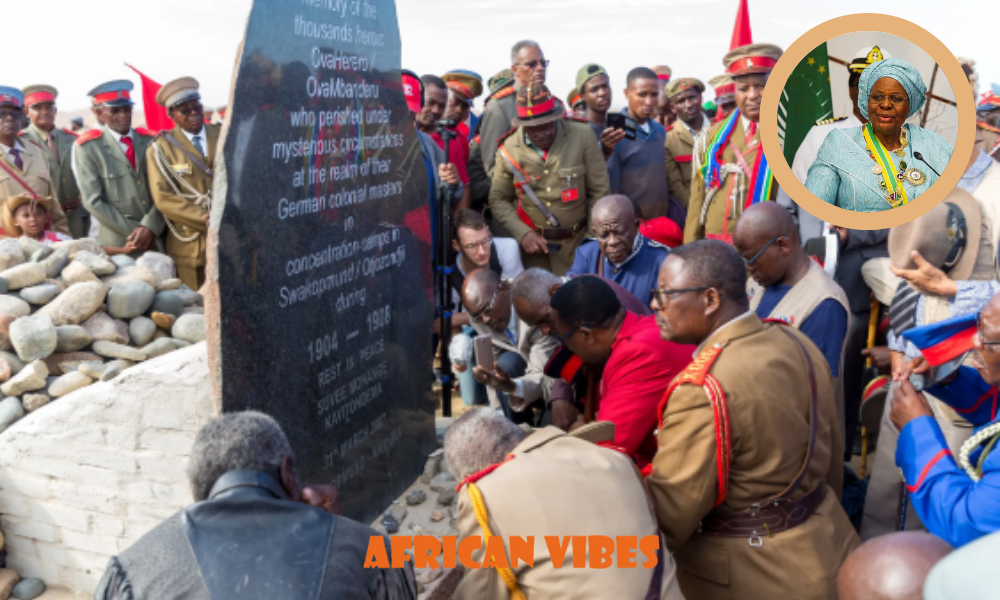
New holiday reignites demands for reparations, land returns, and full recognition of colonial-era crimes. Windhoek, Namibia – May 28, 2025 — For the first time in its post-independence history, Namibia has declared Genocide Remembrance Day, a national public holiday dedicated to honoring the tens of thousands of Ovaherero and Nama people killed during Germany’s brutal colonial rule from 1904 to 1908.
At the heart of the ceremony: truth, mourning, and a growing call for justice.
A Nation Pauses to Remember
Namibians across the country gathered to reflect on a tragedy that many say was forgotten for too long. In Windhoek’s Parliament Gardens, President Netumbo Nandi-Ndaitwah lit memorial candles alongside Vice-President Lucia Witbooi, a direct descendant of the legendary Nama leader Hendrik Witbooi.
A minute of silence was observed. Traditional leaders chanted Ovaherero war cries. Women ululated in remembrance. As night fell, a candlelight vigil united the crowd in grief and resolve.
“This is a step towards restoring dignity to our ancestors,” President Nandi-Ndaitwah said. “We must carry their memory forward with truth and purpose.”

Why May 28 Matters
The government selected May 28 to mark the closure of German concentration camps in 1907—after international outrage exposed the scale of atrocities. Though some descendants argue the date lacks symbolic resonance, the state insists it provides a neutral, inclusive moment of national reflection.
Traditional leaders from the Herero and Nama communities have proposed October 2—the date German General Lothar von Trotha issued an extermination order—as a more fitting choice. But for now, the nation moves forward with May 28 as a solemn milestone.
ALSO READ: Haiti Demands Justice for Independence Debt
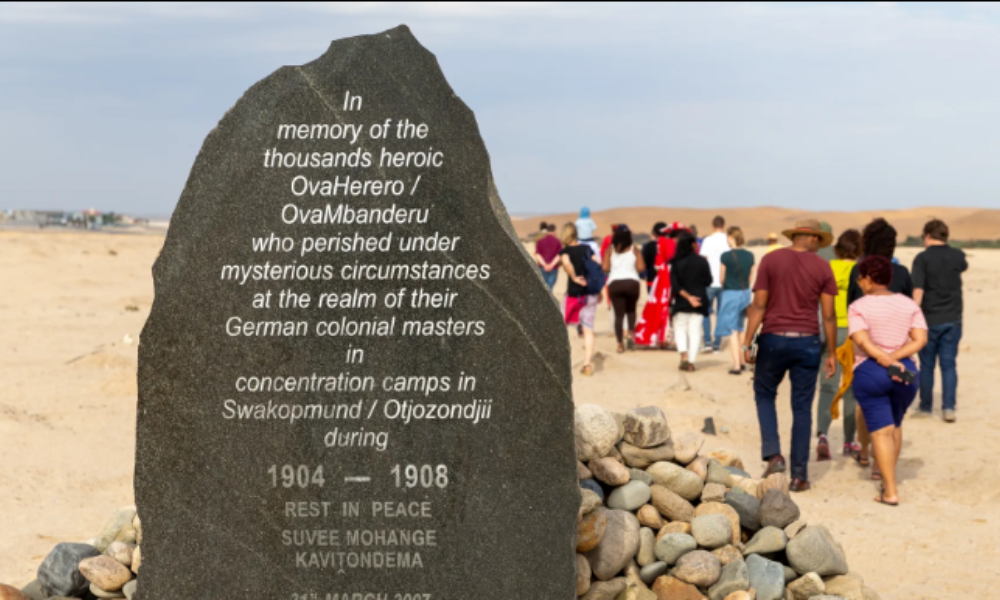
Germany’s Forgotten Genocide
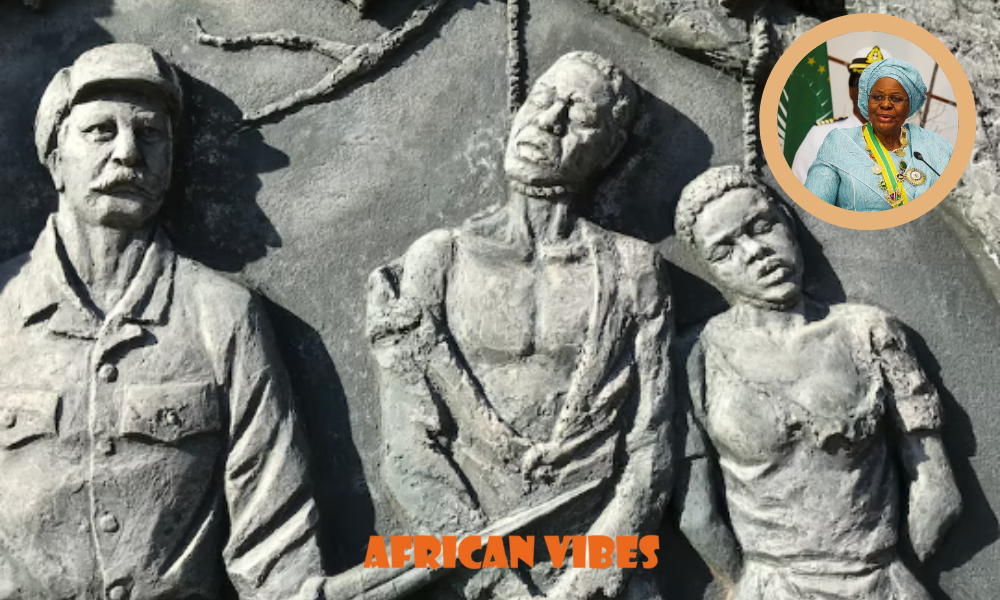
Between 1904 and 1908, German forces carried out what is now widely recognized as the first genocide of the 20th century. After a failed uprising, German troops launched a campaign to exterminate the Herero and Nama peoples.
- Victims were driven into the desert to die of thirst.
- Survivors were captured and forced into concentration camps, where starvation, disease, and forced labor killed thousands.
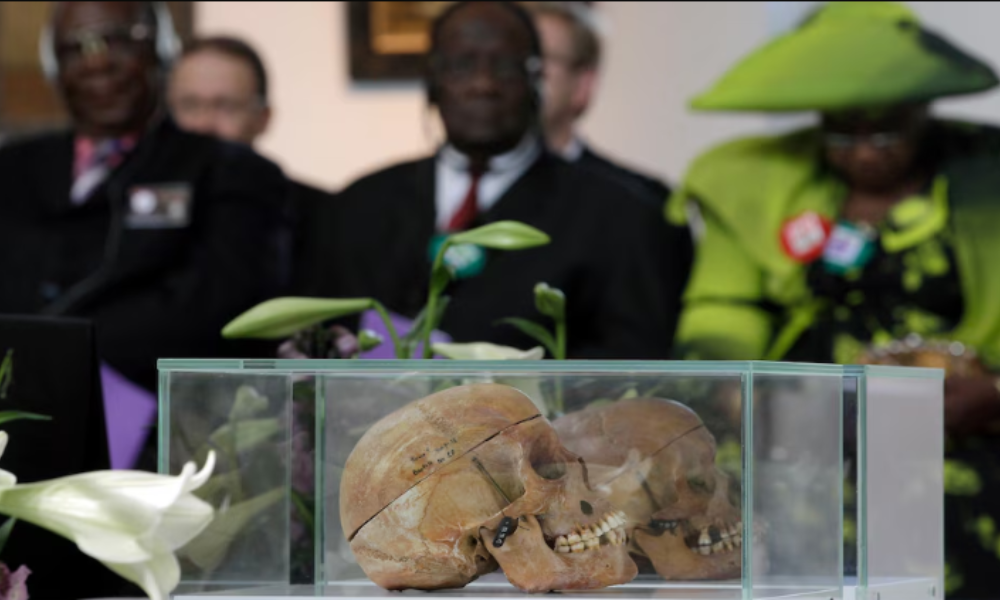
- Skulls and bones of the dead were shipped to Germany for racist “scientific” experiments.
By 1908, over 80% of the Herero and 50% of the Nama had perished. Their land was seized. Their cattle stolen. Their communities scattered.
ALSO READ: Namibia and Botswana Partner to Build Joint Oil Refinery
Acknowledgment Without Accountability
In 2021, the German government officially acknowledged the atrocities as genocide and pledged €1.1 billion over 30 years for development aid.
But Berlin stopped short of calling it reparations. The agreement excluded direct financial compensation and was negotiated without the involvement of Herero and Nama traditional leaders.
“Our pain was signed away without us,” said Chief Vekuii Rukoro, former paramount chief of the Ovaherero, before his death.
Namibia’s parliament ultimately rejected the deal in its current form. Activists and lawmakers alike have called for a complete renegotiation that includes direct engagement with the affected communities.
The Call for Justice Grows Louder
On Genocide Remembrance Day, the tone was reverent—but firm. Community voices were clear: acknowledgment is not enough.
Survivors’ descendants are demanding:
- Formal reparations—not just aid
- Return of ancestral land—not symbolic gestures
- Direct representation in negotiations
- Education and memorialization—so this history is never forgotten
At the Windhoek ceremony, banners read “Restorative Justice Now” and “Land Back.” Youth leaders recited the names of ancestors lost to German brutality.
“This land was taken. Our families were destroyed. We want more than apologies,” said Ida Hoffmann, a Nama elder and longtime campaigner.
What Comes Next?
Namibia’s new administration under President Nandi-Ndaitwah has promised to reopen talks with Germany—this time with community leaders at the table.
Germany, meanwhile, insists its financial commitment is “sufficient.” But the growing chorus of international and African voices suggests otherwise.
The first Genocide Remembrance Day may not bring closure—but it marks a turning point. A country is reclaiming its history. A people are demanding justice.
And in the words spoken that evening, as candles flickered in the Windhoek twilight:
“We may forgive, but we will never forget.”