


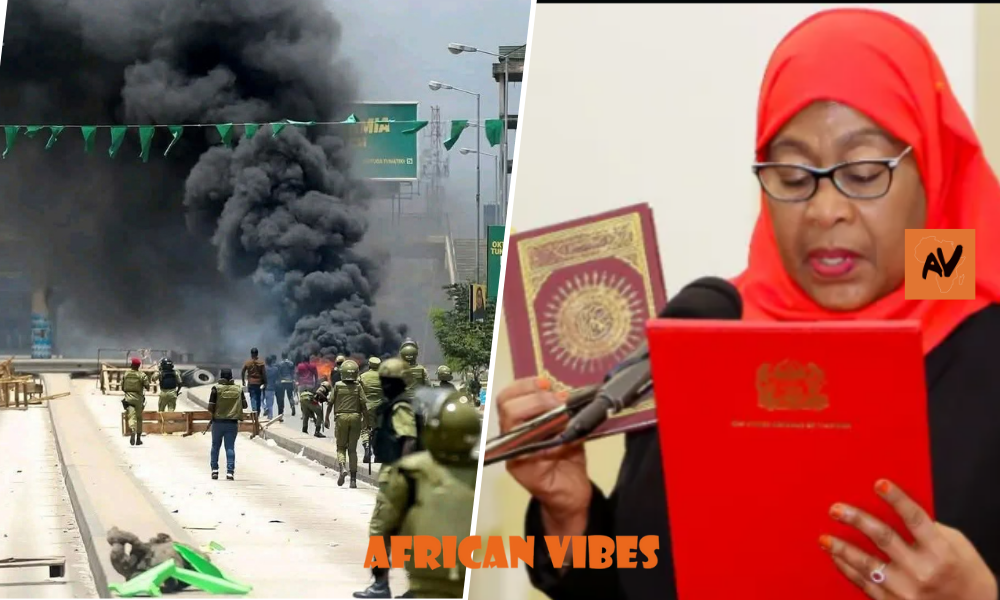
Tanzania’s 2025 presidential election has left the nation suspended between triumph and turmoil. President Samia Suluhu Hassan, once hailed as a reformist trailblazer, has secured an astonishing 97.66 percent of the vote — a figure so dominant it blurs the line between democratic endorsement and political orchestration.
For Africa’s first female head of state and a leader once praised for opening political space, the landslide has triggered a sobering debate: Has “Mama Samia,” the reformer, crossed the threshold into strongman territory?
How 98% Was Achieved
A 98 percent victory is less a number than a statement — one that, in most political systems, suggests the absence of meaningful competition. In the months leading up to the October vote, Tanzania’s opposition was methodically dismantled.
Tundu Lissu, the fiery leader of the opposition Chadema party, was detained on treason charges. Luhaga Mpina of ACT-Wazalendo was repeatedly disqualified on what analysts describe as procedural pretexts. With key rivals sidelined and the electoral field reduced to minor contenders, the vote unfolded less like a contest and more like a choreographed coronation.
On election day, the stage was set: the ruling Chama Cha Mapinduzi (CCM) party — in power since independence — commanded the state apparatus with precision. Ballots were cast, results tallied swiftly, and President Hassan declared victor by an almost divine margin.
But as the numbers rolled in, the streets erupted.
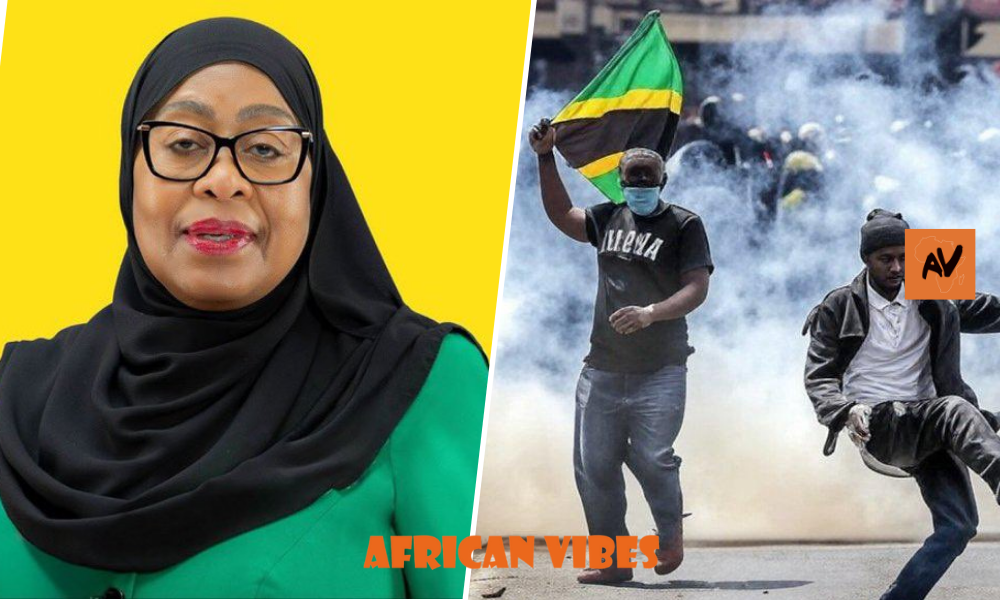
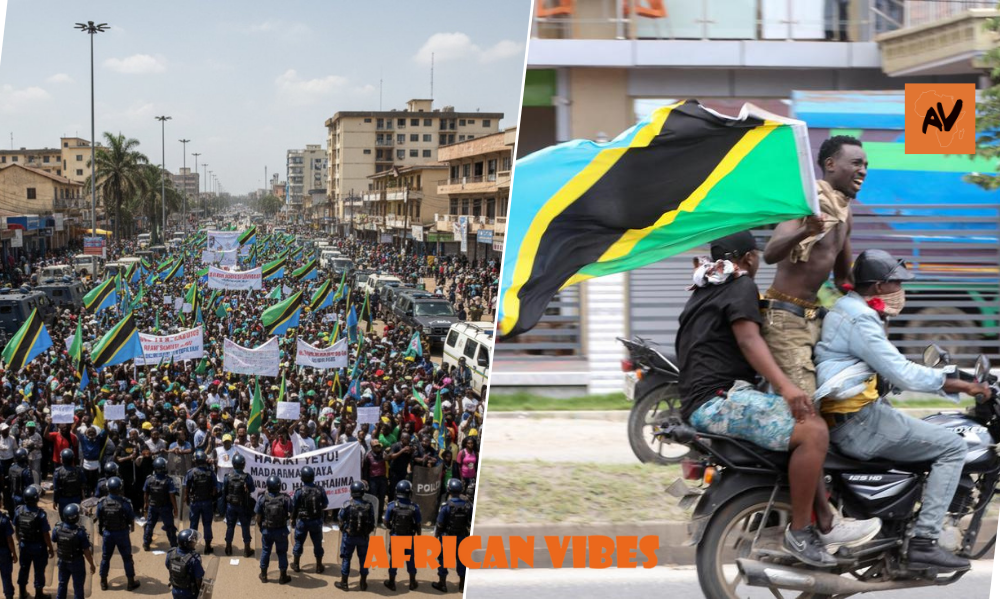
Protests flared in Dar es Salaam, Arusha, and Mwanza, where demonstrators accused the government of stealing their voice. The state response was swift and uncompromising. Soldiers and police patrolled neighborhoods under an emergency curfew. Internet access was cut, social media platforms blocked, and journalists silenced.
While the government insisted the unrest was “under control,” Chadema claimed hundreds of casualties — figures impossible to verify amid the digital blackout. The United Nations and several Western embassies expressed alarm at reports of human rights violations.
For a nation long admired as East Africa’s democratic anchor, the optics were devastating.
ALSO READ: Sudan’s War Is Tearing a Nation Apart and the World Is Still Watching
From Reformer to Enforcer: The Paradox of Mama Samia
When Samia Suluhu Hassan stepped into power in 2021 following the death of President John Magufuli, she was greeted with rare enthusiasm. Her early months were marked by decisive gestures of liberalization: lifting bans on political rallies, reopening media houses, and re-engaging Western partners after years of isolation.
That earned her not just international respect, but genuine affection at home. The woman in the bright khanga and hijab, grounded in her Zanzibari roots, became affectionately known as “Mama Samia.”
But within four years, that reformist image has darkened. Analysts argue that Hassan’s pivot reflects less a personal transformation than the gravitational pull of the CCM’s entrenched power structure. The party’s deep-state machinery, allergic to true competition, has outlasted generations of presidents. Hassan’s consolidation of control — eliminating rivals, curbing dissent, and silencing media — appears to serve the same doctrine that has guided the CCM since the Nyerere era: stability at any cost.
Her near-total victory sends an unmistakable message to both domestic challengers and party insiders: the era of open contestation is over.
Tanzania at a Crossroads — and Africa’s Democratic Reckoning
What happens in Tanzania matters far beyond its borders. The country has long symbolized political moderation in a region beset by turmoil. Its descent toward electoral authoritarianism strikes at the heart of Africa’s ongoing democratic experiment.
For Tanzania’s restless youth — a generation raised in the digital age — the message is chilling. Their protests, organized despite internet blackouts, reflect a deep disillusionment with a system that speaks of democracy but practices control. Many see in Samia’s Tanzania a warning that reformist rhetoric can easily mask autocratic reflexes.
Regional silence compounds the crisis. The African Union and East African Community (EAC) have issued only tepid statements, preferring appeals for calm over firm condemnation. Once again, the principle of “non-interference” has outweighed the defense of democratic norms enshrined in their own charters.
If Tanzania’s slide goes unchecked, it risks normalizing a dangerous precedent: that near-total victories, achieved through state power rather than consent, can still be legitimized as “African democracy.”
ALSO READ: How Namibia’s $750 Million Repayment Rejects the Bailout Culture Plaguing the Continent
The Economics of Control
To her credit, President Hassan has presided over ambitious economic projects. The Standard Gauge Railway, Mchuchuma-Katewaka coal corridor, and Blue Economy initiatives are reshaping Tanzania’s infrastructure map. She argues that political unity under CCM ensures the stability required to see such megaprojects through.
But that stability comes with trade-offs.
Without opposition oversight or a free press, corruption risks multiply. International investors — particularly from the West — are watching closely. Donors link aid to governance standards, and human rights sanctions could follow if repression persists. While Tanzania’s pivot toward China and the Gulf states may soften the blow, its reputation as a reliable democratic partner is undeniably fraying.
The paradox is stark: the very consolidation of power meant to guarantee progress could, over time, undermine economic trust and isolate Tanzania from the global markets it needs most.
The Legacy Question
President Samia Suluhu Hassan’s second term begins with both immense authority and immense peril. The question that will define her legacy is not how decisively she won, but how responsibly she governs.
Will she use her sweeping mandate to entrench one-party dominance and silence dissent — the well-worn path of postcolonial rulers before her? Or will she return to the reformist spirit that once made her a symbol of democratic renewal?
At stake is more than one leader’s legacy. It is the credibility of democracy in one of Africa’s most promising nations — and perhaps, the fate of a continent still wrestling with the balance between stability and freedom.
For now, Tanzania stands at a crossroads. The world, and Africa, are watching whether “Mama Samia” chooses the road of reconciliation — or the path of the strongman.