


A vibrant ripple of excitement has surged across the African continent following a landmark event that unfolded on July 24, 2025, at the iconic NASA Headquarters in Washington, D.C.
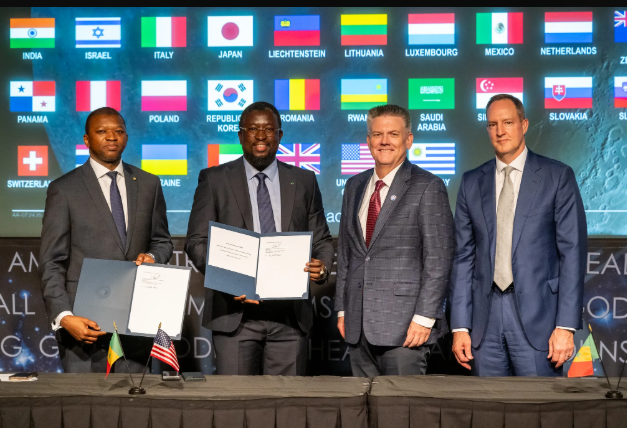
In a move that decisively anchors its burgeoning space ambitions within a framework of international cooperation, Senegal officially became the 56th nation globally and the fourth African country to sign the Artemis Accords.
This historic signing marks not just a diplomatic achievement for the West African nation, but a powerful statement of Africa’s growing resolve to actively shape the future of space exploration for the benefit of all humanity.
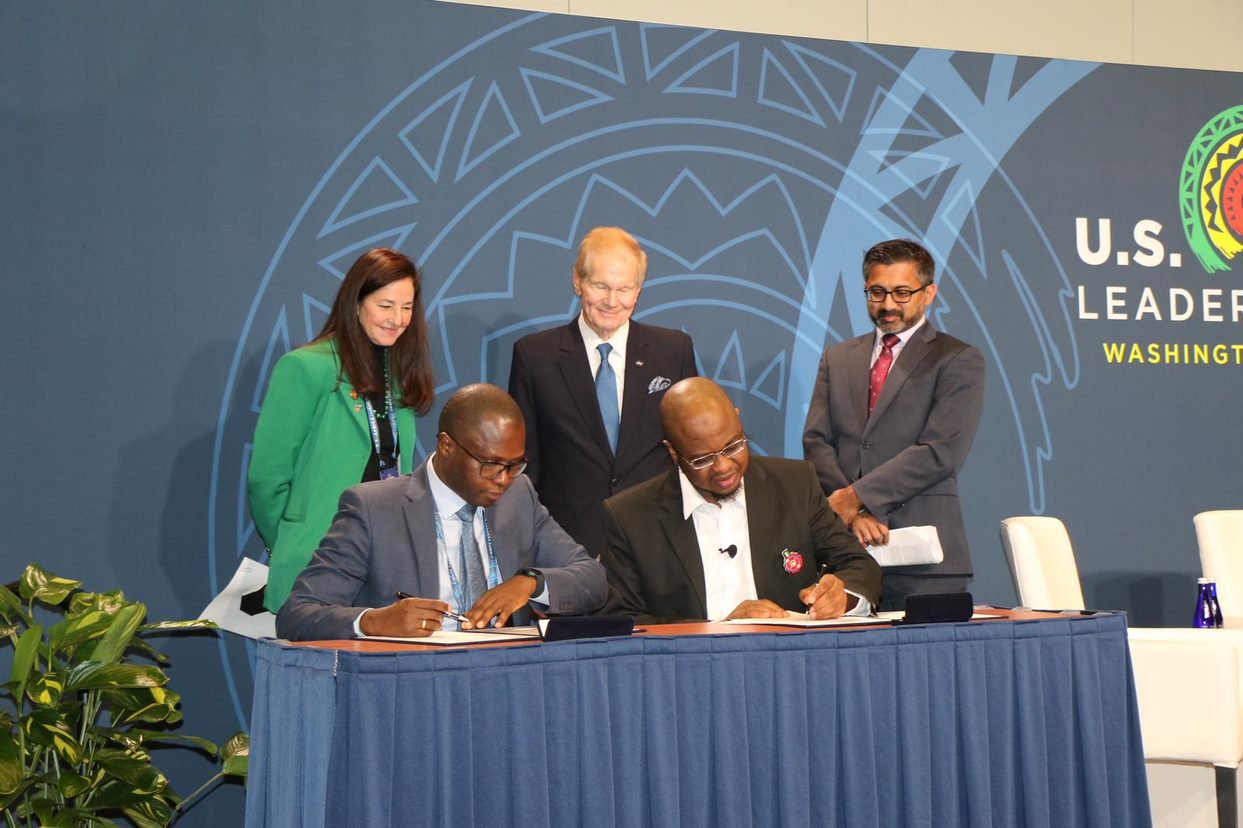
The atmosphere at the signing ceremony was charged with optimistic anticipation. Dr. Maram Kairé, the visionary Director General of the Senegalese Space Studies Agency (ASES), affixed her signature to the accords, alongside Senegalese Ambassador to the United States Abdoul Wahab Haidara, and with the presence of senior U.S.
officials including Acting NASA Administrator Sean Duffy and Jonathan Pratt from the Department of State’s Bureau of African Affairs. Dr. Kairé’s words resonated deeply, capturing the essence of Senegal’s commitment: “Senegal’s adherence to the Artemis Accords reflects our commitment to a multilateral, responsible, and transparent approach to space.
This signature marks a meaningful step in our space diplomacy and in our ambition to contribute to the peaceful exploration of outer space.” Indeed, for a nation that only formally established its space agency in March 2023, this swift and strategic leap into the global space governance arena is nothing short of remarkable.
Senegal’s Ascendant Journey to the Stars
Senegal’s journey to this pivotal moment has been characterized by deliberate and strategic steps, demonstrating a clear understanding that space is not merely a realm for superpower competition, but a crucial domain for national development. The philosophy articulated by Dr. Kairé – that “space is not a luxury for us, it is a tool of development” – underpins every facet of Senegal’s growing engagement.
The nation’s practical strides in space began to materialize with the successful launch of its first nanosatellite, Gaindesat-1A, in 2024. This Earth observation satellite is already proving invaluable in providing critical data for agricultural planning, environmental monitoring, and urban planning, directly addressing key national priorities.
The momentum continues with the assembly of Gaindesat-1B progressing steadily, poised to further enhance Senegal’s capabilities in earth observation. Coupled with the finalization of ground-based data collection sensors across the country, Senegal is building a robust infrastructure to maximize the operational capabilities of its space assets.
Beyond hardware, Senegal is deeply invested in cultivating a future-ready workforce. Initiatives like the recently concluded Senegal Space Week 2025 and the preceding SPACEBUS2025 national tour have been instrumental in igniting passion for space science and technology among the youth.
These programs, which reached thousands of young people across 14 regions, are vital in building a knowledge-based economy and nurturing the next generation of Senegalese engineers and scientists. This focus on human capacity development is critical for ensuring sustainable growth in its space sector and is a shining example of how African nations are prioritizing investing in their own talent.
Furthermore, Senegal has been a quiet contributor to global space endeavors for years. Senegalese astronomers have a history of collaboration with NASA, notably participating in ground-based observations of asteroid and planetary occultations, including a 2021 campaign that helped estimate the shape and size of the asteroid Orus, which NASA’s Lucy spacecraft will approach in 2028.
This foundation of scientific collaboration paved the way for the deeper partnership now cemented by the Artemis Accords.
The Artemis Accords: Charting a Shared Path for Humanity in Space
The Artemis Accords, launched by the United States and seven founding nations in October 2020, represent a crucial attempt to establish a common set of principles for peaceful and sustainable space exploration.
Developed by NASA in collaboration with the U.S. Department of State, these non-binding agreements are designed to ensure that the burgeoning activities in lunar orbit, on the Moon’s surface, and eventually on Mars, are conducted responsibly and transparently.
They are fully consistent with the enduring principles of the 1967 Outer Space Treaty, which remains the cornerstone of international space law.
Key tenets of the Artemis Accords, which Senegal has now formally endorsed, include:
- Peaceful Purposes: All activities must be exclusively for peaceful purposes.
- Transparency: Signatories agree to be transparent about their space policies and plans.
- Interoperability: Promoting the use and development of common standards to ensure safe and robust cooperation.
- Emergency Assistance: Committing to render all necessary assistance to astronauts in distress.
- Registration of Space Objects: Reinforcing the importance of registering space objects for safety and coordination.
- Release of Scientific Data: Ensuring that scientific results from cooperative activities are made publicly available.
- Preserving Heritage: Protecting sites and artifacts of historical significance in outer space.
- Space Resources: Affirming that the extraction and utilization of space resources can be conducted in a manner compliant with the Outer Space Treaty and in support of sustainable activities.
- Deconfliction of Activities: Avoiding harmful interference between operations.
- Orbital Debris Mitigation: Planning for the safe, timely, and efficient disposal of spacecraft at the end of their missions.
By embracing these principles, Senegal is not just joining a club; it is actively participating in shaping the norms of future cosmic endeavors. This alignment is particularly significant as NASA’s ambitious Artemis program aims to return humans to the Moon by 2026 and establish a long-term lunar presence, with the ultimate goal of preparing for crewed missions to Mars. The Accords provide the international framework for this unprecedented era of lunar and deep space exploration.
ALSO READ: Rwanda and DRC Ink Historic Peace Accord, Paving Way for Regional Prosperity
African Ambitions and a Nuanced Space Diplomacy
Senegal’s accession to the Artemis Accords underscores a burgeoning trend across the continent: African space leadership is on the rise. Following in the footsteps of Nigeria and Rwanda (both signed in December 2022), and Angola (signed in December 2023), Senegal’s move solidifies Africa’s growing voice in global space policy.
This is a powerful rebuttal to any notion that space exploration is solely the preserve of established powers; it is increasingly a shared endeavor where African perspectives and contributions are becoming indispensable.
What truly sets Senegal apart, however, is its nuanced approach to space diplomacy. In a move that highlights its strategic autonomy and commitment to broad international engagement, Senegal has also signed on to the China-led International Lunar Research Station (ILRS) initiative. This makes Senegal only the second country globally, after Thailand, to have formal commitments to both major frameworks for lunar exploration.
This dual adherence is a masterclass in balanced foreign policy. While some might interpret it as a hedging strategy, it more accurately reflects Senegal’s pragmatic commitment to engaging with all partners who offer pathways for peaceful and beneficial space activities.
It signals that Senegal is not choosing sides in a geopolitical space race, but rather seeking to leverage opportunities from diverse international collaborations to maximize its own national development goals.
This positions Senegal as a potential bridge-builder in the evolving space landscape, demonstrating that multilateral cooperation can thrive even amidst different international approaches. It’s a testament to a matured diplomatic posture, focusing on tangible benefits rather than exclusive alignments.
The high-level diplomatic engagements leading up to the signing further underscore its significance. The signing ceremony took place just two weeks after a meeting in Washington between Senegalese President Bassirou Diomaye Faye and U.S.
President Trump, along with other African leaders, to discuss U.S.-Africa engagement. This direct link between high-level bilateral discussions and the space agreement highlights the strategic importance placed on this partnership by both nations.
Impact and Future Prospects: Sustainable Space Development for All
For Senegal, joining the Artemis Accords opens up a universe of opportunities. It will facilitate enhanced scientific research, direct technology transfer, and crucial training opportunities for ASES researchers and engineers, allowing them to participate in major scientific projects.
This is not just about prestige; it is about practical applications that directly benefit the Senegalese people. The data collected from Earth observation satellites, combined with international expertise, will bolster national efforts in areas like climate change adaptation, precision agriculture, monitoring illegal fishing activities, and improving disaster response systems.
Beyond Senegal, this accession sends a clear message to the broader African continent. It demonstrates that meaningful participation in global space exploration is within reach for nations, regardless of their historical involvement in the “space race.”
It can inspire other African countries to accelerate their own space programs, fostering regional cooperation in areas like satellite development, data sharing, and capacity building. The collective voice of African nations in shaping global space policy becomes stronger with each new signatory to frameworks that champion responsible conduct.
However, the path to fully realizing Africa’s space ambitions is not without its challenges. Significant investment in funding, robust infrastructure development, and continuous human capacity building remain crucial. Yet, the momentum is undeniable.
The rise of African tech startups in the space sector, alongside increasing government investment, indicates a growing recognition of space as a critical enabler for socio-economic transformation. From satellite internet to remote sensing for resource management, the applications of space technology are vast and directly relevant to Africa’s developmental needs. The sustainable space development championed by the Artemis Accords aligns perfectly with Africa’s long-term vision for prosperity.
Conclusion: Charting a Course for Collective Progress
Senegal’s historic signing of the Artemis Accords is more than just a ceremonial act; it is a profound declaration of intent. It signifies Senegal’s commitment to a future where space is explored not through competition, but through collective endeavor, transparency, and a shared vision for humanity’s progress.
This pivotal moment underscores Africa’s accelerating trajectory in the cosmos, demonstrating its capacity not only to utilize space technology for national development but also to contribute actively to the very governance of this new frontier.
As Senegal charts its course among the stars, it serves as an inspiring beacon for the entire continent. The innovation and ambition displayed by nations like Senegal are paving the way for a truly global and inclusive era of space exploration, one where African perspectives and contributions are not just welcomed, but are fundamental to charting a future for all of humanity in the vast and wondrous expanse of space.