


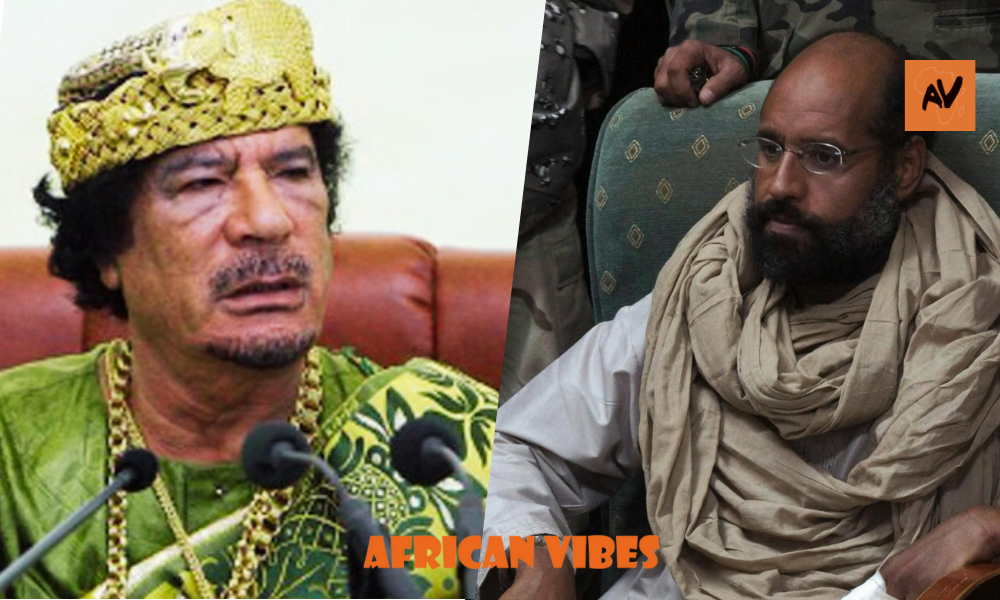
If confirmed, the reported killing of Saif al-Islam Gaddafi in an armed attack in the western Libyan town of Zintan would mark the symbolic end of the Gaddafi family’s political relevance — fifteen years after the violent overthrow of Muammar Gaddafi.
Once groomed as Libya’s reformist future and later vilified as a fugitive of the 2011 uprising, Saif al-Islam embodied the contradictions of post-colonial African power: Western-educated, locally rooted, and ultimately trapped between revolution and restoration.
His reported death raises a larger Pan-African question: does the elimination of political heirs finally close old chapters — or does it deepen instability in states that never rebuilt their foundations?
The Making of a Heir: From Reformist Promise to Political Pariah
Before Libya fractured into rival governments and militia rule, Saif al-Islam Gaddafi was widely viewed as the regime’s acceptable face to the outside world.
Educated in the United Kingdom, fluent in the language of international diplomacy, and active in global forums, he was positioned as the son who could modernize his father’s rule without dismantling it. In the late 2000s, he spoke openly about constitutional reform, anti-corruption measures, and reconciliation with the West — earning cautious praise abroad and suspicion at home.
That image collapsed in 2011.
As protests erupted during the Arab Spring, Saif al-Islam appeared on Libyan state television issuing threats against demonstrators, warning of “rivers of blood.” The moment sealed his fall from reformist to enforcer, and soon after, the International Criminal Court issued a warrant accusing him of crimes against humanity.
Captured later that year by a militia in Zintan, he spent years in detention as Libya descended into chaos. In 2017, he was reportedly released under an amnesty law, resurfacing quietly while the country remained divided.
His attempted political comeback in Libya’s aborted 2021 presidential elections reignited controversy. Supporters framed him as a stabilizing figure in a broken state; critics saw impunity dressed as nostalgia. His candidacy was ultimately blocked — but his name never fully disappeared from Libya’s political calculations.
ALSO READ: Rwanda Takes Britain to Arbitration Over Scrapped Migration Deal
What Is Known About the Reported Attack
According to early reports from Libyan political sources and individuals close to Saif al-Islam, the 53-year-old was killed during a pre-dawn assault on his residence in Zintan.
The accounts describe a coordinated operation: security systems allegedly disabled, armed attackers entering the compound, and Saif al-Islam fatally wounded during the attack. His legal team and political advisers have reportedly confirmed his death, though Libyan state authorities have yet to issue an official statement, and no group has claimed responsibility.
Local armed factions in Zintan have denied involvement, underscoring the opacity that continues to define Libya’s security environment.
As with much of Libya’s post-2011 violence, facts remain fragmented — and truth competes with rumor.
ALSO READ: Burkina Faso Dissolves All Political Parties as Military Tightens Grip on Power
Libya’s Unfinished Collapse
To understand the implications of Saif al-Islam’s reported killing, one must confront a harder reality: Libya never transitioned — it fragmented.
Since 2011, the country has existed in a cycle of rival governments, militia rule, oil blockades, and foreign interference. Elections promised unity but delivered stalemate. Armed groups became power brokers. Institutions withered.
Libya’s instability has spilled beyond its borders, shaping:
- Migration routes across the Mediterranean
- Arms flows into the Sahel
- Proxy competition involving Russia, Turkey, the UAE, and Western powers
In this context, Saif al-Islam’s lingering presence — however symbolic — represented continuity for some and unfinished accountability for others. His reported death removes a political variable, but it does not resolve the deeper crisis: a state without consensus or trust.
A Pan-African Lens: Dynasties, Power, and the Illusion of Closure
Across Africa, the fall of long-ruling leaders has often been mistaken for systemic change.
From North Africa to the Sahel, history shows that removing a figurehead — or even an entire family — does not automatically rebuild governance. The son of a strongman may disappear, but the conditions that produced strongman rule often remain intact: weak institutions, external interference, economic exclusion, and militarized politics.
For Africa’s youth, Saif al-Islam’s reported killing also sends a sobering signal. Dynastic politics may be fading, but the vacuum is not always filled by accountable leadership. In parts of the Sahel, military takeovers framed as corrective measures have instead prolonged uncertainty.
The lesson is uncomfortable but clear: political renewal cannot come from erasure alone.
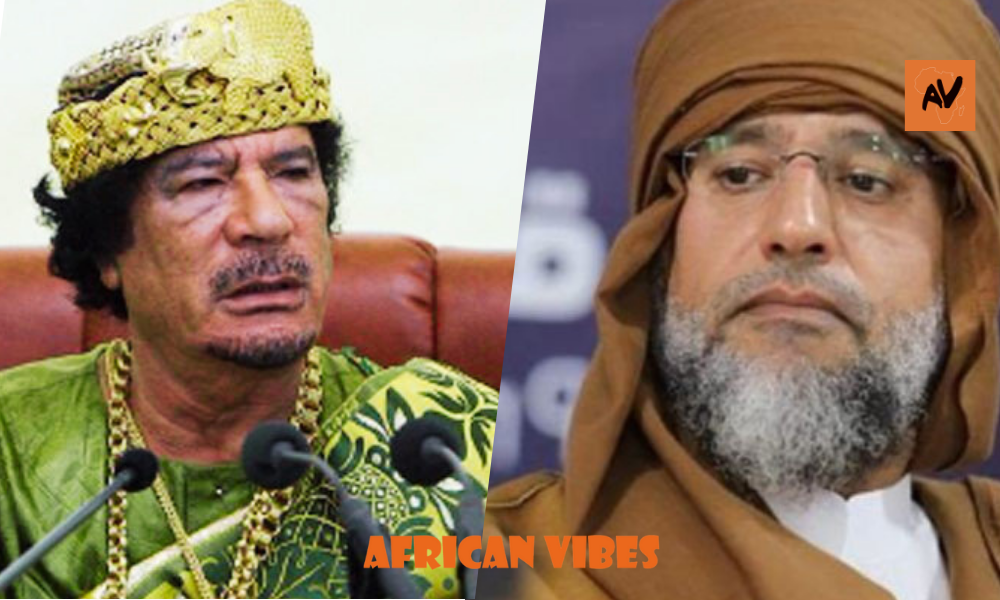
Justice Unanswered, History Unfinished
Perhaps the most troubling implication of Saif al-Islam’s reported death is what it means for justice.
Wanted by the ICC, he represented a rare opportunity for post-conflict accountability — not only for Libya, but for a continent still grappling with how to address crimes of past regimes without perpetuating cycles of revenge.
If confirmed, his killing closes the door on:
- Court testimony
- Historical record
- Legal closure for victims
Africa has long struggled with this dilemma: when trials never happen, history becomes rumor, grievance becomes inheritance, and wounds remain open.
Beyond Ghosts, Toward Healing
If Saif al-Islam Gaddafi is indeed dead, then one of Libya’s most enduring political ghosts may finally be laid to rest. But ghosts do not disappear simply because their names vanish from headlines.
Libya’s future — and Africa’s broader struggle with post-authoritarian transitions — depends not on eliminating symbols of the past, but on building systems that prevent their return.
Pan-African healing requires institutions, not vendettas. Accountability, not assassinations.
The question now is not who falls next — but whether Libya, and the continent watching it, can finally break the cycle.