


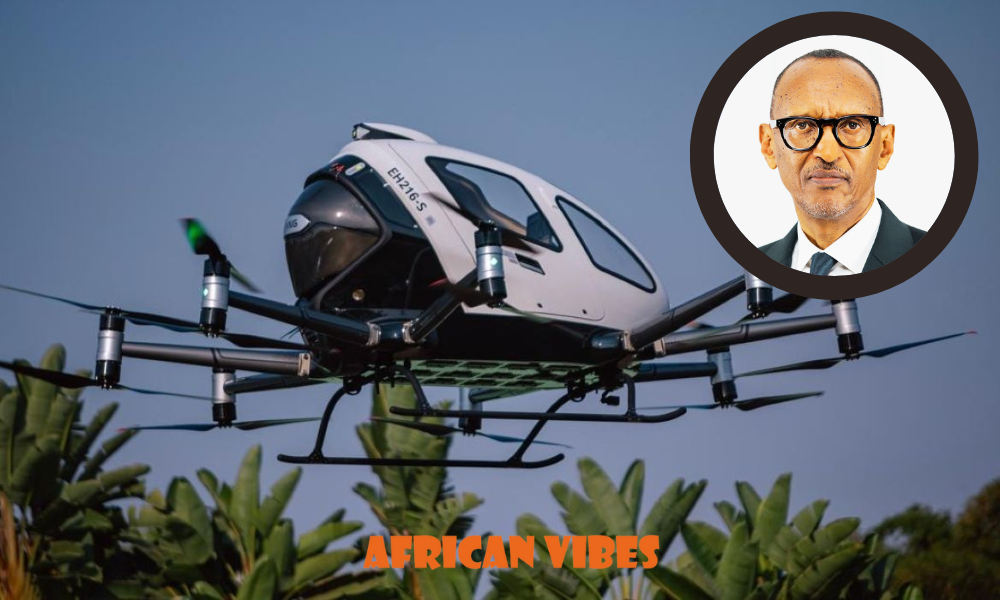
In a landmark moment for African innovation, Rwanda has launched the continent’s first public flight of a self-flying electric air taxi, a stunning spectacle unveiled at the Aviation Africa 2025 Summit in Kigali. The demonstration of the EHang EH216-S, an electric Vertical Take-Off and Landing (eVTOL) aircraft, marks a pivotal step in Rwanda’s mission to become a hub for advanced air mobility.
This historic event is more than just a technological showcase; it’s a powerful statement about Africa’s capacity to lead in the global race for sustainable, futuristic urban transport. This initiative aligns perfectly with the nation’s vision for a connected, efficient, and sustainable future, setting a precedent for African innovation and progress.
Rwanda’s Tech-Forward Vision
Rwanda’s journey to this aviation milestone is rooted in a long-standing commitment to leveraging technology for national development. The country has a proven track record as an early adopter of drone technology, most notably through its partnership with Zipline for life-saving medical deliveries.
This success story, which has revolutionized healthcare access in remote areas, laid the groundwork for a progressive regulatory environment and a public-private partnership model that encourages technological leapfrogging.
The launch of the self-flying taxi is the latest chapter in this narrative, demonstrating a deliberate strategy to address urban congestion and environmental challenges with forward-thinking solutions.
ALSO READ: Kenya Set To Join African Countries Manufacturing Electric Cars
The Flight Demonstration
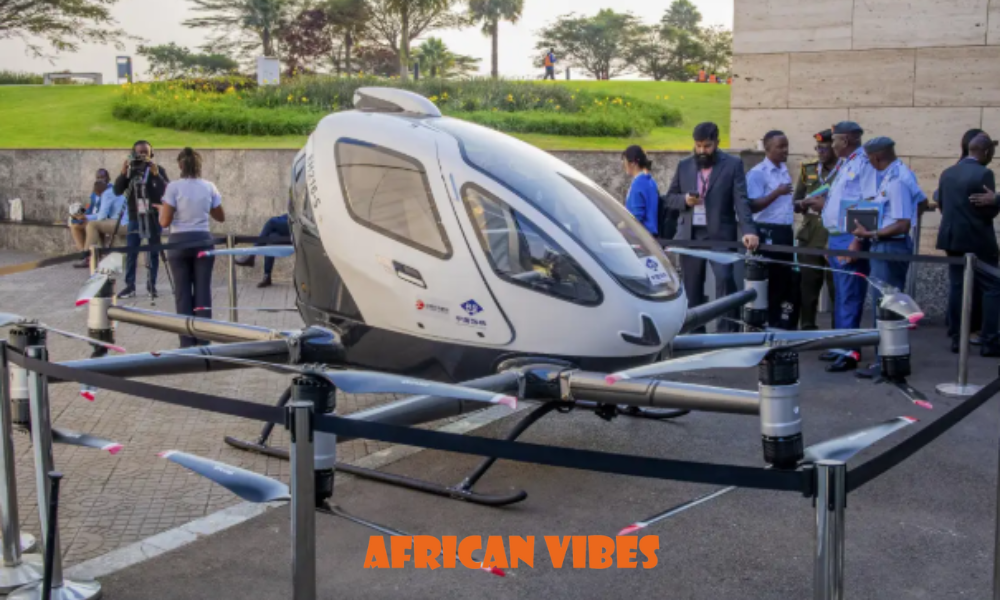
The star of the show was the EHang EH216-S, a two-passenger, pilotless aircraft. During the demonstration, the eVTOL gracefully ascended to a height of 100 meters, captivating attendees including President Paul Kagame and other senior government officials.
This groundbreaking flight was the culmination of a strategic partnership between the Government of Rwanda, the China Road and Bridge Corporation (CRBC), and Chinese aviation technology firm EHang Holdings Limited.
The EH216-S boasts a range of up to 30 kilometers and a top speed of 130 km/h, powered by 16 electric motors. While the current flight was a demonstration, it provides a tangible vision of how such technology could drastically reduce travel times and transform urban logistics in cities like Kigali.
This development is a key part of building a “low-altitude economy,” a concept that redefines urban mobility and logistics.
Impact and Analysis:
This move by Rwanda has far-reaching implications for both the country and the continent. Economically, it positions Rwanda as a global leader in urban air mobility, potentially attracting international investment and serving as a testbed for future technologies.
It also creates new opportunities in sectors like tourism, emergency services, and cargo delivery. Socially, the electric air taxi offers a cleaner, more efficient alternative to traditional transport, addressing the growing problem of urban traffic and pollution.
For a landlocked nation with challenging terrain, this technology offers a unique opportunity to enhance connectivity and accessibility, leapfrogging traditional infrastructure development. The focus on a fully electric system also resonates with a global push for sustainability, placing Rwanda at the forefront of the green transportation movement.
This is a clear example of how African tech startups and forward-thinking governments can collaborate to solve complex problems.

ALSO READ: The Drive Towards Electric Vehicles in Africa: A Path Towards Sustainable Mobility
Challenges and Opportunities:
While the demonstration was a resounding success, the path to widespread adoption is not without its challenges. The development of a robust regulatory framework, investment in new infrastructure like “vertiports,” and addressing public perception and safety concerns are all critical next steps.
The high cost of the technology may also initially limit its use to premium services, but the hope is that as the sector matures, costs will decrease, making it accessible to a broader audience. However, the opportunities are immense.
This project could inspire other African nations to invest in similar technologies, fostering a new era of African development and cross-border collaboration in the aviation sector. It serves as a powerful symbol of what is possible when vision meets technology.
Conclusion:
Rwanda’s pioneering launch of Africa’s first self-flying electric air taxi is a defining moment, not just for the country, but for the entire continent. It is a testament to the nation’s ambitious spirit and its dedication to building a prosperous, technology-driven future.
By embracing this revolutionary technology, Rwanda is not only solving its own infrastructure challenges but is also setting a powerful example for other nations, proving that Africa is not merely a consumer of technology, but a vital co-creator of the global future. This milestone reminds us that the sky is no longer the limit—it’s the next frontier for African progress.