


Beneath the vast southern skies where the Namib Desert meets the horizon, Namibia has quietly taken a decisive step into the space age. This is not a story about mineral wealth or conventional infrastructure, but about data, sovereignty, and the future of African technological power.
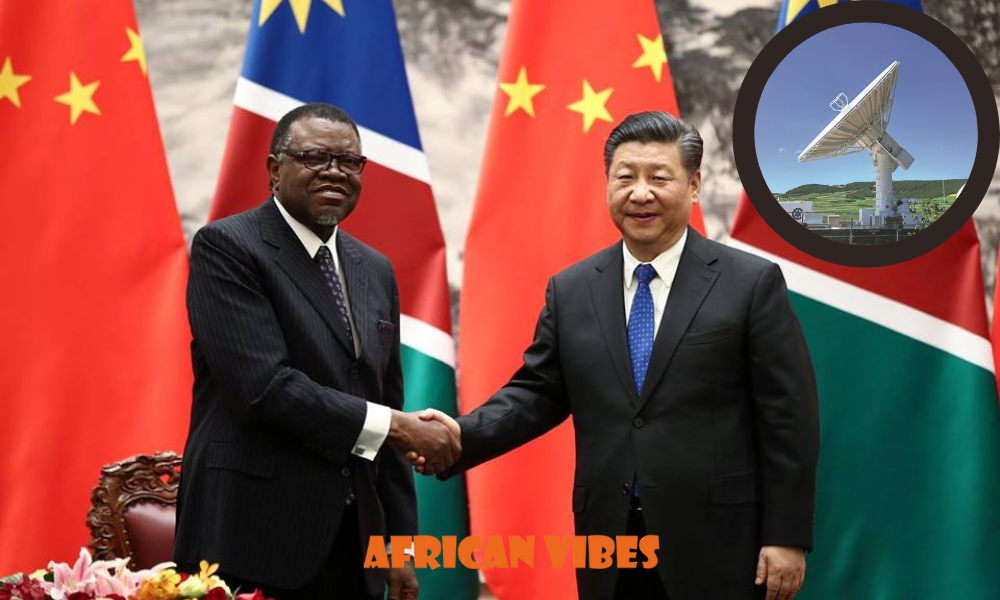
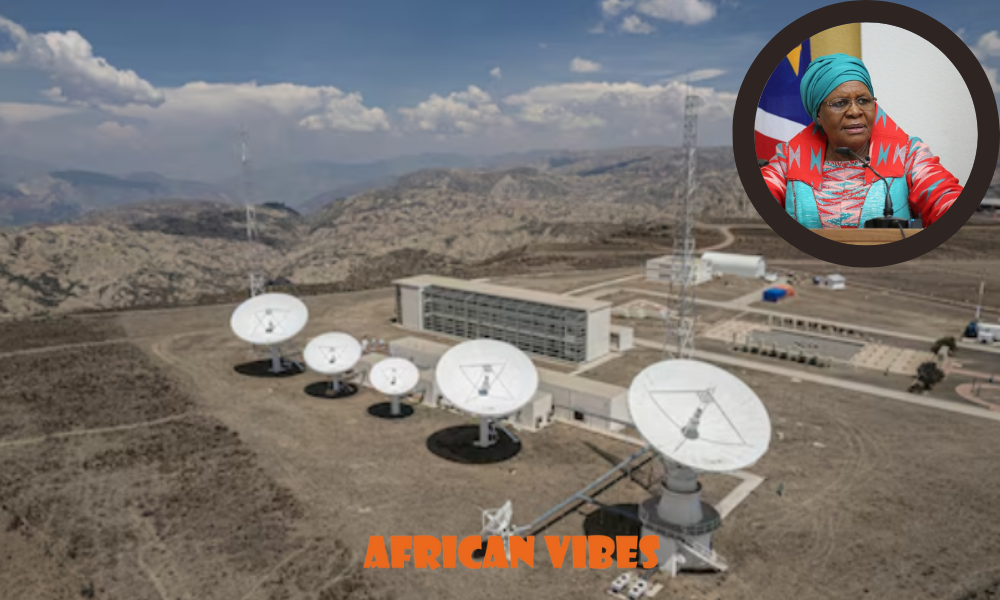
In November, Namibia officially took possession of a state-of-the-art Satellite Ground Data Receiving Station (SGDRS)—a landmark facility donated by the People’s Republic of China. More than a technical upgrade, the station represents a strategic shift: Namibia now has the capacity to directly receive, process, and control satellite data critical to its development. In doing so, it joins a small but growing group of African nations reclaiming ownership over the digital tools that shape governance, climate resilience, and economic planning.
At its core, the station gives Namibia something long denied to many African countries: independent “eyes in the sky.”
From Dependence to Digital Sovereignty
For decades, African governments have relied on foreign providers for satellite imagery and geospatial data—often at high cost and with limited control over access and timing. This dependency has affected everything from disaster response to agricultural planning.
The SGDRS fundamentally alters that equation.
Speaking at the official handover in Windhoek, Dr. Lisho Mundia, Minister of Higher Education, Innovation, Youth, Sports, Arts and Culture, framed the moment in clear terms:
“This station is not merely infrastructure; it is an investment in our sovereignty, our resilience, and our future generations.”
With the ability to receive data directly from Earth-observation satellites, Namibia can now monitor its land, resources, and environment in near real time—without intermediaries. The implications extend far beyond national borders, positioning Namibia as a potential regional data hub within the Southern African Development Community (SADC).
A Partnership Rooted in History
The project is the latest chapter in a long-standing Namibia–China relationship that predates independence. China was a key supporter of Namibia’s liberation struggle, a history that continues to inform present-day cooperation.
Namibia has hosted a Chinese Satellite Tracking, Telemetry and Command (TT&C) station in Swakopmund since 2001. While that facility supports Chinese space missions, the new Windhoek SGDRS marks a significant evolution—from hosting foreign infrastructure to owning and operating national space assets.
This shift reflects a broader continental trend toward what analysts increasingly describe as “digital decolonisation”: building local capacity to control data, technology, and development narratives.
The project also aligns with Namibia’s forward-looking 2024 Space Science and Technology Bill, which provides a legal framework for space-based innovation, research, and national development.
ALSO READ: What China’s New 98.2% Tax-Free Gift Really Means for Kenya’s Smallholder Farmers.
What the Station Actually Does
At a technical level, the SGDRS functions as the nerve centre of Namibia’s emerging space ecosystem.
Large antenna systems receive raw signals transmitted by Earth-observation satellites orbiting hundreds of kilometres above the planet. Inside the operations centre, advanced processing systems convert those signals into usable data—high-resolution imagery, environmental metrics, and geospatial intelligence.
That data is immediately actionable across key sectors:
- Agriculture: Satellite imagery can assess crop health, soil moisture, and early pest outbreaks, enabling precision farming and improved food security.
- Disaster Management: Real-time monitoring of floods, droughts, and extreme weather allows faster, more targeted emergency responses.
- Environmental Protection: The station supports anti-poaching efforts, deforestation monitoring, and ecosystem preservation in protected areas such as the Skeleton Coast.
- Urban and Regional Planning: Authorities can track urban expansion, infrastructure needs, and land-use changes with unprecedented accuracy.
- Natural Resource Management: Water bodies, mining activity, and environmental impacts can be monitored consistently and transparently.
In a climate-vulnerable region, this capability is not a luxury—it is a necessity.
Building African Expertise, Not Just Infrastructure
Crucially, the project prioritised human capital development alongside hardware installation. Namibian engineers and technicians were trained extensively during construction, ensuring the station can be operated, maintained, and upgraded locally.
As Minister of Information and Communication Technology Emma Theofelus noted:
“The true value lies not just in the hardware, but in the human capital it cultivates.”
This emphasis ensures the technology does not become another externally managed asset, but a platform for long-term national expertise and scientific leadership.
Impact of the SGDRS
As climate shocks intensify across Southern Africa, the ability to share satellite data regionally could prove transformative. From cyclone tracking in Mozambique to drought monitoring in Botswana, Namibia’s new capacity strengthens South–South cooperation and regional self-reliance.
Economically, it also reduces reliance on costly foreign data services—freeing public funds for development priorities while enhancing national security and planning efficiency.
For China, the project reinforces its strategic approach to African partnerships focused on technology transfer and capacity building. Chinese Ambassador Zhao Weiping described the station as part of a broader commitment to Africa’s modernisation and innovation ambitions.
Redefining Africa’s Place in Space
Beyond policy and economics, the symbolic power of this moment cannot be overstated.
Africa is too often portrayed as a passive consumer of technology rather than a creator. Namibia’s satellite station challenges that narrative. It presents a different image: African scientists managing advanced systems, African governments shaping data policy, and African youth seeing tangible pathways into STEM careers.
This is not about joining a global space race driven by prestige—but about leveraging space technology for development, climate resilience, and sovereignty.
Looking Forward
As Namibia begins full operations at the Satellite Ground Data Receiving Station, the country stands at the threshold of a new era—one defined by information ownership and technological confidence.
For generations, Africans have looked to the stars with curiosity. Today, Namibia is using them to safeguard its land, empower its people, and contribute to a more self-reliant continent.
This is not just a national milestone. It is a statement: Africa is no longer waiting for the future—it is actively building it.