



The latest Africa Wealth Report by New World Wealth shows there are now just over 160,000 millionaires in Africa. From 2000 to 2013, the number of millionaires in Africa on the continent grew by more than 145 percent. This is compared to the worldwide growth rate of 73 percent. In recent years, most of the ‘new millionaires’ have been young entrepreneurs and investors.
They have created promising businesses and invested in lucrative sectors of Africa’s fast-growing economies. This year, more new millionaires will join the club. This article will share the top business opportunities on the continent that will make more millionaires in Africa.
Tapping into Africa’s Solar Power Revolution
Africa is rich in solar power, a renewable energy source that could revolutionize its energy landscape. Despite this, over 600 million people lack access to reliable electricity. This presents a significant opportunity for entrepreneurs and investors to tap into the sun’s power. They can bring clean, affordable energy to underserved regions.
The potential for solar power in Africa is immense. Studies indicate that Africa’s green energy capacity is 50 times greater than the global electricity demand for 2040. Since 2004, Africa has seen $63.8 billion in renewable energy investments. Yet, in 2022, it received only 0.8% of the $495 billion invested globally. To meet climate goals, a massive investment of $741 billion to $1.66 billion is needed by 2050, highlighting a significant gap for entrepreneurs to fill.
A new wave of solar startups and entrepreneurs is rising in Africa. Companies like BBOXX and UNICAF have secured millions in funding to bring solar power to off-grid communities. These businesses are not just providing clean energy. They are also creating jobs and driving economic growth in underserved areas.
| Metric | Value |
|---|---|
| Capacity of solar energy in Africa | 13.5 gigawatts |
| Africans without access to electricity | Over 600 million |
| Investment in renewables in Africa since 2004 | $63.8 billion |
| Africa’s share of global renewable energy investment in 2022 | 0.8% |
| Required investment in renewables in Africa by 2050 to meet climate goals | $741 billion to $1.66 billion |
The solar power revolution in Africa offers a remarkable chance for entrepreneurs and investors to make a significant impact. By leveraging the continent’s solar resources and addressing the need for reliable electricity, innovators can contribute to sustainable development. They can also emerge as leaders in the growing renewable energy sector.
“Africa’s green energy capacity is 50 times greater than the anticipated global electricity demand for the year 2040.”
Agribusiness: Africa’s Untapped Goldmine
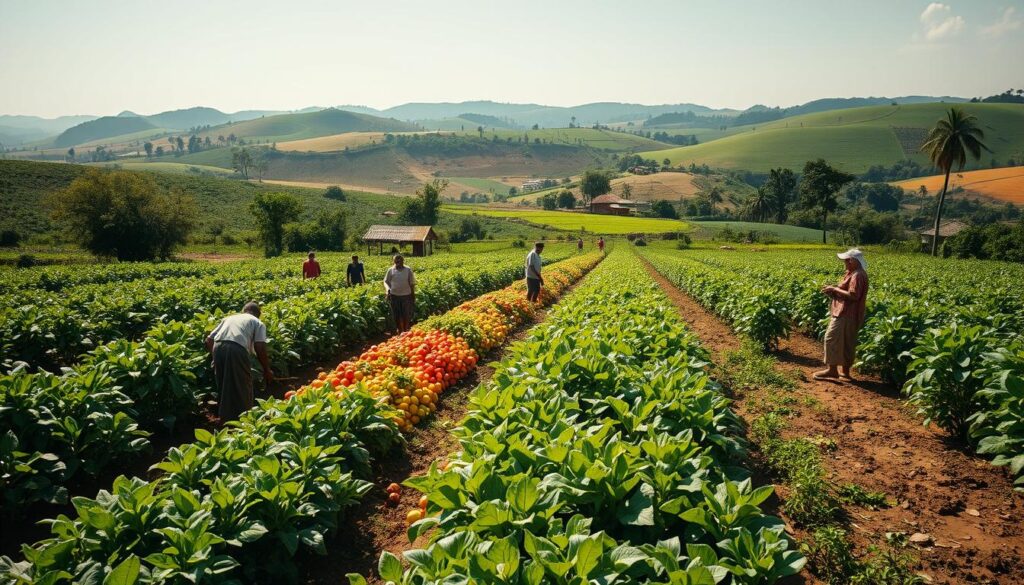
Africa’s agribusiness sector is on the cusp of explosive growth, aiming to hit a trillion-dollar mark by 2030. With its vast, fertile lands, abundant labor, and year-round sunshine, sub-Saharan Africa is perfectly positioned to lead globally in agriculture, farming, and food production.
Even without focusing on export markets, Africa’s one billion inhabitants offer a massive domestic market for agribusiness. The surge in African entrepreneurs entering the agribusiness and food processing sectors is driven by the increasing demand for food and the need for innovative solutions to agricultural challenges.
| Key Statistics | Value |
|---|---|
| Africa’s Agribusiness Industry Forecast | $1 trillion by 2030 |
| Africa’s Uncultivated Arable Land | 60% of the world’s total |
| Growth in Number of Millionaires in Africa | 145% from 2000 to 2014 |
| Africa’s Agricultural Potential | 60-65% of the world’s uncultivated arable land |
| Increase in Agricultural Output in Africa | 160% over the past 30 years |
The emergence of agriculture startups and increased agriculture investments in Africa reflect the sector’s growing appeal. Innovations in precision farming and food processing are transforming Africa’s agribusiness scene. These advancements are opening up new avenues for wealth generation.
ALSO READ: Mali’s Interim President Assimi Goïta’s extended term in office.
“Africa’s agribusiness industry is forecasted to reach a value of $1 trillion by 2030, highlighting the vast potential within the agricultural sector for creating millionaires.”
The Rise of Low-Cost Smartphones in Africa
Africa’s mobile technology scene is rapidly changing, driven by a growing need for affordable smartphones. As the smartphone market in Africa expands, entrepreneurs see a chance to offer low-cost devices to consumers.
Sub-Saharan Africa is expected to see a 130% increase in Internet users by 2025 compared to 2017. Yet, achieving universal Internet access in Africa might take another decade, a 2020 Web Foundation report suggests. This digital gap highlights the need for low-cost smartphones to bridge the gap and connect more Africans online.
A study by the Alliance for Affordable Internet (A4AI) shows that in 70 low-and-middle-income countries, including 32 in Africa, nearly 2.5 billion people face high costs for smartphones. This emphasizes the necessity for more affordable mobile devices to enhance digital inclusion across the continent.
| Smartphone Brand | Market Share | Trend |
|---|---|---|
| Samsung | Market Leader | Maintaining Strong Presence |
| Huawei | Significant Growth | Emerging as a Dark Horse |
| Nokia | Steady Presence | Retaining Loyal Customer Base |
| Apple | Niche Market | 3% Penetration in South Africa |
| BlackBerry | Declining | Facing Challenges in the Market |
In response to these market shifts, a dozen low-priced smartphone brands have entered the African market in the last eighteen months. These affordable devices are gaining popularity, offering entrepreneurs a chance to create new millionaires in Africa.
“Mobile technology will empower Africa to close the digital divide with the rest of the world, with untapped potential in the digital field.” – Founder of iCow
Innovative Solutions for Internet Access Across Africa
Africa’s internet market is booming, with tech giants like Google and Facebook racing to enhance internet access for millions. Meanwhile, African entrepreneurs are leading the charge in solving the internet access challenge.
BRCK, a Kenyan startup, has developed a rugged internet modem for areas with limited connectivity and power. This device recently secured $3 million in funding to expand its reach.
The potential for internet-based businesses in Africa is vast. Wild Fusion, a digital marketing firm, has grown from a small startup to a $6 million company. One Africa Media, a classifieds platform, received a $20 million investment, valuing it at $80 million.
| Company | Highlights |
|---|---|
| iRokoTV | Over 500,000 registered subscribers and $10 million in venture funding, plus $2 million from Kinnevik |
| World Of Avatar | Acquired MXit from Herman Heunis for over $50 million |
| Woothemes | Generates over $3 million annually from the sale of its themes |
These success stories highlight the vast potential of internet-based businesses in Africa. As the continent’s internet infrastructure improves, entrepreneurs are ready to meet the growing demand for digital services and connectivity.
“Africa’s current fibre optic cables have up to 170 terabits combined capacity, but only 5.8% reaches the last mile.”
Addressing the connectivity gap is crucial for Africa’s digital future. Google’s Equiano subsea cable and Taara wireless project, along with local partnerships, are making significant strides towards better internet access and digital inclusion.
Millionaire in Africa: Addressing the Education Crisis
Africa’s human capital is a vast, untapped resource. Yet, a few pioneering ventures are making strides in education, achieving remarkable success. Bridge Academies in Kenya and East Africa, and Omega Schools in Ghana and West Africa, have pioneered a low-cost primary school model. This model allows students to pay just $1 per day in school fees.
Andela stands out as another trailblazer in Africa’s education landscape. It develops African talents into top-tier software developers. These developers are then sought after by tech giants in the USA and Europe. Such initiatives highlight the vast potential for education-focused businesses to flourish and make a significant difference across the continent.
- Only 4% of the world’s dollar millionaires are located in Africa, compared to 38.2% in the United States.
- However, Africa is anticipated to see the highest percentage rise in High Net Worth (HNW) individuals globally, with a predicted 113% increase by 2027.
- The number of billionaires in Africa grew by 10% between 2022 and 2025, as reported by the Forbes Africa Billionaire’s list.
- Sub-Saharan African immigrants sent back $54 billion in remittances to Africa in 2023, a 27% increase since 2020.
These statistics underscore Africa’s immense growth potential and untapped wealth. This presents a unique opportunity for education-focused startups and investments to make a lasting impact. As the continent’s “Next-Gen” philanthropists focus on social impact, African universities are well-positioned to attract significant donations. This is especially true with advancements in technology and communications.
“The rise of the ‘Next-Gen’ philanthropists, who prioritize social impact over preserving assets, may present an opportunity for African universities to attract major gifts.”
Trailblazers like Bridge Academies, Omega Schools, and Andela show that tackling Africa’s education crisis can lead to financial success. By adopting innovative approaches and technology, these businesses are not just changing lives. They are also showcasing the immense potential of education-focused entrepreneurship in Africa.
The Booming Market for African Art
The African art market is witnessing a significant boom, drawing in investors, collectors, and enthusiasts from around the globe. Sales of artwork by African-born artists have skyrocketed by 46% between 2013 and 2023. In 2021, these sales reached a remarkable $101.3 million.
The Postwar & Contemporary genre has seen the most success at auction, with $73.8 million in sales in 2023. Yet, it’s the Ultra-Contemporary category that has driven sales for African-born artists the most. Between 2020 and 2022, sales in this category surged from $16.2 million to $40.6 million in 2021.
“Morning (2008)” by Julie Mehretu stands out, making up 59% of the total sales of African-born artists in 2023. It sold for an impressive $10.7 million.
| Category | Sales in 2021 (in $ million) | Sales in 2023 (in $ million) |
|---|---|---|
| Postwar & Contemporary | $52.1 | $73.8 |
| Ultra-Contemporary | $40.6 | $22.1 |
Although the African art market saw a decline in 2023, with sales dropping to $17.9 million, the long-term outlook is optimistic. Africa’s millionaire population is expected to double to 768,000 by 2027. This growth in wealth is driving a surge in demand for African art.
Initiatives like the Edo Museum of West African Art and the “Also Known As Africa” (AKAA) event in the United States are boosting global recognition of African art. As the market evolves, more investors and collectors will likely turn to African art. This will open up new opportunities for artists and investors alike.
Capitalizing on Africa’s Retail Explosion
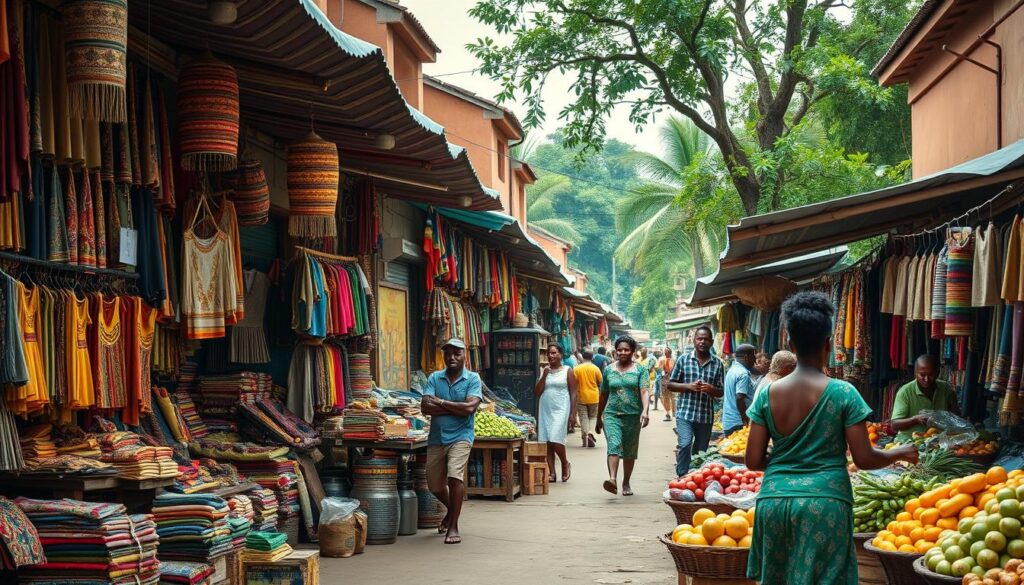
The African retail market is booming, driven by a growing middle class and increasing consumer spending. The opening of the Mall of Africa in South Africa and the Two Rivers mall in Nairobi, Kenya, mark a retail revolution. This surge is fueled by a rapidly expanding middle class and a booming e-commerce sector.
Local and international supermarket brands are expanding across the continent. Shoprite, Game, Checkers, Woolworths, Edgars, and Spar are vying for market share. E-commerce giants like Konga and Jumia have seen impressive growth, with a combined worth over $1 billion. This highlights the potential of online retail in Africa.
The retail explosion in Africa is driven by several factors:
- A large and growing middle class with increasing disposable income
- A boom in the number of expat workers, driving demand for international brands and shopping experiences
- Rapid urbanization, with the majority of Africa’s population expected to live in cities by 2050
- High mobile phone penetration, facilitating the growth of e-commerce and digital payments
- Approximately 90% of transactions in the African retail market being informal, indicating significant room for growth in the formal retail sector
The retail explosion in Africa offers exciting opportunities for investors and entrepreneurs. With strong economic growth, rising consumer spending, and the expansion of both physical and digital retail channels, the potential is vast. Savvy entrepreneurs and investors who capitalize on these trends are set to benefit from Africa’s retail revolution.
“The concept of formal retail stepping into the African market suggests there is potential for growth in the formal retail sector in the region.”
Apps and Online Services Disrupting Africa’s Digital Economy
The digital revolution is sweeping across Africa, transforming the way people access services and conduct business. Mobile apps and online platforms are redefining the digital landscape. For example, Hotels.ng and Jovago.com have become the leading online hotel booking services in Nigeria. Hotels.ng recently secured a $1.2 million investment to expand its reach.
IrokoTV, a popular app providing access to over 5,000 African movies, has secured an additional $19 million in investment funding. This investment aims to enhance its presence across the continent. These examples highlight the thriving digital economy in Africa, where technology startups and innovative online services are disrupting traditional industries.
Africa’s digital transformation is driven by a young and tech-savvy population, high mobile penetration, and a culture of creativity and entrepreneurship. Despite challenges like affordable internet access and digital literacy, the potential for growth is immense. With mobile-first and offline-first solutions bridging the digital divide, Africa is poised to harness the power of technology to drive economic development and transform lives.